News Desk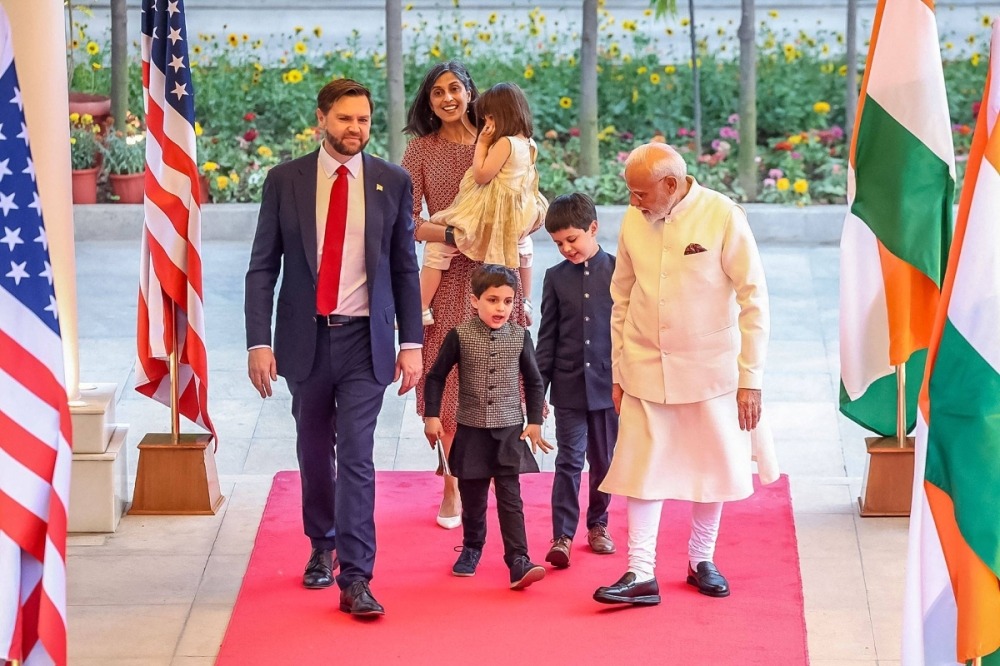
NEW DELHI — In a pivotal meeting on Monday, Indian Prime Minister Narendra Modi and U.S. Vice President JD Vance advanced negotiations for a bilateral trade agreement, aiming to counter the looming threat of steep U.S. tariffs while deepening economic ties. The discussions, held in New Delhi, underscored India’s strategic maneuvering to secure its position as a global economic powerhouse and a key U.S. ally in the Indo-Pacific.
The talks come as U.S. President Donald Trump’s proposed 26% tariff on Indian goods, currently delayed for 90 days, has spurred urgent negotiations. India, leveraging its growing geopolitical clout, is pushing for a deal that addresses its $45.7 billion trade surplus with the U.S. while expanding cooperation in defense, technology, and energy. The agreement could serve as a bulwark against economic disruptions and reinforce India’s role as a manufacturing hub amid global supply chain shifts away from China.
Both leaders hailed “significant progress” toward a “mutually beneficial” trade pact, with Vance announcing a finalized “terms of reference” to guide future talks. “This agreement will foster job creation and economic well-being while strengthening supply-chain integration,” Vance said, speaking during a four-day visit to India that blended personal and diplomatic objectives.
India’s proactive stance includes commitments to boost U.S. energy imports from $15 billion to $25 billion and explore defense purchases, such as F-35 fighter jets. New Delhi has also lowered tariffs on U.S. products like bourbon, luxury cars, and solar cells, while scrapping a 6% digital advertising tax. These concessions aim to ease tensions over India’s trade surplus, which grew 5.4% to $129.2 billion last year, according to U.S. data.
Finance Minister Nirmala Sitharaman, currently in the U.S. for high-level talks, expressed optimism that the first phase of the trade deal could be finalized by fall. Her visit, coinciding with Vance’s trip, highlights India’s multipronged strategy to attract investment and secure favorable terms.
Experts see India’s approach as a deft balance of economic and geopolitical priorities. “India is positioning itself as a critical partner in the U.S.’s efforts to counter China,” said Emily Benson, a trade expert at Minerva Technology Policy Advisors. “A swift deal could cement India’s role as a manufacturing powerhouse while ensuring stability for investors.”
However, India faces domestic challenges, particularly in agriculture, where concessions could spark backlash by threatening rural livelihoods. Analysts expect Modi to prioritize protecting staple crops, reflecting the government’s cautious approach to balancing global ambitions with local concerns.
While India’s strategy may offer insights for other nations facing U.S. tariff pressures, experts caution that its unique relationship with Washington limits its replicability. “Each country’s economic ties with the U.S. demand tailored solutions,” said Kurt Tong, a former U.S. ambassador. “India’s playbook, while instructive, won’t be a universal blueprint.”
As negotiations progress, India’s ability to secure a deal could enhance its economic resilience and global standing, signaling a new era of partnership with the U.S. while navigating the complexities of a shifting trade landscape.