News Desk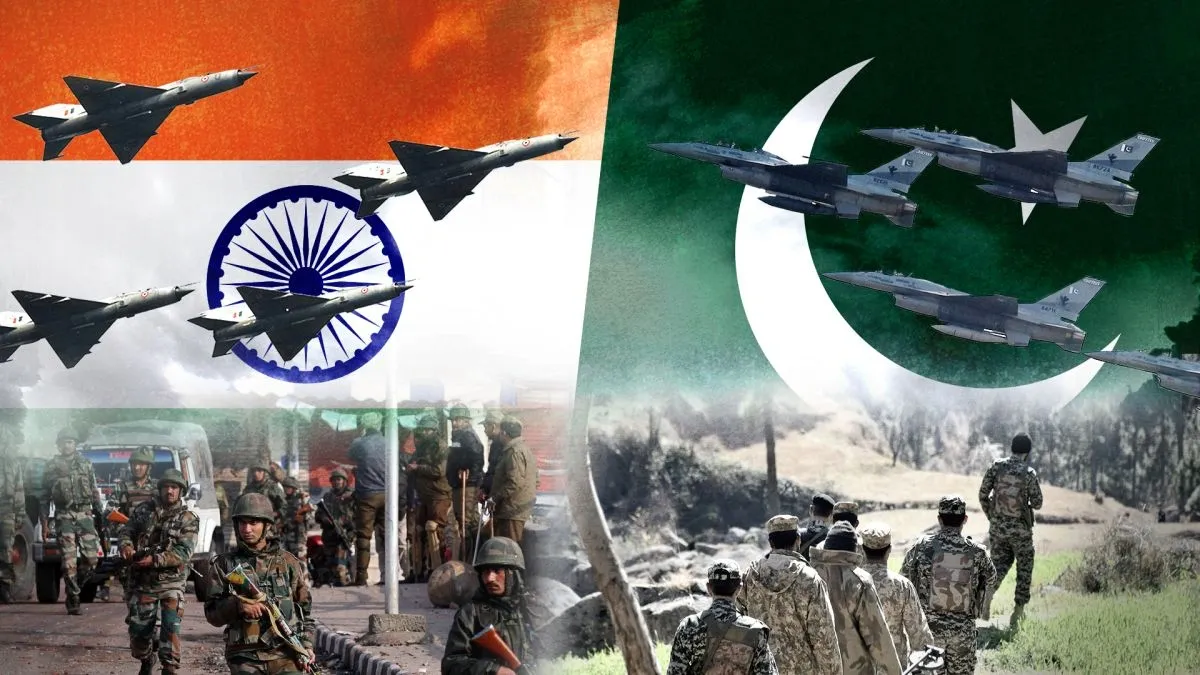
The simmering conflict between India and Pakistan, reignited by a deadly April 2025 terrorist attack in India’s Kashmir that killed 26 people, has thrust the nuclear-armed neighbors into their most dangerous confrontation in decades. As missiles fly, drones are shot down, and both sides trade accusations of aggression, the media in each country has become a mirror of national sentiment—part patriot, part propagandist, and wholly unyielding.
Drawing from recent reports, the coverage in Indian and Pakistani media reveals not just the facts of the escalating crisis but also the deeper currents of nationalism, fear, and political maneuvering that shape how each nation sees itself and its rival.
In India, the media has largely rallied behind the government’s narrative, framing the conflict as a righteous response to Pakistan’s support for terrorism. Outlets like NDTV and The Indian Express have leaned heavily on official statements, with headlines screaming India’s “precision strikes” on terrorist infrastructure in Pakistan. The Indian Express detailed how Pakistani drones and missiles targeted 15 military installations, only to be “neutralized” by India’s air defenses, painting a picture of a vigilant and capable military.
NDTV’s coverage of “Operation Sindoor” described Indian forces thwarting Pakistani attacks with almost surgical efficiency, downing eight missiles and even an F-16, though it noted an official confirmation was pending. At a joint press conference by the Ministry of External Affairs and the Ministry of Defence, Wing Commander Vyomika Singh debunked Pakistan’s claims of destroying critical Indian assets, including the S-400 system at Adhampur, airfields at Suratgarh and Sirsa, Brahmos space at Nagrota, and artillery positions in Dehrangyari and Chandigarh. Displaying time-stamped images of undamaged Indian air bases, Singh called these claims part of a “malicious misinformation campaign” to undermine India’s military capabilities and instill fear. She further highlighted Pakistan’s escalation along the Line of Control (LoC), including drone intrusions and heavy artillery shelling that threatened civilian infrastructure and caused casualties. The Indian Army, she noted, responded “effectively and proportionately,” inflicting “extensive damage” on Pakistani forces in sectors like Kupwara, Baramulla, Poonch, Rajouri, and Akhnoor.
Foreign Secretary Vikram Misri also condemned Pakistan’s “tissue of lies” about attacks on Indian infrastructure, urging the public not to be misled.
This triumphal tone carries an undercurrent of nationalism, as The Washington Post observed, with outlets amplifying public outrage over the Kashmir attack and portraying Prime Minister Narendra Modi’s retaliation as both inevitable and justified. Yet, there’s a curious shift reflecting Modi’s government calibrating, especially as India pushes to block Pakistan’s $7 billion IMF loan—a move The New York Times described as a “bloodless” attack. Still, the media’s focus on military victories and Pakistan’s alleged duplicity leaves little room for nuance, with scant discussion of the human toll or the risks of nuclear escalation. Still, the media’s focus on military victories and Pakistan’s alleged duplicity leaves little room for nuance, with scant discussion of the human toll or the risks of nuclear escalation.
Across the border, Pakistani media paints a starkly different picture, one of defiance and victimhood. Outlets like Dawn and Geo News have condemned India’s strikes as “acts of war,” with Dawn’s breaking news calling them politically motivated attempts to inflame the region.
There’s a notable thread of jingoism here too, with Pakistani outlets celebrating military successes—like the alleged downing of Indian jets by Chinese-made J-10 fighters. But the tone has shifted in recent days, with some channels pivoting to talk of mediation by Iran or the U.S., suggesting a growing awareness of the conflict’s unsustainable costs.
What’s striking is how both sides’ media ecosystems are locked in an information war. Pakistan has blocked Indian news sites for spreading “biased propaganda,” while India has reportedly cut off Pakistani media outlets like Dawn and Geo TV.
As a journalist, it’s hard not to see this as a tragedy of mirrors—two nations reflecting their worst fears and oldest grudges through their media. The Indian press, energized by nationalist fervor, risks normalizing a cycle of retaliation that could spiral into catastrophe. The Pakistani press, while highlighting real suffering, often sidesteps its military’s role in stoking tensions. Both are more interested in winning the narrative than grappling with the stakes of a nuclear standoff. But for now, the Pakistani media seems content to fan the flames, leaving the rest of us to wonder how close the subcontinent is to the abyss.