News Desk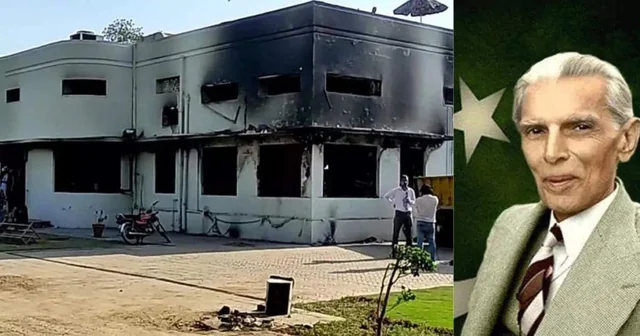
In a cramped courtroom inside Lahore’s Kot Lakhpat jail, Pakistan’s Anti-Terrorism Court (ATC) has set the stage for what many see as a politically charged spectacle. On Saturday, May 17, Judge Manzer Ali Gill oversaw the distribution of charge sheets to 267 suspects, including prominent leaders of the Pakistan Tehreek-e-Insaf (PTI), in the Jinnah House attack case. The accused, ranging from former ministers to social media activists, face serious allegations of terrorism, vandalism, and even waging war against the state—charges that critics argue are a thinly veiled attempt to crush the country’s largest opposition party.
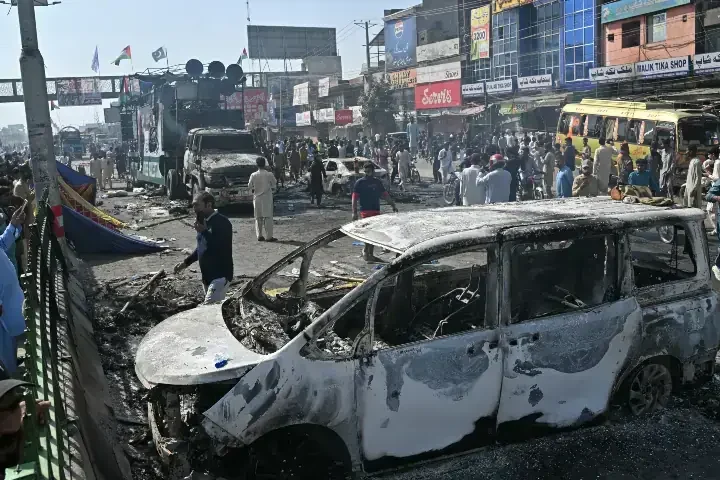
The Jinnah House attack, which occurred on May 9, 2023, followed the arrest of PTI founder and former Prime Minister Imran Khan in a corruption case. Protesters, allegedly PTI supporters, stormed the residence of the Lahore Corps Commander, a symbolic military site, in a chaotic outburst that left the property damaged and Pakistan’s establishment rattled.
The state responded with fury, registering cases under Section 7 of the Anti-Terrorism Act of 1997, accusing the suspects of rioting, abetting mutiny, and attempting to destabilize the nation. The charge sheet distribution marks a pivotal step toward formal indictments, scheduled for May 24, 2025, in a trial that promises to be as divisive as the events it seeks to address.
Among the accused are PTI heavyweights like Dr. Yasmin Rashid, a former minister known for her fiery rhetoric, and Senator Ejaz Chaudhry, both of whom were hauled into court from their prison cells. Shah Mehmood Qureshi, another senior PTI figure and former foreign minister, was notably absent, having been rushed to the Punjab Institute of Cardiology for a heart condition—a detail that underscores the physical and emotional toll of prolonged detention. Others, like former lawmakers Aliya Hamza Malik and Rubina Jamil, as well as fashion designer Khadija Shah and activist Sanam Javed, attended the hearing on bail, their presence a stark reminder of the broad net cast by the authorities.
Pakistan’s government insists this is a matter of national security. The military, still smarting from the unprecedented breach of Jinnah House, has labeled May 9 a “black day” and vowed to punish those responsible. Yet, the scale of the crackdown—267 individuals, many of them PTI affiliates—raises uncomfortable questions. Is this justice for an attack on a military installation, or a calculated move to dismantle the opposition? The inclusion of charges like “waging war against Pakistan” and “abetting mutiny” suggests an intent to portray PTI as an existential threat, a narrative that aligns conveniently with the establishment’s long-standing unease with Imran Khan’s populist defiance.
Skeptics point to the trial’s optics: a jailhouse courtroom, high-profile opposition leaders in the dock, and a judiciary perceived by many as beholden to the military.
The ATC’s decision to extend pre-arrest bail for Aliya Hamza Malik until May 26 and grant a one-time exemption to Khan’s sisters, Aleema and Uzma, in related cases only fuels suspicions of selective pressure. Why, critics ask, are PTI members facing terrorism charges while others implicated in similar unrest face lesser scrutiny? The state’s narrative hinges on the claim that PTI orchestrated the violence, but evidence remains contentious, with some accusing the authorities of fabricating or exaggerating claims to justify the purge.
The broader context is grim. Pakistan’s economy is teetering, inflation is biting, and public discontent is simmering. The government, backed by a powerful military, appears increasingly reliant on strong-arm tactics to maintain control. The Jinnah House trial, with its sweeping indictments and high-stakes rhetoric, risks further polarizing a nation already fractured by political vendettas. For PTI supporters, the case is proof of a vindictive state targeting their leaders to silence dissent. For the establishment, it’s a necessary stand against those who dared challenge its authority.
As May 24 approaches, the world will be watching—not just for the outcome of the indictments, but for what they reveal about Pakistan’s fragile democracy. Will the ATC deliver impartial justice, or will it cement the perception of a judiciary weaponized against the opposition? In a country where power often trumps principle, the answer may already be written.