 News Desk
DHAKA, Bangladesh — Leaders of Bangladesh’s 12-party alliance issued a scathing rebuke of Nobel laureate and Chief Adviser Muhammad Yunus on Friday, accusing him of misrepresenting the nation’s political will and consolidating power through autocratic maneuvers. The alliance, a coalition of pro-democracy parties, sharply contested Yunus’s claim, made during a speech at the Nikkei Forum in Japan, that only one political party is pressing for general elections in December. They assert that his actions threaten the democratic aspirations of a nation long defined by its struggle for free and fair elections.
In a strongly worded statement, alliance spokesperson Shahadat Hossain Selim emphasized that “all democratic political parties” have been united in their demand for elections by December, a call they say has been consistent for nine months. The alliance accused Yunus of deliberately distorting this reality to justify delaying the electoral process, aligning himself with “fundamentalist, unpopular, and anti-liberation” political factions to entrench his interim leadership.
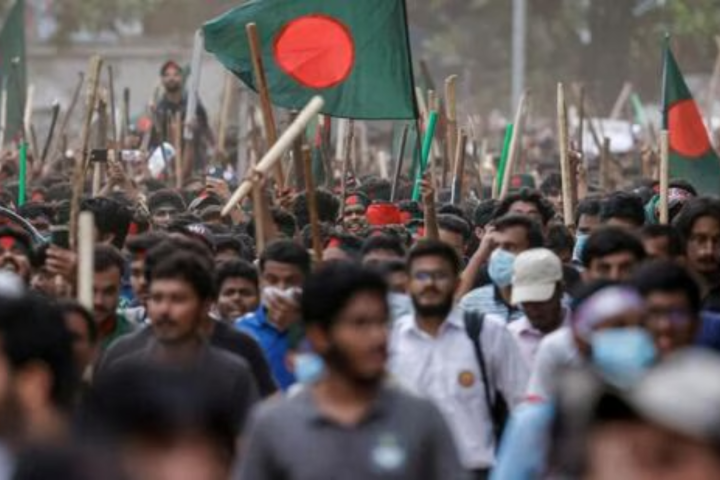
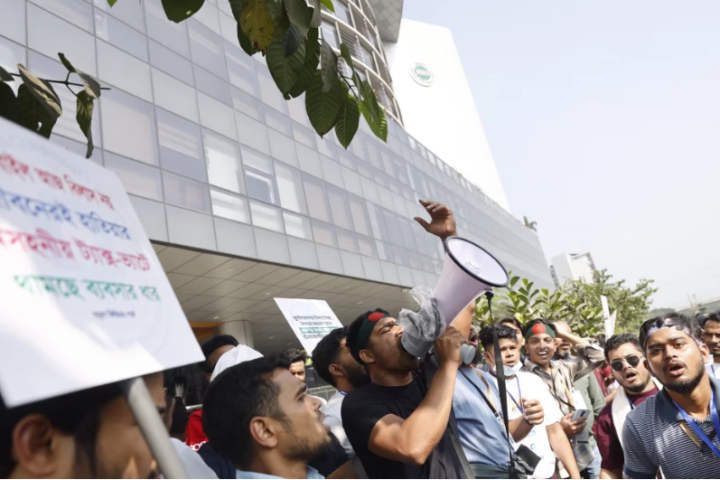
The criticism comes amid growing frustration with Yunus’s tenure as head of Bangladesh’s interim government, a role he assumed following the ouster of former Prime Minister Sheikh Hasina. The alliance alleges that Yunus has sidestepped democratic norms, engaging with political figures tied to Hasina’s authoritarian regime while marginalizing those who have championed democratic movements, including the student-led protests of July and August. These protests, which galvanized public opposition to Hasina’s rule, were notably absent of the figures Yunus has recently courted, the alliance claims.
“Yunus’s theatrical resignation threats and rhetorical ploys may fool some, but the people of Bangladesh see through his tactics,” the statement read, referencing what the alliance described as a calculated stunt to maintain his grip on power. The leaders pointed to Bangladesh’s history of hard-fought democratic struggles— from the 1971 liberation war to the 1990 anti-Ershad movement and the recent resistance against Hasina’s “fascist regime”—to underscore the centrality of the right to vote. They accused Yunus and his advisers of undermining these sacrifices by stalling elections.
The alliance insists that elections are not only feasible but urgently needed before December, a timeline they say is supported by the military. They called on Yunus to announce an immediate electoral roadmap and to proceed with reforms alongside ongoing efforts to hold Hasina’s Awami League accountable, including a push to ban its activities. Failure to act, they warned, would provoke widespread public resistance, leaving Yunus isolated among the “disconnected and irrelevant” factions he has courted.
Yunus, whose global reputation as a microfinance pioneer earned him a Nobel Peace Prize, has faced mounting criticism for what detractors describe as an increasingly autocratic style. The alliance’s statement paints him as a leader out of touch with Bangladesh’s democratic pulse, more intent on preserving power than fulfilling his interim mandate. As the nation teeters on the edge of political crisis, the alliance’s ultimatum signals a deepening rift, with the specter of mass unrest looming if electoral demands go unmet.