News Desk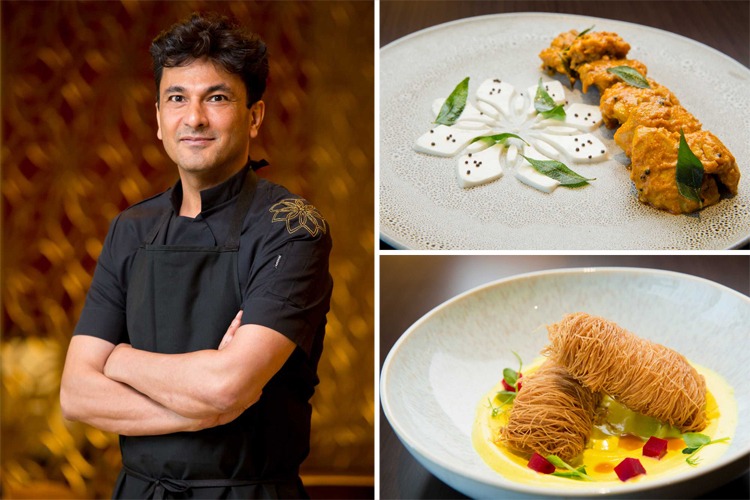
Indian food, with its kaleidoscope of flavors and deep cultural roots, is having a moment on the world stage. For too long, it’s been pigeonholed as the stuff of takeout menus—curries, naan, and little else. But a seismic shift is underway, and at the heart of it is Trèsind Studio, a Dubai-based restaurant that just became the first Indian establishment to earn three Michelin stars in the 2025 Michelin Guide Dubai. Led by Chef Himanshu Saini, this 20-seat gem in the St. Regis Gardens at Palm Jumeirah is redefining how the world sees Indian cuisine, proving it’s as sophisticated and inventive as any global culinary tradition.
Saini, who grew up amid the chaotic charm of Delhi’s Chandni Chowk, draws inspiration from the street food stalls of his childhood—think tangy chaat and sizzling kebabs. “When I traveled abroad, I saw Indian food reduced to stereotypes,” he said in an interview with The Hindu. “It was always ‘curry’ or ‘takeaway.’ I wanted to change that.” And change it he has. Trèsind Studio’s 16-course tasting menu is a love letter to India’s regional diversity, split into four sections—North, South, East, and West—each with four dishes that weave tradition with avant-garde flair. There’s no rice or bread, no caviar or foie gras. Instead, you’ll find bold creations like pandan kadhi, Parmesan saaru, shiso khakra, and even khandvi ice cream.
One standout dish, the kebab scarpetta, captures the essence of Saini’s vision. It’s inspired by the juicy, caramelized bits left on a pan after cooking kebabs, which he recalls mopping up with paratha as a kid. At Trèsind, the kebab is served still sizzling, its aroma pulling diners straight to Delhi’s bustling streets. “I’ve seen guests cry over this dish,” Saini says, a testament to its emotional pull. Another highlight, Sadhya, pays homage to Kerala’s vibrant cuisine, distilling its essence into a single, artful course.
The Michelin Guide praises Saini’s “limitless imagination and creativity,” noting how his menu transforms traditional dishes into “vibrant, eye-catching, and flavorsome creations.” A guide inspector described the 18-course experience as so seamless that three hours passed unnoticed, with dishes crafted from top-tier ingredients and spices balanced with surgical precision. Before each course, a map of India is presented, spotlighting the regions inspiring the food—a theatrical touch that deepens the connection to India’s vast culinary tapestry.
This milestone isn’t just a win for Trèsind Studio; it’s a beacon for Indian cuisine’s global ascent. Restaurants like Gaggan in Bangkok, which earned two Michelin stars, and New York’s Semma, with its one-star nod, have already hinted at this shift. But Trèsind’s three-star achievement—the highest Michelin honor—sets a new benchmark. It reflects a growing appreciation for India’s culinary heritage, from the coconut-laced curries of the south to the robust, spice-driven dishes of the north.
The world’s palate is evolving, and Indian food is leading the charge. In London, Gymkhana’s Michelin star and dishes like muntjac biryani draw crowds, while in Sydney, Enter Via Laundry serves up inventive takes like Goan fish curry. These restaurants, like Trèsind, show that Indian cuisine isn’t just comfort food—it’s a global force, capable of dazzling the most discerning diners. As Saini predicted, the attitude toward Indian food is changing, and it’s a change worth savoring.