 News Desk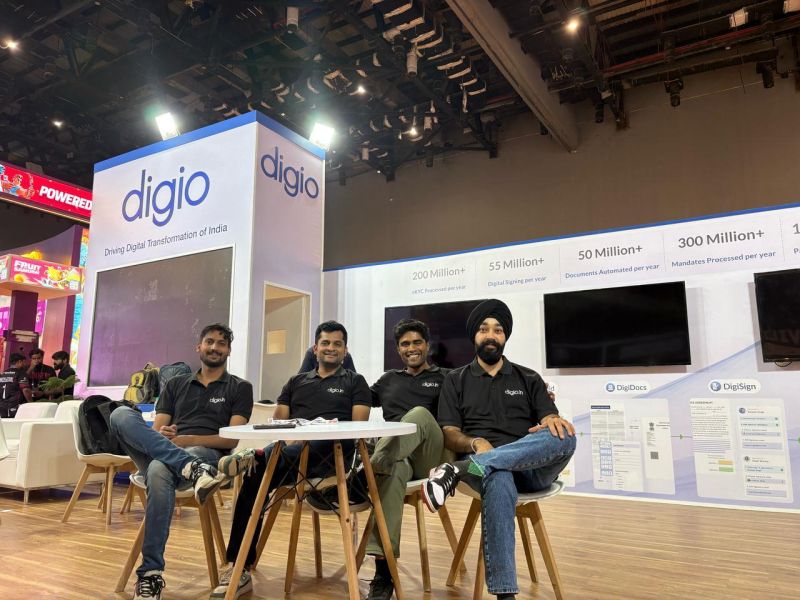
In a world racing toward digital economies, verifying identities quickly and securely is a cornerstone of progress. For the Global South, where cumbersome paperwork and limited infrastructure often hinder access to services, India’s Digio (digio.in) offers a transformative model. This Bengaluru-based fintech platform has redefined Know Your Customer (KYC) processes, leveraging India’s cutting-edge digital infrastructure to deliver seamless, user-friendly solutions. By comparing Digio to the Maldives’ government-led eFaas system, Estonia’s e-ID ecosystem, and digital identity efforts across South Asia, we see why Digio stands out as a benchmark for emerging economies. Its private-sector agility, paired with India’s digital stack, showcases how technology can empower users and inspire nations worldwide.
Digio: Revolutionizing KYC in India
Founded in 2016 by Abhinav Parashar and Sanket Nayak, Digio has emerged as a leader in India’s digital transformation. Its flagship offering, DigiKYC, automates identity verification using tools like Aadhaar offline XML, DigiLocker for document storage, video KYC, and bank account validation via penny-drop transactions. Beyond KYC, Digio provides DigiSign for electronic signatures and DigiCollect for recurring payments, serving banks, fintechs, and insurers. With over 50 million consumer KYCs processed annually, Digio has earned accolades, including a spot as India’s third-fastest-growing company in the Financial Times’ 2022 rankings and $11.9 million in funding.
What sets Digio apart is its integration with India’s digital public infrastructure, known as the India Stack. Aadhaar, the world’s largest biometric ID system with 1.3 billion users, provides a near-universal identity backbone. DigiLocker enables secure access to digital documents, while the Unified Payments Interface (UPI) powers instant transactions. Digio’s WhatsApp-based onboarding, where users complete KYC and sign documents without leaving the app, exemplifies its focus on accessibility. Features like facial recognition and geotagged selfies ensure compliance with regulations from the Reserve Bank of India (RBI) and the Securities and Exchange Board of India (SEBI), making Digio a trusted partner for businesses and a model for user-centric innovation.
eFaas: Maldives’ Centralized Digital ID
In the Maldives, the government-led eFaas system offers a unified digital identity for citizens. Launched to streamline access to public and private services, eFaas uses biometrics and multi-factor authentication, allowing users to file taxes, access healthcare, or authenticate banking transactions via a mobile app. Its strength lies in state-backed trust and privacy controls, letting users manage data sharing. However, eFaas focuses primarily on government services, with limited private-sector applications like e-signatures or payment solutions. For a small nation of 500,000, eFaas is effective but lacks the scalability and versatility of Digio’s private-sector model.
Estonia: A Digital Powerhouse
Estonia, a global leader in e-governance, offers a compelling contrast. Its e-ID system, centered on the mandatory ID-card, Mobile-ID, and Smart-ID (developed by private firm SK ID Solutions), enables 99% of public services online, from voting to tax filing. The ID-card uses 384-bit ECC encryption, while Smart-ID provides app-based authentication with Qualified Electronic Signatures (QES), legally recognized across the EU. Estonia’s X-Road platform ensures secure data sharing, saving 2% of GDP annually. Private providers like SK ID Solutions and RaulWalter integrate with this system, offering APIs for businesses, much like Digio. However, Estonia’s solutions are tightly linked to government infrastructure, unlike Digio’s standalone private-sector approach, and lack features like payment automation or WhatsApp-based onboarding.
South Asia: A Mixed Landscape
Across South Asia, digital identity systems vary widely, often leaning toward government-led models like eFaas, with private-sector innovation lagging behind Digio.
- Pakistan: The National Database and Registration Authority (NADRA) issues the Computerized National Identity Card (CNIC), a biometric ID used for government services and banking. Private fintechs like JazzCash use NADRA’s APIs for e-KYC, resembling Digio’s integrations. However, CNIC’s centralized design and privacy concerns limit its user experience compared to Digio’s mobile-first approach.
- Bangladesh: The National Identity Card (NID), managed by the Election Commission, supports government services and financial inclusion via platforms like bKash. While these resemble Digio’s private-sector applications, they lack advanced features like video KYC or WhatsApp onboarding, constrained by weaker digital infrastructure.
- Sri Lanka: The Digital Identity Project, inspired by Aadhaar, aims to create a biometric-based ID card. It mirrors eFaas in its government focus but lacks private-sector platforms like Digio, hindered by funding and infrastructure challenges.
- Nepal: The National ID Card uses biometrics for government services but has minimal private-sector integration. Without a robust digital stack, Nepal’s system is closer to eFaas than Digio.
- Afghanistan: The e-Tazkira system, disrupted by political instability, focuses on government use cases like voter registration. Private-sector KYC is virtually nonexistent, far from Digio’s model.
- Bhutan: The Citizenship Identity Card serves basic identification needs but lacks advanced digital applications or private-sector platforms, aligning more with eFaas.
South Asia’s government-driven systems prioritize citizen services but fall short of Digio’s private-sector versatility and user-centric design, highlighting India’s lead in digital innovation.
Digio’s Edge: Private-Sector Agility
Digio’s private-sector roots give it a distinct advantage over government-led systems like eFaas and Estonia’s e-ID. Operating in India’s vast market of 1.4 billion, Digio serves diverse industries—banking, insurance, fintech—with APIs that integrate KYC, e-signatures, and payments into business workflows. Its video KYC, compliant with RBI’s Video Customer Identification Process (V-CIP), verifies identities in minutes, a stark contrast to eFaas’s narrower focus or Estonia’s reliance on state-issued IDs. Clients like Zerodha and Groww demonstrate Digio’s ability to meet commercial demands while maintaining regulatory rigor.
Unlike eFaas, which serves a small population, or Estonia’s e-ID, which leans on government infrastructure, Digio’s standalone platform adapts to varied needs. Its ability to reduce onboarding times from days to minutes and cut costs by up to 70% compared to paper-based processes makes it a compelling model for resource-constrained economies.
India Stack: A Global Marketing Triumph
India’s digital stack—Aadhaar, DigiLocker, UPI—is Digio’s backbone and a powerful marketing asset. Aadhaar’s near-universal coverage ensures broad accessibility, while UPI’s instant payments and DigiLocker’s document storage create a cohesive user experience. A customer can verify their identity, sign a contract, and set up payments in one flow, often via WhatsApp, a platform familiar to millions. This seamless integration is a blueprint for the Global South, where mobile penetration often outpaces broadband.
For South Asian countries like Pakistan or Bangladesh, building a similar stack could unlock private-sector innovation. Estonia’s X-Road shows how data-sharing platforms enhance efficiency, but India’s stack is more accessible for developing nations due to its open-source APIs and scalability. By marketing India Stack’s role in Digio’s success, India can position itself as a digital leader, offering a replicable model for nations like Nigeria or Indonesia.
A Benchmark for the Global South
Digio’s success offers three key lessons for emerging economies:
- Private-Sector Innovation: Unlike eFaas or Estonia’s e-ID, Digio shows how private companies can drive digital transformation within regulatory frameworks. South Asian nations could encourage fintechs to build on government IDs, as Pakistan’s JazzCash does, but with Digio’s user-focused features.
- Mobile-First Accessibility: Digio’s WhatsApp onboarding and video KYC cater to India’s smartphone-savvy population. In regions like Sub-Saharan Africa, where mobile money platforms thrive, similar approaches could bridge digital divides.
- Cost Efficiency: Digio’s cost reductions resonate in budget-constrained economies. Estonia’s e-ID saves significant resources, but Digio’s private-sector model is more adaptable to diverse markets.
Compared to South Asia’s government-heavy systems, Digio’s agility stands out. Pakistan and Bangladesh show private-sector potential, but their platforms lack Digio’s polish. Estonia’s private providers like SK ID Solutions are advanced but tied to government infrastructure, limiting their scope compared to Digio’s standalone versatility.
India’s Digital Leadership
India’s digital journey, with Digio as a flagship, is a beacon for the Global South. While Estonia’s e-ID system is a gold standard for small nations, and eFaas suits the Maldives’ scale, Digio’s ability to serve a billion-plus market sets it apart. Its integration with India Stack offers a scalable, user-friendly model that South Asian countries, from Nepal to Sri Lanka, could adapt by fostering public-private partnerships. For global audiences, Digio’s story underscores India’s role as a digital innovator, proving that technology can empower users, streamline services, and drive economic inclusion. As emerging economies seek to modernize, Digio’s blend of innovation, accessibility, and efficiency lights the way forward.