News Desk
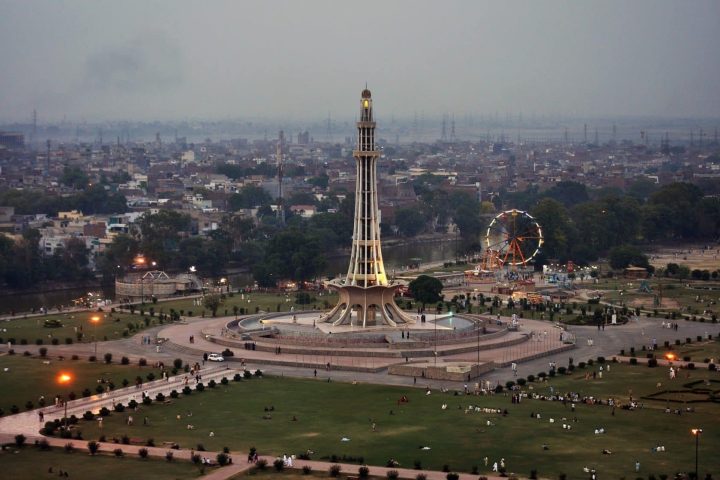
In a bold move to curb public displays of power and fear, Punjab Chief Minister Maryam Nawaz on Monday ordered a sweeping crackdown on the open display of weapons and the use of Toyota Hilux pickup trucks across the province. The directive, announced in Lahore, signals a new push to rein in symbols of intimidation that have long defined status and influence in Pakistan’s most populous region.
The newly established Crime Control Department (CCD), a specialized unit tasked with tackling organized crime, will lead the effort, taking “indiscriminate action” against those who brandish weapons or use Hilux trucks to sow fear. “Spreading panic in society through displays of arms cannot be tolerated,” said Additional Inspector General of Police (AIG) Sohail Zafar Chatha in a statement, underscoring the government’s resolve. The CCD, equipped with advanced technology, will leverage over 21,000 Safe City cameras and artificial intelligence to monitor and identify violators, ensuring swift enforcement.
The Toyota Hilux, particularly the mid-2000s Vigo model, has become more than just a vehicle in Punjab—it’s a cultural phenomenon. Known locally as the “Vigo Dala,” the pickup truck is a favorite among urban business elites and powerbrokers seeking to project dominance. With tinted windows, flashing lights, and armed guards often perched in the back, Hilux convoys barrel through traffic, demanding right of way. “It’s not just a car; it’s a statement,” said Faisal Iqbal, a Lahore-based shopkeeper who has witnessed these vehicles intimidating drivers on busy roads. “They speed up, flash their lights, and everyone scatters.”
This image of the Hilux as a rolling fortress has taken root in a society marked by stark class divides, where symbols of wealth and power often double as tools of coercion. In cities like Karachi, the Vigo’s imposing presence is said to deter even street criminals, but in Punjab, its use has sparked public resentment. “People feel helpless when they see these trucks,” said Amna Khan, a schoolteacher in Faisalabad. “It’s not just about traffic—it’s about who gets to act above the law.”
The crackdown is part of Chief Minister Nawaz’s broader “Safe Punjab Vision,” which has already seen aggressive action against illegal firearms. Since January, Punjab Police have seized over 1,500 Kalashnikovs, nearly 40,000 pistols, and millions of rounds of ammunition in province-wide operations. The CCD, established in February 2025, is a cornerstone of this initiative, armed with drone surveillance and a mandate to target organized crime, from land mafias to street gangs. Nawaz’s directive to curb the Hilux’s use reflects a recognition that public safety extends beyond crime statistics—it’s about dismantling the culture of fear perpetuated by ostentatious displays of power.
Yet, the crackdown faces challenges. The Hilux’s popularity, particularly among newly wealthy entrepreneurs, is deeply entrenched. In recent years, the vehicle has become a status symbol, its high price—often exceeding 10 million rupees ($36,000)—making it a marker of success in a society where wealth is often equated with influence. Enforcing the ban could spark pushback from powerful business and political circles, where such vehicles are a common sight. “This won’t be easy,” said a senior CCD official, speaking on condition of anonymity. “Some of these truck owners have deep connections. It’s not just about stopping a vehicle—it’s about challenging a mindset.”
Public reaction has been mixed. In Lahore’s upscale neighborhoods, some residents welcome the move, citing the aggressive behavior of Hilux drivers. “They act like they own the road,” said Tariq Mehmood, a motorbike mechanic in Gulberg. Others, however, see the crackdown as a distraction from deeper issues like unemployment and inflation, which Nawaz has also targeted with campaigns against price gouging. “Fix the economy first, then worry about trucks,” said Saima Bibi, a vegetable vendor in Rawalpindi.
For now, the CCD is moving forward with its high-tech arsenal, including AI-driven surveillance to detect weapons and monitor compliance. But the real test will be sustaining the effort in a province where symbols of power are fiercely guarded. As Punjab seeks to redefine its streets, the crackdown on Hilux trucks and weapon displays is a gamble—one that could either restore public confidence or stir resistance from those who thrive on intimidation. For residents like Amna Khan, the hope is simple: “A city where no one feels scared to drive or walk—that’s all we want.”