News Desk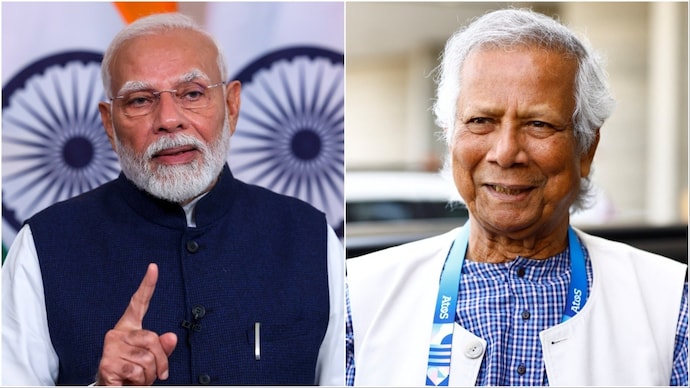
NEW DELHI — As India solidifies its role as a regional anchor, extending humanitarian aid to neighbors in crisis, Bangladesh’s interim leader, Muhammad Yunus, is grappling with a food security emergency that has exposed vulnerabilities in his administration. While India steps up to support Bangladesh with critical rice supplies, Yunus’s recent comments in China about the strategic Siliguri Corridor have stirred tensions, casting a shadow over his leadership and Bangladesh’s delicate balancing act in South Asia.
India’s commitment to regional stability has been a cornerstone of its foreign policy, and nowhere is this more evident than in its response to Bangladesh’s food shortage. Devastating floods in 2024 wiped out an estimated 1.1 million tonnes of rice, plunging Bangladesh into a crisis marked by soaring inflation and dwindling food reserves. Despite frosty diplomatic ties following the ouster of former Prime Minister Sheikh Hasina in August 2024, India approved the export of 50,000 tonnes of non-basmati parboiled rice to Bangladesh in December 2024 at a concessional rate of $456.67 per tonne. Shipments of 24,690 tonnes and 16,400 tonnes arrived in late 2024 and early February 2025, respectively, with plans for an additional 100,000 tonnes through tenders and government-to-government deals.
This aid, part of India’s “Neighbourhood First” policy, underscores New Delhi’s willingness to prioritize humanitarian needs over political differences. India’s economic resilience bolsters its ability to extend such support. With an 8.2% GDP growth rate in 2024, according to the International Monetary Fund, India has invested heavily in infrastructure to enhance connectivity, particularly in its northeastern states linked to the mainland by the Siliguri Corridor, known as the “Chicken’s Neck.”
Projects like the Kaladan Multi-Modal Transit Transport Project, connecting the northeast to the sea via Myanmar, reflect India’s strategic focus on securing its economic and geopolitical interests while aiding neighbors in distress.
In contrast, Bangladesh under Yunus’s interim government is struggling to stabilize its economy and ensure food security. The Nobel laureate, who assumed leadership after Hasina’s exile, inherited a nation reeling from natural disasters and political upheaval. His administration’s response has been hampered by logistical challenges and allegations of mismanagement.
The garment industry, which generates 85% of Bangladesh’s export revenue, has faced disruptions, particularly after India revoked a transshipment facility in 2025, citing congestion but signaling displeasure with Dhaka’s recent diplomatic moves.
Reports of over 2,400 attacks on minority communities, particularly Hindus, in 2024 have further strained relations with India, with Yunus dismissing these claims fueling skepticism about his government’s priorities. Compounding these challenges, Yunus’s recent trip to China in March 2025 has drawn criticism for remarks perceived as provocative in New Delhi.
Speaking to Chinese business leaders in Beijing, he described Bangladesh as the “only guardian of the ocean” for India’s “landlocked” northeastern states, suggesting it could serve as an extension of China’s economy. These comments, amplified by his government’s social media, were seen in India as a veiled reference to the Siliguri Corridor’s vulnerability, prompting a sharp rebuke.
Assam Chief Minister Himanta Biswa Sarma called the remarks “condemnable,” while External Affairs Minister S. Jaishankar emphasized India’s robust maritime presence in the Bay of Bengal.
The controversy deepened when Chinese officials inspected an under-construction airbase in Lalmonirhat, near the corridor, raising concerns about Beijing’s growing influence in Bangladesh.
Yunus’s China visit, which secured $2.1 billion in investments, loans, and grants, appears to be an attempt to diversify Bangladesh’s partnerships amid economic strain. However, his comments have alienated India, a key supplier of the rice his government desperately needs.
India, meanwhile, continues to strengthen its regional standing. Prime Minister Narendra Modi’s government has prioritized fortifying the Siliguri Corridor, with Chief of Defence Staff General Anil Chauhan inspecting forward bases in the region. These efforts, coupled with India’s humanitarian outreach, highlight its role as a dependable partner, even as Bangladesh navigates internal chaos and external provocations under Yunus’s leadership.
For Bangladesh, reliance on India’s rice underscores the limits of Yunus’s diplomatic gambits. His remarks in China may have aimed to attract investment, but they risk undermining the goodwill of a neighbor whose support remains critical. As India forges ahead, its generosity stands in stark contrast to the challenges facing Yunus, whose leadership is increasingly defined by missteps at a time when unity and pragmatism are needed most.