News Desk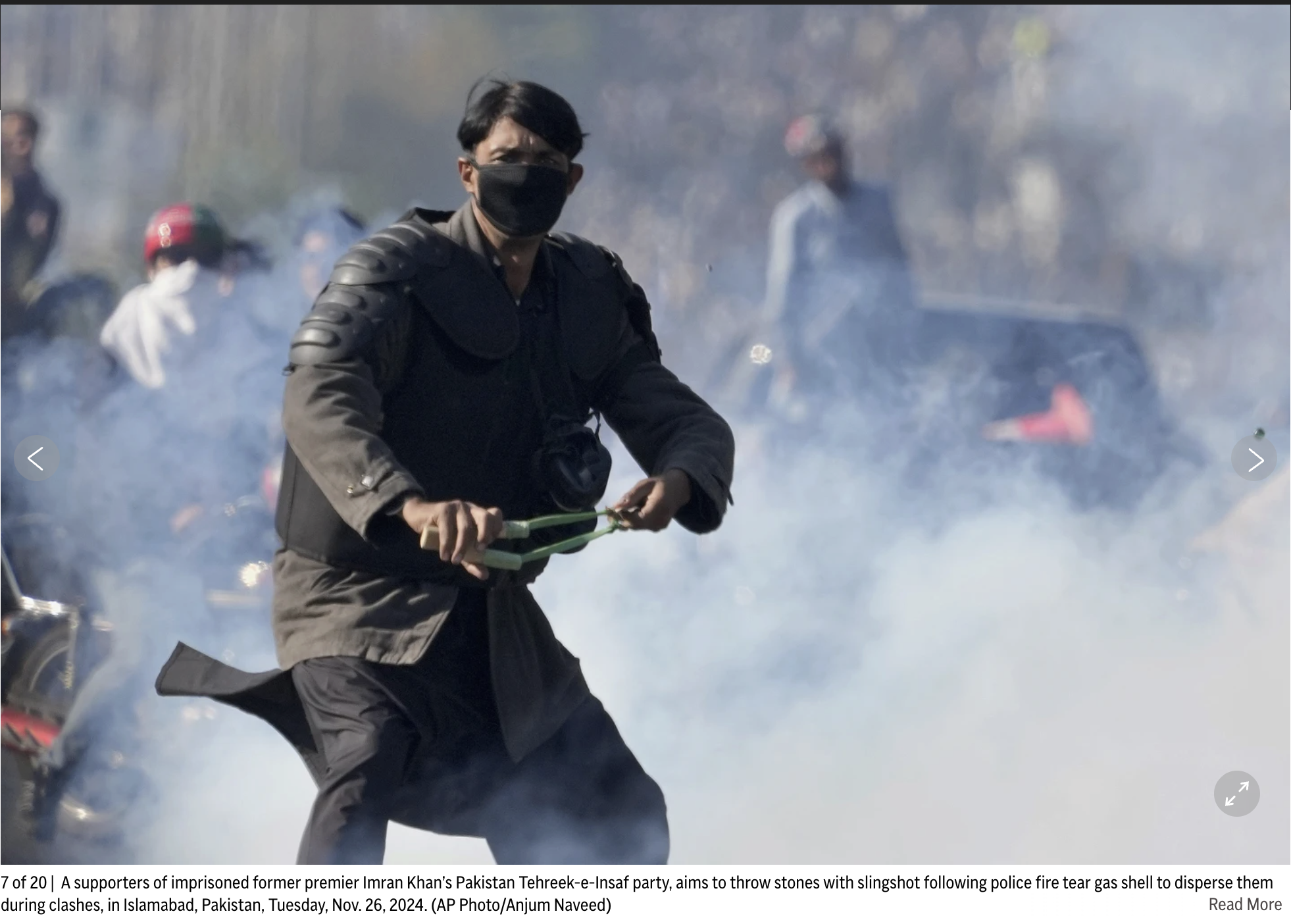
When tens of thousands of young Pakistanis poured into the streets in support of Imran Khan last year, the scenes were both startling and familiar. Startling, because rare in Pakistan’s tightly controlled political order was such visible anger directed at the Army itself. Familiar, because across South Asia — in Kathmandu, Dhaka, and beyond — frustrated youth have increasingly taken to the streets to demand accountability and a future not monopolized by aging elites.
In Kathmandu, the so-called Gen Z protests in September 2025 burned through government quarters, media houses, and the Supreme Court. In Dhaka, recurring student protests have long challenged corruption and dynastic politics. Pakistan’s version carried the same spirit: a rejection of the old order, a cry against inequality, and a rallying call around a single, charismatic leader.
But in Pakistan, the outcome was never in doubt. The Army crushed the movement swiftly and decisively, turning a youth-driven uprising into yet another chapter of its long history of political manipulation.
Pakistan is a young country — demographically, almost astonishingly so. Two-thirds of its 240 million people are under the age of 30. For them, Imran Khan represented not merely a politician but an avatar of change: someone who spoke the language of justice, railed against corruption, and challenged the entrenched order of generals and dynastic parties.
When Khan was ousted in 2022 after falling out with his military backers, his base only grew. The youth, digitally connected and disillusioned with decades of broken promises, poured into the streets in 2023 and 2024. They saw themselves in a movement that promised to dismantle the cozy nexus between politics, wealth, and khaki.
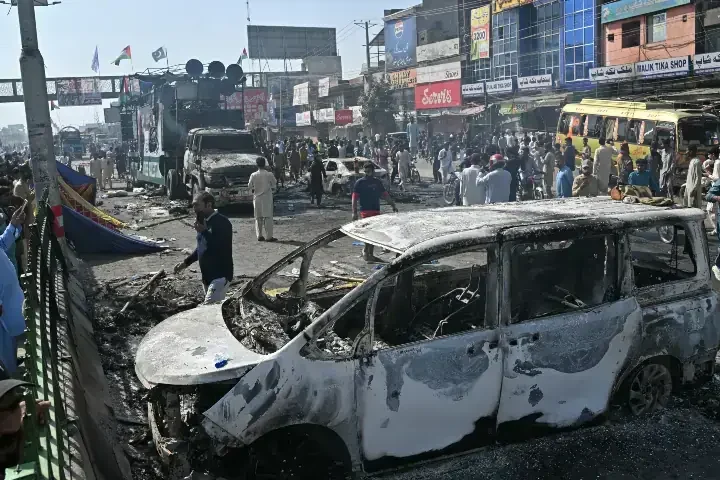
Then came May 2023, when Khan was arrested. What followed was unprecedented: mobs attacked military cantonments, torched the Corps Commander’s residence in Lahore, and openly chanted slogans against the generals. For a country where the Army has long been sacrosanct, this was rebellion.
But rebellion is one thing; revolution is another.
The youth protests collapsed under the weight of Pakistan’s oldest reality: the omnipresence of the military.
The Pakistan Army is not simply a defense institution. It is the state’s most powerful political party, its largest landowner, and one of its biggest corporate actors. Through foundations, front companies, and sprawling business empires, it controls everything from cement to cornflakes. More importantly, it controls the narrative.
The generals swiftly branded the protests as “anti-state” and “terrorist-backed.” Thousands of young people were arrested, many tried in military courts. Social media was throttled, television channels silenced, journalists intimidated. Khan himself was buried under a mountain of legal cases, each designed to ensure he could not return to power.
Unlike Kathmandu’s Gen Z, who temporarily seized the political initiative, Pakistan’s youth found themselves not just facing a government but an institution that has mastered the art of absorbing and neutralizing dissent. Their spontaneity became their weakness. Leaderless, uncoordinated, and without an alternative structure, the protests fizzled as fear set in.
The Army’s ability to outmaneuver civilian actors is not new. It is the defining feature of Pakistan’s modern history.
- Ayub Khan (1958–1969) inaugurated the cycle with Pakistan’s first coup, ushering in an era of “guided democracy” where the generals dictated the rules.
- Zia-ul-Haq (1977–1988) deepened the military’s hold, Islamizing politics and entrenching authoritarianism under the guise of religious legitimacy.
- Pervez Musharraf (1999–2008) was the modern face of the same tradition, presenting himself as a reformer while ensuring military dominance remained untouched.
Even during civilian interludes, from Zulfikar Ali Bhutto to Nawaz Sharif, the military loomed over every decision, ready to intervene. Former Army Chief Qamar Javed Bajwa perfected the more subtle style of “hybrid regime,” allowing civilians to govern but only under the military’s invisible leash. His successor, FGeneral Asim Munir, returned to blunt methods: mass arrests, coerced defections, and the dismantling of Khan’s party from within.
The youth movement underestimated this history. They mistook cracks in the Army’s image for institutional weakness. But Pakistan’s generals have repeatedly demonstrated their resilience: when threatened, they recalibrate, repress, and return stronger.
The contrast with Nepal and Bangladesh is instructive.
- Nepal’s Army Chief in September 2025 faced a country in flames. His address sought to restore calm, pledging security but not overtly claiming political control. Though Nepal’s democracy remains fragile, the military has avoided becoming the constant puppeteer of governments. Its intervention during the Gen Z riots was reactive, not premeditated.
- Bangladesh’s Army Chief, chastened by a bloody history of coups and counter-coups in the 1970s and 1980s, has largely kept the institution professional in recent decades. Dhaka’s politics remain dominated by the Sheikh Hasina–Khaleda Zia rivalry, but the Army today projects itself as stabilizer rather than kingmaker.
- Pakistan’s Army Chief, by contrast, presides over a force that has institutionalized meddling. From foreign policy to the economy, the generals are not referees but players — ensuring that no civilian government can ever claim full autonomy.
This difference matters. Nepal’s protests were crushed by state violence, but the Army did not seek to capitalize politically. Bangladesh’s military has chosen, for now, to remain in the barracks. Pakistan’s Army, however, turned youth unrest into a fresh mandate for its dominance.
For Pakistan’s young, the failure of the movement carries heavy consequences. Many had hoped Khan’s rise would dismantle a broken order. Instead, they witnessed the Army’s brutal efficiency. The message was clear: Pakistan’s democracy will only go as far as the generals allow.
The disillusionment is palpable. Emigration among young professionals has surged, echoing Nepal’s remittance-driven exodus. Universities buzz with frustration at the lack of opportunity. The sense of a stolen future weighs heavily.
And yet, the underlying grievances remain unresolved. Pakistan’s economy teeters on the brink, reliant on IMF bailouts. Corruption flourishes. Inequality widens. The Army, despite its strength, cannot forever insulate itself from these realities.
The history of Pakistan’s politics resembles a revolving stage play. The actors change — Bhutto, Sharif, Khan — but the director remains the same. The generals write the script, orchestrate the exits, and control the curtain call.
The failure of Pakistan’s youth movement was not simply the defeat of one leader or one party. It was the triumph of an entrenched institution that has perfected the art of survival.
Where Nepal and Bangladesh’s armies have, however imperfectly, begun to calibrate their roles in relation to civilian authority, Pakistan’s Army remains the singular force that defines and confines politics.
Until that changes, Pakistan’s youth — however loud their slogans, however brave their defiance — will remain actors in a play whose ending is already written.