News Desk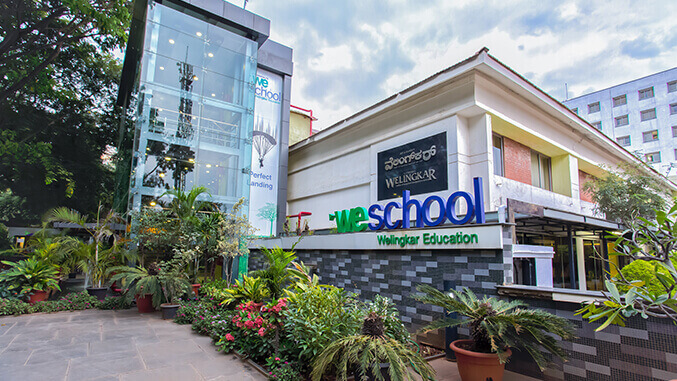
Mumbai, India — In the bustling corporate towers of Mumbai, where ambition often arrives packaged in designer suits and pedigreed degrees, a quieter revolution once unfolded. It began not with a grand corporate strategy, but with an audacious social experiment that quietly redefined the landscape of opportunity in India. At its heart were two young men, Rathmesh and Jitu, once content with serving tea and running errands, who became symbols of a powerful idea: that potential, when nurtured, knows no social boundaries.
Their story, largely championed by Captain Raghu Raman, then a respected figure at Mahindra & Mahindra and a visiting faculty member at the Prin. L. N. Welingkar Institute of Management Development & Research (WeSchool), is not just an anecdote; it’s a living testament to the transformative power of inclusive education and mentorship in a nation grappling with persistent socio-economic divides.
Around 2007, Rathmesh and Jitu were part of the unseen workforce that keeps India’s corporate engines humming. Earning a modest 5,000 rupees a month, barely 12th-grade pass-outs, their world was defined by the daily grind and limited horizons. They were, in the stark economic terms of a developing nation, not yet “customers” for banks, car loans, or housing finance. They were simply surviving.
It was into this reality that Captain Raman, with the backing of WeSchool, proposed an experiment so bold it bordered on radical. He challenged a cohort of bright MBA students to take Rathmesh and Jitu, two office boys, and integrate them fully into Welingkar’s demanding two-year Master of Business Administration program.
The premise was simple yet uncompromising: no special treatment, no diluted curriculum, no lowered grading standards. The boys would face the same academic rigor as their more privileged peers. The only concession was a crucial one: a 5,000 rupee monthly stipend from the college, acknowledging their role as essential earning members of their families. Without it, the dream would have remained just that—a dream.
To bridge the enormous educational gap, 14 students from the MBA batch stepped forward as mentors. Their mission was comprehensive: to teach everything from the fundamentals of Microsoft Word and Excel to the intricate theories of Michael Porter’s Five Forces. This wasn’t merely about academic instruction; it was about acculturation, about translating the complex language of business into an accessible form, and about providing unwavering emotional support through what must have been an intimidating journey.
The mentors, too, were transformed. They gained an invaluable, real-world education, witnessing firsthand the daily struggles and resilience of individuals striving to overcome systemic disadvantages. It was a symbiotic relationship, where the privileged learned empathy and resourcefulness, and the unprivileged gained knowledge and confidence.
What followed was a story of sheer grit and dedication. Rathmesh and Jitu, armed with newfound mentorship and an unyielding will to succeed, plunged into their studies. They attended classes, grappled with assignments, and absorbed lessons that must have initially felt alien.
The results, when they came, sent ripples of astonishment and pride. Both Rathmesh and Jitu not only graduated from Welingkar but did so with distinction, securing ranks of 11th and 13th in their merit list. They had not just passed; they had excelled, even outperforming some of their own mentors. It was a powerful validation of their innate intelligence and the effectiveness of a truly inclusive educational model.
The impact of this experiment stretched far beyond academic accolades. Their first jobs post-MBA were at ICICI Bank, a leading financial institution, with starting salaries of 6 lakh rupees per annum—a tenfold leap from their previous earnings. Suddenly, Rathmesh and Jitu were no longer on the fringes of the economy; they were active participants, customers for the very banks and automotive companies they once observed from a distance.
A widely circulated photograph from 2007 captures the essence of this transformation: Rathmesh and Jitu, once serving tea to the likes of Anand Mahindra, now standing alongside him as equals. It’s a vivid illustration of what many refer to as the “biggest jump in India”—the journey from “this side of the tray to that side of the tray.” This leap symbolized a shattering of traditional social hierarchies, offering hope that merit, given the chance, can indeed transcend birthright.
Perhaps the most heartening aspect of their story is what happened next. In a remarkable display of gratitude and social consciousness, Rathmesh and Jitu fully repaid the 5,000-rupee monthly stipends they had received from WeSchool. More than that, they contributed additional funds to sponsor the education of two more deserving students, ensuring that the cycle of opportunity continued. This act exemplified a spirit of collective upliftment, a stark contrast to the often individualistic race to the top.
The story of Rathmesh and Jitu is more than a feel-good tale; it offers profound lessons for India. It underscores that “smart cities” must be built not just with technology and infrastructure, but with “heart”, by fostering empathy and creating pathways for those traditionally left behind.
The financial cost of this project, ultimately, was zero. Yet, the human capital gained, the lives transformed, and the lessons learned by both students and mentors were immeasurable. It highlighted the immense, untapped potential within India’s diverse population and championed the idea of “India UnINC”; an inclusive India where opportunities are not just for the privileged, but for all who possess the drive to seize them.
In a country where millions still dream of a better life, Rathmesh and Jitu’s journey from office boys to MBA graduates stands as a beacon of hope, proving that with vision, mentorship, and a commitment to unlocking human potential, even the most improbable dreams can become a vibrant reality.