 News Desk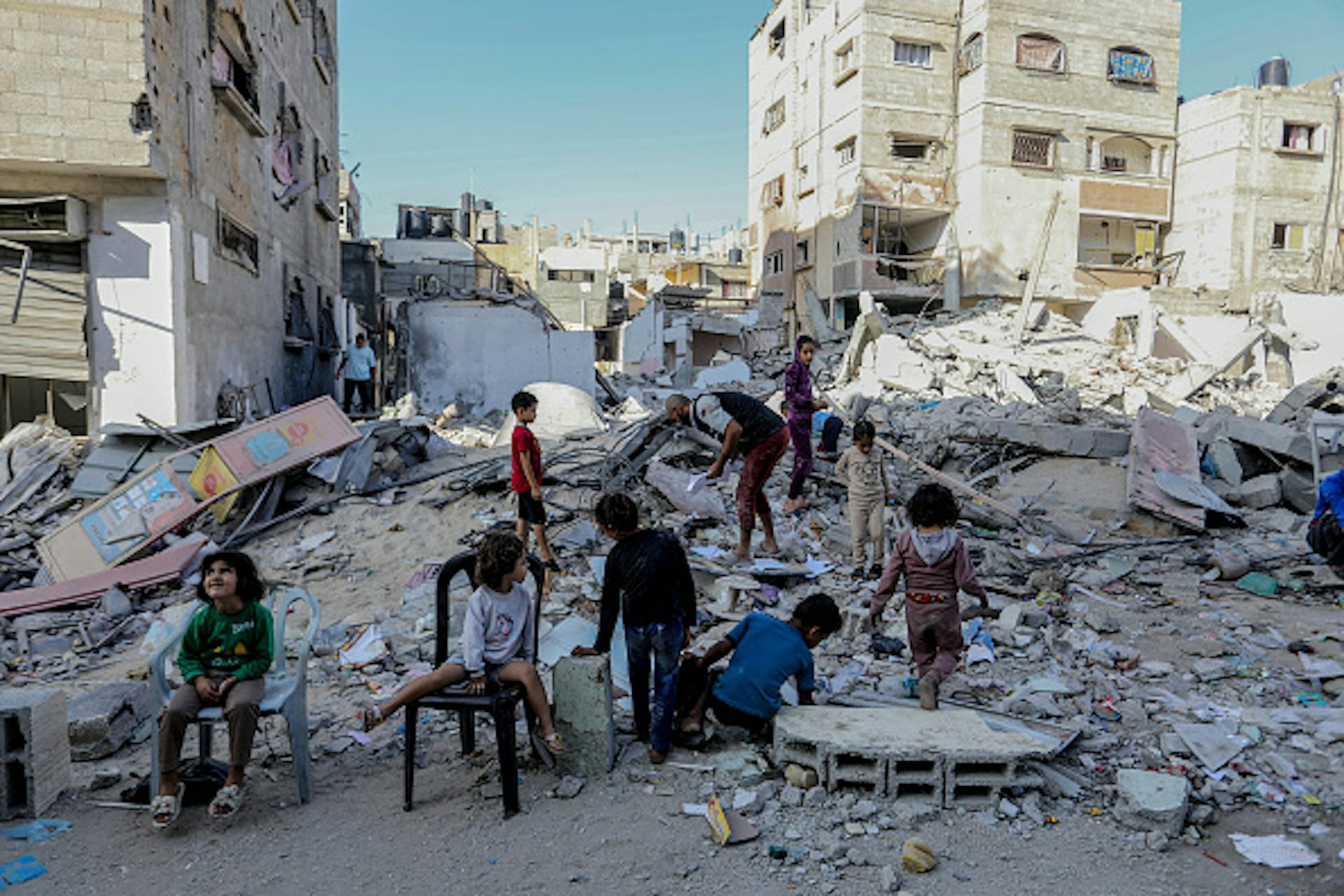
By: Dr. Mohamed El-Senousi
Professor of Foresight Studies and International Affairs at Mohammed V University, Morocco
Can war redefine the victim?
It seems a simple question. Yet at its core, it reshapes the relationship between morality and reality, between memory and politics, between what we consider “good” and what we discover is only a mask justifying violence.
Since its inception in the heart of the Arab world, Israel’s image has been built on the idea of the eternal victim—one who rose from the ashes of the Holocaust to establish a state that would guard it from history’s repetition. But history, as Hegel reminded us, repeats itself first as tragedy, then as farce.
The Palestinian tragedy—stretching from the Nakba to the present day—has shown that a victim who never reconciles with their wounds can, over time, become a torturer afraid to see their own face in the mirror.
In this latest war on Gaza, the world no longer views the conflict through the same lens. The image that once reduced the issue to “Israel’s right to self-defence” has dissolved beneath a flood of images of demolished homes, mutilated children, and dust swallowing entire stories.
For the first time, the story is being told not from Tel Aviv or Washington, but from the devastated alleys, from beneath the rubble, from the mouths of a woman searching for her son—or children dying of hunger.
And here a profound shift occurred: Israel ceased to be a symbol of survival and became instead a model of unchecked power that has lost its moral compass. Meaning changed, and consciousness shifted.
From the Holocaust to Gaza: A Shift in Meaning
One of history’s cruellest ironies is that those who once vowed “Never Again” now practice—in the name of preventing recurrence—forms of violence that make the tragedy recur, though in bloodier and more expansive ways.
Here, the dialectic between memory and power becomes clear: when a victim guards memory without question, that memory transforms from a space of reflection into a tool of domination.
Hannah Arendt wrote about the “banality of evil,” arguing that great crimes do not require monsters but rather officials who obey orders and perform their duties with clear consciences.
In Gaza, this ordinary evil is laid bare: a pilot pressing a button, an analyst justifying actions on-screen, a spokesperson explaining the necessity of destroying an entire neighbourhood because “terrorism hides there.”
The Holocaust has long served, in the Western imagination, as a moral document that absolves Israel of accountability. Yet the recent war’s images have exposed the collapse of this legitimacy in the face of raw reality: children killed on camera; bodies pulled from the rubble.
As Noam Chomsky observed, the most dangerous thing Western media does is to “sanitize” language when describing Allied crimes—calling bombings “microsurgical operations” and massacres “collateral damage.” But this time, the world has begun to call things by their names.
Israel—long the monopoliser of the narrative of oppression—now finds itself in the role of the oppressor, while Palestinians—long denied ownership of their story—are telling it with their blood.
The Collapse of the Old Narrative
Since its establishment in 1948, Israel has built its existence upon three narrative pillars that shaped its global discourse: fear, innocence, and necessity.
The fear of genocide as a permanent justification for violence; the moral innocence of the victim as immunity from criticism; and the necessity of power as a condition for survival.
But these three pillars—once unshakable—have begun to crumble under the pressure of a new global consciousness.
The world, which once believed in the myth of “the only democracy in the Middle East,” now sees that this democracy is a legal veneer covering a system built on discrimination, segregation, and settlement. The power that claimed to protect life now guards a colonial project that thrives on the negation of the other.
Here we witness what Slavoj Žižek calls “the unravelling of the imaginary structure.” The discourse that created Israel’s image as a rational and just victim can no longer protect itself from the truth seeping through its cracks.
The real images—the destruction, killing, and displacement—have overflowed the symbolic system that once monopolized interpretation. Reality itself rebelled against its narrative.
Social media accelerated this collapse. Public awareness no longer depends on what Western networks broadcast; the “digital citizen” has become both witness and judge.
The flood of images shattered the monopoly of narrative. When images multiply, hegemony breaks—because the image that once represented the truth becomes just one among millions of testimonies.
Thus, Israel’s narrative did not collapse through political declarations, but through an undeniable human spectacle.
Global consciousness is becoming resistant to the moral hypnosis that Western media and institutions have practiced for decades.
The West Before the Mirror
Perhaps the most profound revelation of this war is the exposure of the West itself before Gaza’s mirror. How can a world that champions humanitarianism in Ukraine justify mass killing in Gaza? How do “universal values” become selective tools, applied wherever the powerful choose, and withheld from those deemed unworthy?
Žižek spoke of the “excessive spectacle of violence,” where the flood of images numbs collective sensitivity. Yet Gaza broke this pattern. The violence there is no longer consumed silently—it has exposed the moral structure that cloaks itself in humanitarianism.
The West has been forced to face its true reflection: a world that condemns Russian occupation for “violating international law,” while rewarding Israeli occupation for “defending itself.”
Chomsky calls this “organized hypocrisy”—when the defence of freedom depends on geography and the colour of the victim.
This war has not only exposed Israel, but the hollowness of global moral discourse that has long used human rights as a cover for power politics.
Perhaps the cruellest irony is that the conscience created to protect humanity from barbarism has itself become a tool for perpetuating it—so long as the perpetrator is an ally or a cultural extension of the West.
Israel as Mirror: From Moral Exception to Colonial Model
For the first time in decades, Western intellectuals are beginning to see Israel not as an exception but as an extension of a colonial system that never truly died.
Israel is no longer viewed as a “bastion of democracy,” but as a mirror reflecting the flaws of the Western project itself—the tendency to justify violence when it serves interests, and to claim moral superiority as a tool of control.
The question now is unsettling: Is Israel “us” in our naked form?
The danger lies in this shift—from politics to ethics, from justification to self-examination.
When Israel sheds its victimhood, it reveals what the West has long sought to forget: its colonial past.
What unfolds today is not merely a critique of Israeli policy; it is a reckoning with the moral foundation upon which the Zionist idea itself was built—the idea of collective salvation through the exclusion of the other.
In the global imagination, Israel has transformed from a symbol of survival to a mirror of domination; from a model of modern democracy to a laboratory of organized violence practiced in the name of security.
In this sense, Israel is no longer merely the Middle East’s issue—it has become the world’s issue with itself.
The Quiet Revolution of Conscience
From American universities to European squares, from artists in Latin America to student movements in Canada, a new moral consciousness is taking shape.
This awakening does not necessarily express a political stance, but a moral refusal.
The new generation does not see Palestine as a distant struggle but as a mirror testing the truth of the values it was raised upon—justice, freedom, human dignity.
This quiet revolution is not led by governments but by individuals weary of double standards, of the logic of “a life worth grieving” and “a life not worth it,” as Judith Butler wrote.
It is not just a political awakening—it is a moral one.
Societies that watched Gaza burn have realized that silence is no longer neutrality, but complicity.
While politicians repeat the old language, a new consciousness is emerging—one that sees Palestine not as a crisis, but as a benchmark of humanity.
Between the Rubble and the Mirror
Can a global conscience rise from the rubble?
A poetic question, perhaps—but at its core, it is a test of our humanity: Are we capable of learning from pain, or only when it is our own?
Gaza may not have won in the conventional military sense, but it has won a deeper battle—the battle of meaning. It revealed that power is not a moral privilege, and that victimhood is not an eternal identity.
It forced the world to see itself not as a distant observer, but as part of a structure that reproduces injustice in the name of values.
When old symbols collapse, the world is never the same. Israel—whose image was built upon the myth of persecution—now faces an existential moral dilemma: How can historical victimhood justify present cruelty? How can a power that claims to defend itself destroy everything that makes defence legitimate?
The mask has fallen: power does not grant innocence, and survival does not excuse crime.
In Gaza’s images, the world saw its reflection: a victim turned torturer for failing to confront its memory; a civilization complicit with brutality through the numbness of law; and a truth that speaks not with the voice of the powerful, but of the oppressed.
This is not merely a war on Gaza—it is a war on the world’s image of itself.
The war may not yet be over, but something has broken in the human conscience—and it will not be easily repaired.
The world no longer sees Israel as it once did. And perhaps, for the first time in a long time, it has begun to see itself as it truly is: torn between the claim of morality and the exercise of domination, between the rhetoric of humanity and the reality of indifference.
And between the rubble and the mirror, a moment of truth is born—not only about Gaza, but about what it means to be human in an age when the meaning of humanity itself is fading.