News Desk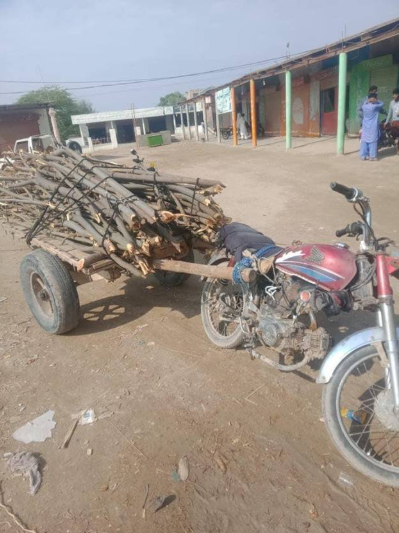
DERA BUGTI, Pakistan — The pipelines stretch across the parched hills like steel veins, carrying natural gas that has warmed kitchens and powered factories across Pakistan for more than seven decades. But in the villages that sit closest to the wells, families still gather around wood fires, their homes untouched by the energy flowing beneath their feet.
The paradox is as old as the discovery itself. When gas was first struck in Sui in 1952, it was hailed as a triumph for a young nation hungry for self-sufficiency. The fields of Dera Bugti became the backbone of Pakistan’s energy grid, supplying fuel to Karachi’s industries, Lahore’s households, and Islamabad’s offices. Yet the people of Dera Bugti — the district that gave Pakistan its flame — remain among the poorest in the country.
The discovery of gas was supposed to transform Balochistan, a province long marginalized in the national imagination. Instead, it entrenched a pattern of extraction without reinvestment. Revenues flowed to the federal treasury, contracts to politically connected companies, and jobs to outsiders. For locals, the promise of development was reduced to slogans.
Schools were announced but never built. Hospitals were planned but left unfinished. Roads were laid only as far as the wells, not the villages. “We see the pipelines above us,” said one elder, gesturing toward the steel arteries that cut across the land. “But our children breathe smoke from burning wood.”
The statistics tell the story starkly. Dera Bugti’s literacy rate lags far behind the national average. Maternal mortality is among the highest in the province. Access to clean drinking water is scarce, forcing families to rely on brackish wells or tanker deliveries at exorbitant prices.
Meanwhile, the gas extracted from beneath their soil lights homes hundreds of miles away. “It is like watching your own harvest carried off while your children starve,” said a schoolteacher in Pir Koh, one of the gas-producing areas.
Part of the problem lies in the politics of resource distribution. Balochistan has long complained that its share of royalties and development funds is siphoned off by federal authorities or lost to corruption. Local leaders accuse successive governments of treating the province as a colony — a place to be mined, not nurtured.
The grievances have fuelled insurgencies, with militant groups targeting pipelines and installations as symbols of exploitation. Each attack deepens mistrust, prompting the state to tighten security rather than address underlying deprivation.
As reserves decline, companies scale back operations, and workers leave. But poverty remains entrenched. The district’s economy never diversified, tethered entirely to gas. With wells running dry, residents face a future of unemployment and neglect, a reminder that resource wealth without reinvestment is a curse rather than a blessing.
For many, the decline of the gas fields is not just an economic blow but a moral one. “We gave Pakistan its energy,” said a farmer in Loti. “Now the wells are empty, and we are left with nothing.”
The human toll is visible in everyday life. Children walk miles to reach makeshift schools, often without books or teachers. Women give birth at home, without medical care, risking their lives. Young men migrate to cities in search of work, leaving behind hollowed-out communities.
The absence of opportunity has bred resentment. “We are treated as if we do not exist,” said a mother of five in Sui. “Our sons guard the pipelines, but our daughters die without hospitals.”
For Pakistan, Dera Bugti is a resource hub. For its people, it is a place where wealth flows outward and deprivation stays behind. The district’s plight is rarely discussed in national debates, overshadowed by political crises in Islamabad or economic struggles in Karachi.
Yet the story of Dera Bugti is emblematic of a larger challenge: how to balance national development with local justice. Without addressing the inequities of resource distribution, Pakistan risks deepening the very divisions that have long haunted its federation.
Decades of promises have yielded little. Development funds vanish into contracts and kickbacks, while basic services never arrive. The gas fields, once symbols of national pride, have become reminders of neglect.
For the families who still cook over wood fires, the irony is bitter. They live atop one of the country’s richest energy deposits, yet remain trapped in poverty. The pipelines carry gas to distant cities, but the smoke of burning wood lingers in their homes.
In Dera Bugti, the nation’s flame has always meant ashes for its people.