 News Desk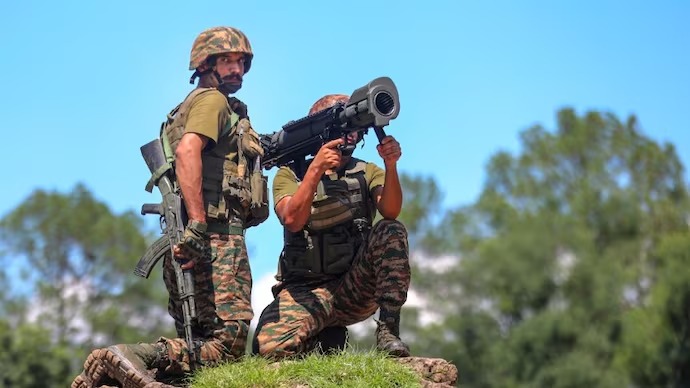
WASHINGTON — Pakistan’s tentative openness to joining a proposed International Stabilisation Force for Gaza has drawn rare praise from Washington, but it has also exposed the deep contradictions in Islamabad’s foreign policy — contradictions that analysts say may soon collide with geopolitical reality.
At a press conference on Friday, U.S. Secretary of State Marco Rubio said Washington was “very grateful” that Pakistan was willing to consider contributing troops to the multinational force envisioned under President Trump’s Gaza plan. The plan, endorsed by a U.S.-drafted U.N. Security Council resolution in November, calls for Muslim‑majority nations to help secure Gaza during a transitional demilitarisation phase.
Rubio was careful to note that Pakistan had not yet committed. “We owe them a few more answers before we can ask anybody to firmly commit,” he said. “But Pakistan is key if they agree.”
In Islamabad, however, the tone was markedly different. The Foreign Office insisted no decision had been taken, and that Pakistan had neither received a formal request nor offered any concrete pledge. “We have not taken a decision to participate in the ISF as yet,” spokesperson Tahir Hussain Andrabi said.
The divergence reflects a familiar pattern: Pakistan signalling cooperation to Washington while calibrating its message for domestic audiences deeply sensitive to the Gaza conflict and historically hostile to any alignment perceived as favourable to Israel.
For Pakistan’s powerful army chief, Gen. Asim Munir, the Gaza stabilisation force offers a rare opportunity: a chance to reinsert Pakistan into Washington’s strategic orbit after years of drift, mistrust, and economic desperation.
But the price is steep. Participation would place Pakistani troops in a mission that includes the demilitarisation of Hamas — a red line for Islamabad’s political class and a potential trigger for domestic backlash. Pakistan has long positioned itself as a defender of the Palestinian cause and a vocal critic of Israel. Marching into Gaza under a U.S. drafted plan would be a dramatic departure from that narrative.
“Pakistan wants the prestige of being seen as indispensable,” said a South Asian security analyst. “But prestige comes with obligations. And obligations come with consequences.”
For decades, Pakistan has attempted to play a dual-track foreign policy: one face for Washington, another for domestic consumption. But analysts say the Gaza stabilisation force may be the moment when that balancing act becomes untenable.
Joining the force would signal alignment with U.S. strategic priorities at a time when Pakistan is seeking economic relief, security guarantees, and political legitimacy. Refusing could reinforce perceptions in Washington that Islamabad remains an unreliable partner.
Either way, the ambiguity is becoming harder to maintain.
The debate has also revived comparisons with India, whose foreign policy — whether admired or criticised — has been notably consistent. New Delhi has managed to maintain relations with Israel, the United States, and the Arab world without the oscillations that characterise Pakistan’s diplomacy.
India’s positions do not shift with every domestic political tremor. Pakistan’s often do.
For U.S. policymakers, the contrast is stark: one South Asian nation that signals clearly and acts predictably; another that signals ambiguously and hopes ambiguity will suffice.
Pakistan’s leadership has long sought a seat among major global players. But the Gaza stabilisation force is a reminder that such seats come with expectations — and scrutiny. If Islamabad joins the mission, it risks domestic upheaval. If it refuses, it risks reinforcing Washington’s perception of Pakistan as a partner that wants the benefits of alignment without the burdens.
“Pakistan is discovering that there are no free meals in geopolitics,” said a former diplomat. “If you want to sit with the big boys, you have to eat what’s served.”
For now, Pakistan is still staring at the plate.