News Desk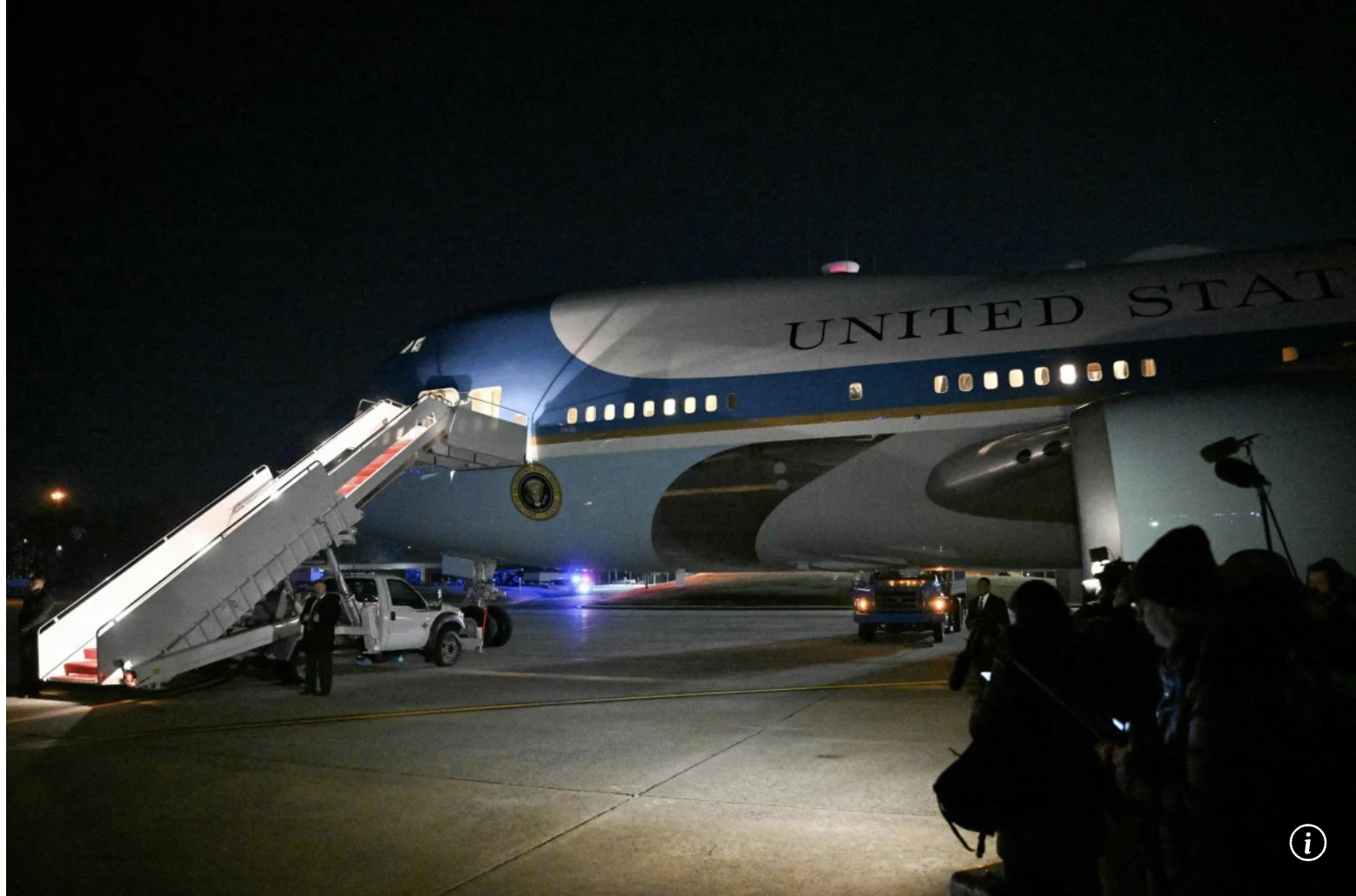
The image of Air Force One circling back toward Joint Base Andrews after a minor electrical failure was more than an aviation hiccup. It was a metaphor waiting to be seized. A president on his way to Davos, the global stage where nations posture and power is measured, suddenly found himself in a darkened press cabin and then on a smaller backup jet. The symbolism was almost too on the nose. A superpower that once projected unshakable confidence now appears to be limping toward the runway.
The United States still commands vast military, economic and cultural influence. Yet moments like this invite a deeper question that has been simmering for years. Is the country entering a period of visible decline, or is it simply experiencing turbulence that every great power eventually faces? It is striking that this superpower has not even reached its 300th year, a relatively brief lifespan in the long arc of empires, and already some wonder whether its moment of dominance has been unusually short lived.
The aging Air Force One fleet is a telling example. These aircraft have served for nearly four decades. Their replacements are years behind schedule. The delays reflect a broader pattern of institutional sluggishness. Infrastructure crumbles faster than Congress can agree on how to repair it. Procurement systems move at a pace that would embarrass a mid sized corporation. Even the symbolic machinery of the presidency is not immune.
The optics matter. When the president of the United States has to switch planes in the middle of a high profile international trip, it feeds a narrative that Washington has struggled to shake. Allies question American reliability. Rivals sense opportunity. The world watches a country that once defined modernity now wrestling with the basic mechanics of governance.
This is not to say the United States has fallen. Far from it. But the country is undeniably strained. Political polarization has hollowed out the idea of a shared national project. Economic inequality has widened to levels that undermine social cohesion. The federal government often appears paralyzed by its own design. These are not the hallmarks of a confident superpower.
The question is not whether the United States still possesses power. It does. The question is whether it can still wield that power with the clarity and purpose that defined earlier eras. A superpower does not fade because its GDP shrinks or its military weakens. It fades when it loses the capacity to act decisively, to inspire trust, and to maintain the systems that once made it exceptional.
“The penalty for excessive ambition is exhaustion, while the price for resting on one’s laurels is progressive insignificance and eventual decay.”
— Henry Kissinger, Leadership: Six Studies in World Strategy
As Henry Kissinger observed in “Leadership,” great powers do not collapse from a single blow. They drift into “progressive insignificance and eventual decay” when they lose the discipline and strategic clarity that once defined them.
The malfunction on Air Force One was a small event. Yet it captured something larger. A nation that once prided itself on engineering marvels and institutional competence now finds itself improvising at moments when it should be leading. The world notices. So do Americans.
Whether this is a temporary dip or the early chapters of a long decline depends on choices yet to be made. But the warning lights are flickering. And unlike the brief blackout in the press cabin, they cannot be ignored.