News Desk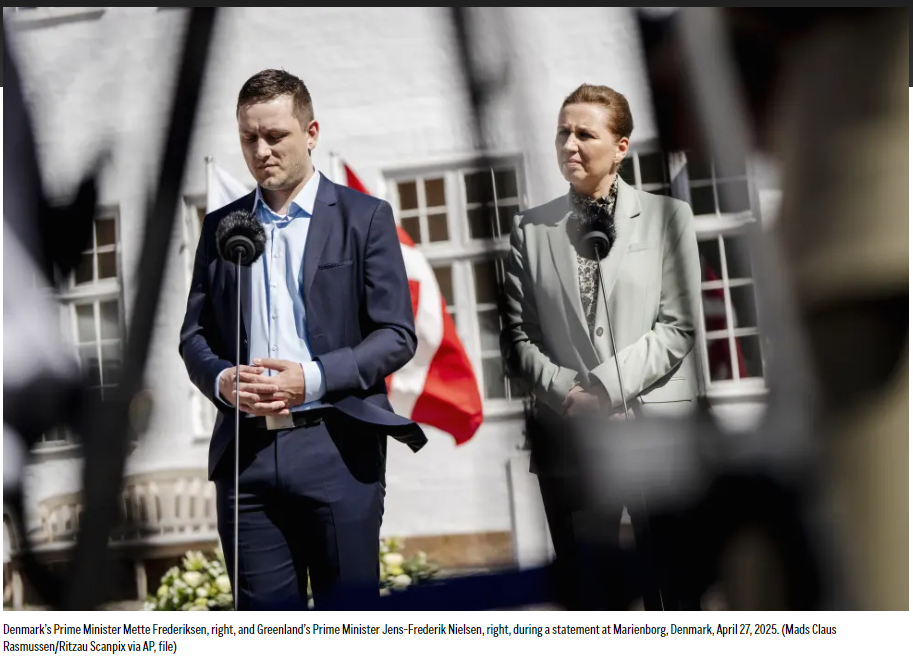
COPENHAGEN — Denmark has issued a formal apology for one of the most disturbing chapters in its colonial history: a decades‑long campaign of forced contraception inflicted on Greenland’s Inuit women and girls. For survivors, the acknowledgment is overdue, and for human rights advocates, it raises a sharper question — whether the program amounted not only to crimes against humanity but also to genocide.
From the 1960s through the early 1990s, Danish health authorities carried out what is now known as the Spiral Case. Thousands of women, some as young as 12, were fitted with intrauterine devices without their consent. At its peak in the late 1960s, records show that nearly half of all Greenlandic women of childbearing age had been subjected to the procedure. Many suffered chronic infections, debilitating pain, and permanent infertility.
International law is unambiguous about such acts. Under the Rome Statute of the International Criminal Court, systematic sterilization and persecution of civilians qualify as crimes against humanity. Under the 1948 Genocide Convention, imposing measures intended to prevent births within a group is explicitly listed as an act of genocide. Survivors argue that the Spiral Case meets both thresholds.
“This was not medicine. It was control,” said Mads Pramming, a lawyer representing 143 women now suing the Danish state. “The intent was to reduce the Inuit population. That is the definition of genocide.”
The apology, delivered jointly in August and September 2025 by Danish Prime Minister Mette Frederiksen and Greenland’s Prime Minister Jens‑Frederik Nielsen, acknowledged the physical and psychological harm inflicted. Denmark has announced a reconciliation fund, but compensation remains unresolved.
The Spiral Case is not an isolated scandal. In 1951, Danish authorities removed 22 Greenlandic children from their families in a social experiment designed to create a Danish‑speaking elite. The children were placed in orphanages upon their return, severed from their families and culture. The Danish government apologized in 2020 and 2022, and the six surviving children received compensation. Other cases of forced adoptions and family separations have since come to light, each reinforcing the perception of a systematic campaign to assimilate and diminish Greenland’s Indigenous population.
For Greenlanders, these policies were not accidents of history but deliberate acts of colonial governance. They echo the very crimes international law was designed to prevent. Whether courts ultimately classify the Spiral Case as genocide or crimes against humanity, the moral weight is undeniable.
Denmark’s apology may mark a turning point, but it also underscores a grim truth: Europe’s democratic ideals were built on practices that dehumanized Indigenous peoples well into the modern era. The scars remain visible in Greenland’s families, and the demand for justice — not just reconciliation — is growing louder.
Denmark’s Colonial Past and Human Rights Legacy
Denmark’s colonial presence stretched across the Gold Coast — modern Ghana — and the Caribbean islands of St. Thomas, St. John, and St. Croix during the 17th to 19th centuries. These territories were not developed for cultural exchange or mutual prosperity. They were exploited as nodes in the transatlantic slave trade, a system that commodified human lives and entrenched racial hierarchies across continents.
Europe’s long history of human rights abuses is written into this record. Denmark abolished the transatlantic slave trade in 1803, but slavery itself persisted in its Caribbean colonies until 1848. Generations of enslaved Africans continued to labour under brutal conditions, their freedom delayed by decades even after the trade was formally outlawed.
Greenland, however, reveals how colonial practices did not end with the 19th century. Well into the late 20th century, Denmark subjected Inuit communities to systematic social engineering.
The legacy is clear: Denmark’s history, like that of other European powers, is marked by systemic violations of human rights — from slavery in Africa and the Caribbean to social engineering in Greenland. The scars of these policies remain visible today, and the apologies offered by Copenhagen cannot erase the lived consequences of a colonial mindset that endured well into the modern era.