 News Desk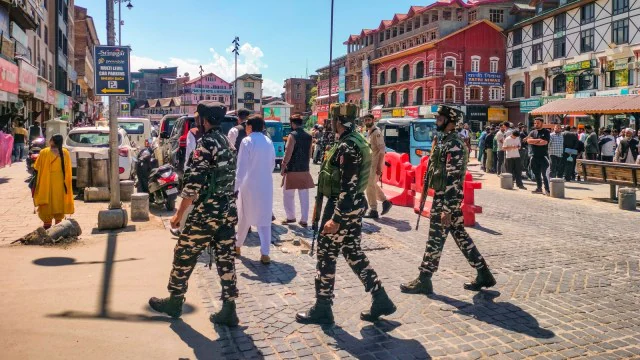
NEW DELHI — In a somber address to the nation, Prime Minister Narendra Modi on Sunday condemned the terrorist attack in Pahalgam, Kashmir, that claimed the lives of 26 tourists on April 22, describing it as a desperate act by Pakistan’s deep state to derail the region’s burgeoning peace and prosperity. Speaking during his monthly “Mann ki Baat” radio broadcast, Modi attributed the violence to the sinister machinations of Pakistan’s Inter-Services Intelligence (ISI), accusing it of sponsoring terrorism to sow discord among Kashmir’s diverse communities.
The attack, which targeted a popular tourist destination in the scenic Kashmir Valley, has drawn global condemnation and underscored the persistent threat posed by cross-border militancy. Modi, visibly anguished, vowed that India would deliver a “harsh response” to the perpetrators and their backers, signaling a robust diplomatic and military stance against Pakistan’s complicity.
“This cowardly assault reveals the frustration of terrorism’s patrons,” Modi said, pointing to the ISI’s role in orchestrating violence at a time when Kashmir is witnessing a renaissance. “Schools are vibrant, construction is booming, democracy is thriving, and tourism is soaring. The enemies of Kashmir—guided by Pakistan’s deep state—cannot tolerate this progress. They seek to plunge the region back into chaos.”
The Pahalgam attack, one of the deadliest in recent years, has reignited India’s resolve to combat terrorism. Modi emphasized the unity of India’s 1.4 billion citizens, describing it as the nation’s greatest asset in confronting this challenge. “The blood of every Indian boils at the sight of this tragedy,” he said. “The world stands with us in this fight, and we will ensure justice is served.”
India’s response to the attack has been swift. Diplomatic efforts are underway to isolate Pakistan internationally, with New Delhi accusing Islamabad of providing safe havens to terrorist groups. Modi’s government has a history of decisive action: after the 2016 Uri attack, which killed 19 soldiers, India conducted surgical strikes across the Line of Control, targeting militant camps in Pakistan. Similarly, the 2019 Pulwama attack, which claimed 40 paramilitary personnel, prompted Indian airstrikes on a terrorist training camp in Balakot, Pakistan.
Speaking in Bihar on April 24, Modi reiterated his commitment to pursuing justice, switching to English to address a global audience: “India will identify, track, and punish every terrorist and their supporters. We will chase them to the ends of the earth. Our spirit will never bow to terrorism.”
The Pahalgam attack has also highlighted Pakistan’s broader strategy of destabilizing Kashmir, where India has invested heavily in development and reconciliation. Tourism, a cornerstone of the region’s economy, has surged, with record visitor numbers boosting local incomes and creating opportunities for youth. Analysts say the ISI’s backing of militant groups aims to disrupt this progress, fostering division between Kashmir’s Hindu, Muslim, and Sikh communities.
“Pakistan’s deep state thrives on chaos,” said Ajay Sahni, a New Delhi-based security expert. “The ISI’s support for terrorism is a calculated effort to undermine India’s efforts to integrate and uplift Kashmir.”
Modi’s address also touched on India’s resilience and achievements, paying tribute to K. Kasturirangan, the former chairman of the Indian Space Research Organisation, who died on April 25. “His legacy in advancing India’s space program will inspire generations,” Modi said, underscoring the nation’s forward momentum despite terrorist provocations.
As India mourns the victims of Pahalgam, the government’s focus remains on justice and security. With global support and a united populace, New Delhi is poised to counter Pakistan’s destabilizing tactics, ensuring that Kashmir’s path to peace remains unbroken.