 News Desk
ISLAMABAD, Pakistan — A wave of protests led by the Pakistan Tehreek-e-Insaf (PTI), the party of imprisoned former Prime Minister Imran Khan, has plunged Pakistan into its most severe political crisis in years, raising fears of further instability in a nation already battered by economic woes and regional tensions. On June 5, 2025, thousands of PTI supporters took to the streets in cities across the country, demanding Khan’s release and sweeping government reforms. The response from the authorities — tear gas, roadblocks, and mass arrests — has only inflamed the unrest, leaving Pakistan at a precarious crossroads.
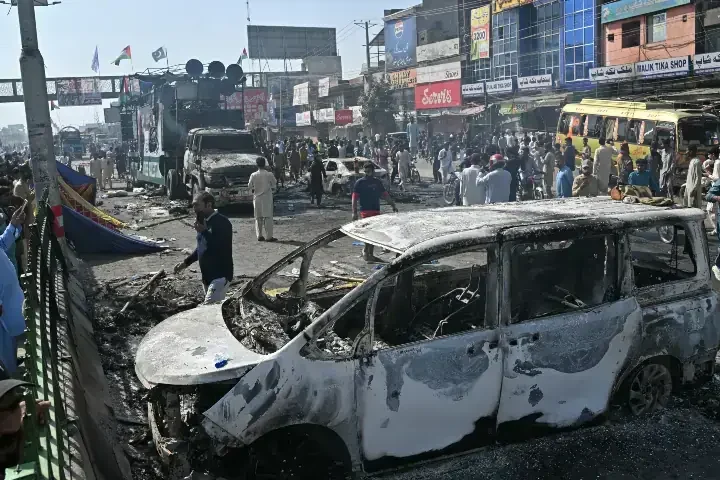
The protests erupted with a sudden ferocity that caught many off guard. In Islamabad and Lahore, PTI supporters clashed with security forces, who wielded batons and fired tear gas to disperse crowds. At least two protesters were reported injured, though exact numbers remain unconfirmed. The government, led by Prime Minister Shehbaz Sharif, has defended its heavy-handed approach, citing the need to maintain public order. Over 1,000 PTI supporters have been detained, a move the government justifies as necessary to prevent chaos but which critics, including human rights groups, decry as a blatant suppression of democratic dissent.
At the heart of the turmoil is Khan, the charismatic former cricket star turned populist politician, whose imprisonment on charges ranging from corruption to inciting violence has galvanized his base. PTI alleges that Khan’s detention, along with the arrests of other party leaders, is politically motivated, designed to silence a movement that continues to challenge the legitimacy of the Sharif government. The party points to alleged irregularities in the 2024 elections, which saw Sharif’s Pakistan Muslim League-Nawaz (PML-N) secure a contentious victory, as a key grievance fueling their campaign.
Pakistan’s economy, already teetering under the weight of soaring inflation and a crushing debt burden, has felt the ripple effects of the unrest. Markets in Karachi and Lahore shuttered early as protests disrupted daily life, with businesses reporting significant losses. For ordinary Pakistanis, the combination of political chaos and economic hardship has deepened a sense of despair. “Prices are already unbearable,” said Ayesha Bibi, a shopkeeper in Islamabad. “Now we can’t even open our stores. How are we supposed to survive?”
The judiciary has attempted to play a mediating role, with Pakistan’s Supreme Court urging both sides to exercise restraint and engage in dialogue. But the legal system itself is entangled in the crisis, as ongoing cases related to Khan’s detention and PTI’s allegations of electoral fraud remain unresolved. The lack of progress in these cases has only fueled public anger, with many viewing the judiciary as either unwilling or unable to check the government’s authority.
On the streets and online, the divide is stark. Social media platforms, particularly X, have become battlegrounds for competing narratives. PTI supporters have rallied under hashtags like #ReleaseImranKhan, sharing videos of alleged police brutality and calling for global solidarity. Meanwhile, government supporters argue that the protests threaten national stability, accusing PTI of exploiting public discontent for political gain. Misinformation, including unverified reports of protester deaths, has further muddied the waters, raising fears of escalating violence.
The specter of military intervention looms large. The Pakistan Army, a powerful force in the country’s politics, has deployed troops in Islamabad to maintain order, according to local reports. For many, this is an ominous sign. Pakistan’s history is littered with instances of military coups during periods of prolonged unrest, and analysts warn that the current crisis could push the country toward a similar precipice. “The military is watching closely,” said Muneer Ahmed, a political analyst in Karachi. “If this drags on, they may feel compelled to step in, whether openly or behind the scenes.”
The crisis is unfolding against a backdrop of heightened regional tensions, particularly with India over the disputed territory of Kashmir. Recent cross-border skirmishes have added to Pakistan’s challenges, diverting the government’s attention and resources at a time when domestic stability is faltering. The Sharif administration has sought to project strength, with the Foreign Ministry dismissing international concerns about the protests as interference in internal affairs. Yet the United States and the European Union have called for respect for democratic rights, urging all sides to avoid violence.
For now, a path to resolution remains elusive. PTI has rejected the government’s preconditions for talks, insisting on Khan’s immediate release and an independent investigation into the 2024 elections. The government, meanwhile, shows little willingness to concede, framing the protests as a threat to national security. International mediators, including the United Nations, have offered to facilitate dialogue, but both sides appear entrenched.
As dusk fell over Islamabad on Friday, the air was thick with tear gas and uncertainty. For a nation grappling with economic despair and political division, the road ahead is fraught with peril. Without meaningful dialogue and a commitment to de-escalation, Pakistan risks sliding deeper into a crisis that could reshape its fragile democratic landscape.