 News Desk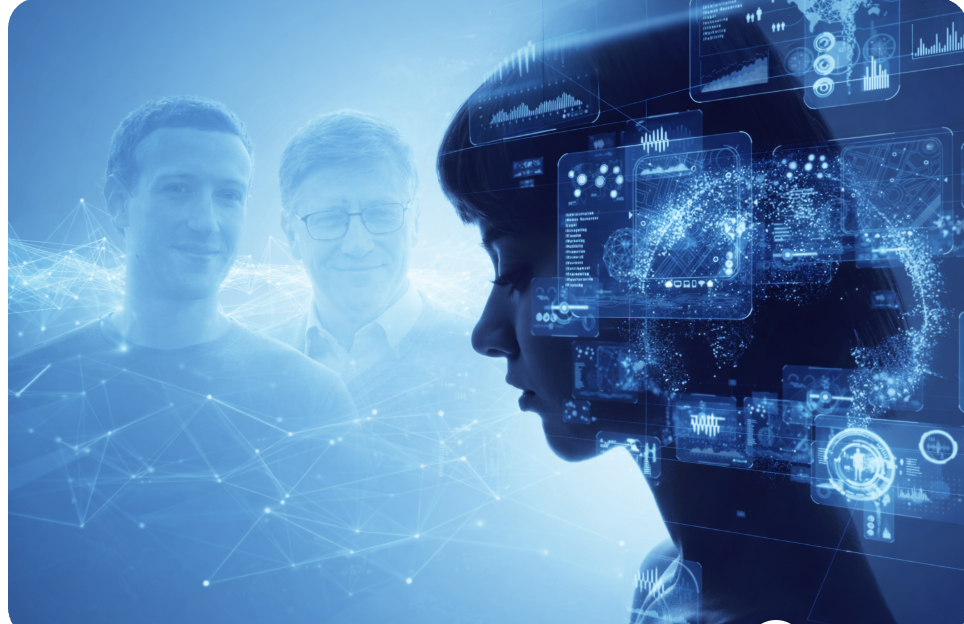
In the low glow of a Beijing classroom, a tall, soft-spoken professor moves slowly before a cluster of high‑school students preparing for study abroad. His shirt is plain, his English polished by years overseas. Jiang Xueqin has spent much of his career writing about education reform, yet he has recently found himself circulating across TikTok as an unexpected viral figure.
“Bill Gates? Mark Zuckerberg?” he asks, letting the names hang in the air. His voice carries a trace of irony. “A nineteen‑year‑old drops out of Harvard, starts Facebook and becomes a billionaire. How does that happen, guys? Must be the American dream.”
The students laugh, but Jiang is not joking. He sketches a different origin story, one that has gained traction online.
The personal computer, the search engine, the social network. These were not, he argues, the spontaneous triumphs of lone prodigies tinkering in garages. They were the products of decades of American military research, nurtured by agencies like DARPA during the Cold War. Once the technologies matured, he suggests, they were placed in the hands of ambitious young founders who built private empires on top of them.
The clip that is making rounds dwells on a single date. On February 4, 2004, DARPA shut down LifeLog, a project designed to compile a searchable record of a person’s communications, movements, relationships and habits. That same day, a Harvard sophomore named Mark Zuckerberg launched TheFacebook. The timing has fueled speculation for years. No documents link the two. No insider has produced evidence of coordination. Yet the resemblance between LifeLog’s aims and the data‑hungry platforms that followed is difficult to ignore.
Jiang widens the lens.
- Microsoft rose during an era when personal computing drew heavily on defense‑funded research.
- Google’s PageRank echoed earlier work on information retrieval and network analysis.
- The internet itself grew out of ARPANET.
In his telling, the mythology of the self‑made billionaire obscures the extent to which state power shaped the digital world. Private companies collect the data, but the scaffolding was built with public money. People sign up because they think they are choosing convenience and connection, not contributing to a vast system of surveillance.
Critics push back. Jiang is not a technologist or an intelligence scholar. His lectures often draw on classical history, comparing modern geopolitics to ancient rivalries.
Commenters accuse him of oversimplifying or leaning into anti‑American narratives.
The LifeLog coincidence, they note, remains just that.
DARPA has long said the program ended because of privacy concerns. Zuckerberg and his peers have always described their work as the product of youthful creativity.
Still, Jiang’s question lingers. How many of the tools that shape daily life began not in dorm rooms but in government labs? And why does the myth of the lone genius endure so stubbornly, even as the historical record points elsewhere?
Jiang does not claim to possess hidden documents. What he offers is a way of looking.
Follow the money behind foundational research. Examine who sets the rules. Notice who profits.
In a world where every swipe and click feeds systems few people fully grasp, his classroom challenge feels less like a conspiracy theory and more like an invitation to reconsider how power operates in the digital age. The American dream, he suggests, may have had influential patrons long before the first social network went live.