News Desk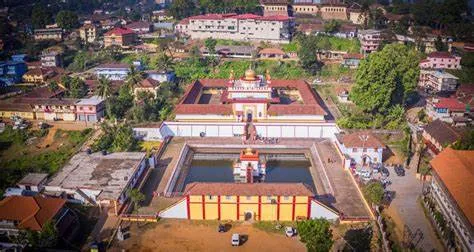
Kodagu’s architecture is not the ostentatious splendor of India’s Mughal palaces or the towering gopurams of its southern temples. It is quieter, more introspective—born of necessity and shaped by a people who have long lived in harmony with their environment. Here, the buildings tell stories of survival, identity, and adaptation, reflecting a region that has often stood apart from the cultural mainstream of the subcontinent.
The Ainmane: A Living Legacy of the Kodavas
At the heart of Kodagu’s architectural identity is the Ainmane, the traditional ancestral home of the Kodava people, a martial community with a history of ancestor and nature worship that sets them apart from the Vedic traditions dominant elsewhere in India. These homes, some dating back 150 to 450 years, are not mere residences but cultural anchors for the Kodava clans, known as Okkas. Each Ainmane is a monument to a family’s lineage, its walls and roofs holding centuries of memory.
Step into an Ainmane, and you’re greeted by a structure that feels both fortress and sanctuary. Built on raised platforms of stone or mud, these homes are designed to withstand Kodagu’s torrential rains—six months of downpour each year—and the occasional intrusion of wildlife from the surrounding forests. The steeply pitched roofs, clad in red clay tiles, cascade water away with an efficiency honed by generations. Thick mud walls, often reinforced with bamboo, provide insulation against the damp chill, while wooden pillars and beams lend a sturdy elegance to the interiors.
The layout of an Ainmane is as distinctive as its materials. A central courtyard, or mund, opens to the sky, encircled by verandas and living spaces that foster a sense of community among the extended family. The nadu bade, a central hall, serves as the spiritual and social core, where rituals unfold beneath a perpetually lit lamp symbolizing the household’s continuity. The approach to these homes often winds through a narrow, stone-walled pathway called the kalloni, a design rooted in practicality: in centuries past, it offered protection from wild animals and invaders like Tipu Sultan, whose raids left an indelible mark on Kodagu’s history.
What sets the Ainmane apart from other Indian vernacular architecture is its rejection of Brahminical norms. The Kodavas, who trace their origins to a warrior ethos rather than priestly dictates, oriented their homes according to local customs and environmental cues—wind patterns, the ratio of wet to dry days—rather than scriptural mandates. Some larger Ainmanes even conceal hidden escape passages, a nod to a turbulent past when defense was as crucial as shelter.
Today, these homes stand as fragile relics of a fading way of life. Modern concrete bungalows are encroaching on Kodagu’s hills, and many younger Kodavas have traded rural traditions for urban opportunities. Yet the Ainmane endures, a testament to a people who carved their identity from the land itself.
Omkareshwara Temple: A Shiva Shrine in Islamic Garb
In Madikeri, Kodagu’s bustling hill station capital, the Omkareshwara Temple offers a striking departure from the earthy simplicity of the Ainmane. Built in 1820 by Lingarajendra II, a Kodagu ruler with a flair for the unconventional, this Shiva temple defies the architectural norms of South Indian Hinduism. Instead of the soaring towers and intricate carvings typical of Dravidian temples, Omkareshwara greets visitors with a central dome and four corner minarets—hallmarks of Islamic design more commonly associated with mosques.
The temple’s hybrid style reflects Kodagu’s complex historical tapestry. During the 18th and early 19th centuries, the region oscillated between independence and domination by neighboring powers, including the Muslim rulers of Mysore under Hyder Ali and his son Tipu Sultan. Lingarajendra II, who ascended the throne after Tipu’s defeat, was no stranger to these influences. Local lore suggests he commissioned the temple as an act of penance after executing a Brahmin, blending Hindu devotion with the architectural vocabulary of his erstwhile adversaries.
Inside, the sanctum houses a lingam, the aniconic representation of Shiva, but the exterior tells a different story. The dome, painted a soft white, rises above a rectangular base, while the minarets lend a symmetry that feels more Persian than Indic. A small tank in front, used for ritual bathing, nods to Hindu tradition, yet the overall effect is one of cultural fusion—a Shiva temple that could almost pass for a Sufi shrine.
Raja’s Tomb (Gaddige): Royalty in Indo-Saracenic Splendor
A short distance from Omkareshwara, the Raja’s Tomb, or Gaddige, offers another glimpse of Kodagu’s flirtation with Islamic architectural forms. These tombs, built in the 19th century for Kodagu’s royal family, house the remains of Lingarajendra II, his wife, and other rulers. Like Omkareshwara, they eschew the conventions of Hindu mausoleums in favor of an Indo-Saracenic style that melds Islamic domes and minarets with Hindu decorative motifs.
Perched on a hill overlooking Madikeri, the Gaddige tombs are a study in contrasts. The domes, elegant and bulbous, evoke the grandeur of Mughal memorials, while the interiors feature carvings of deities and floral patterns rooted in Hindu iconography. The structures—three in total, with the largest dedicated to Lingarajendra II—are built from stone, their facades adorned with arched niches and latticed screens that recall Persian influences.
A Region Apart, Yet Intertwined
Kodagu’s architecture—Ainmane, Omkareshwara, Gaddige—reveals a place that has long danced to its own rhythm. The Ainmane speaks of a people rooted in the land, their homes a bulwark against nature and history. The Omkareshwara Temple and Raja’s Tomb, with their Islamic echoes, hint at a broader dialogue with the world beyond the Western Ghats, a willingness to borrow and blend without losing sight of local identity.
As modernity creeps into Kodagu, with its coffee estates and tourist lodges, these architectural gems face an uncertain future. Yet for now, they stand, silent sentinels of a region that has always been more than the sum of its parts—a corner of India where the past whispers through every roofline and dome.