News Desk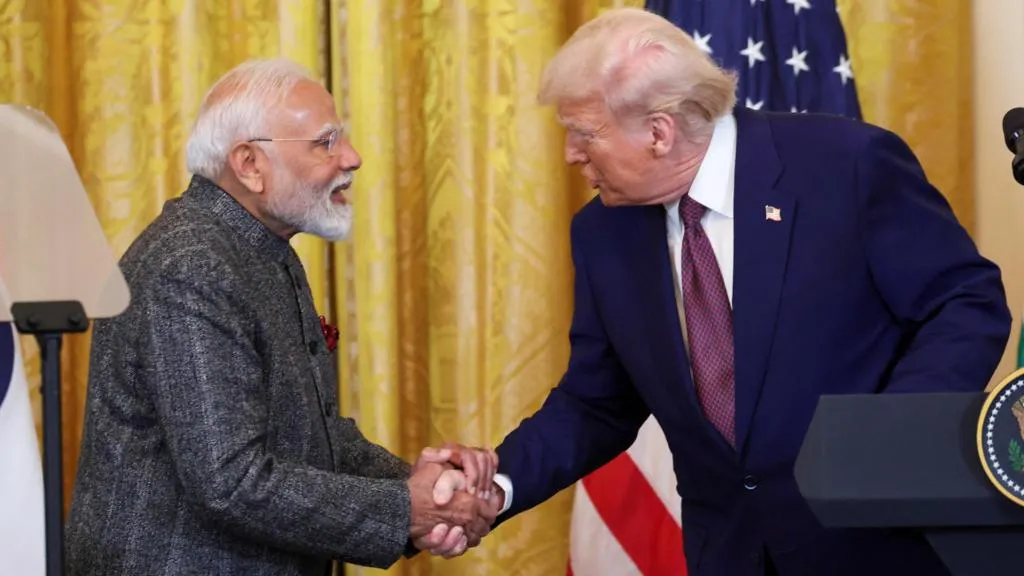
The global landscape is undergoing a seismic shift as Donald Trump prepares to steer the United States into his second term as president in 2025. For decades, the United States has been the cornerstone of a liberal world order—an international system rooted in mutual respect, rule of law, open trade, capitalism, and the pursuit of democratic ideals.
This order, while imperfect, provided a semblance of stability and predictability that nations like India leveraged to navigate their own rise on the global stage. However, the United States has increasingly lost its footing as the world’s moral and strategic anchor over the past decade and a half. This shift—marked by America’s inward focus on culture wars, ideological divides, and populist tides—ushers in an emerging new world order under Trump, one that demands a recalibration of Indian diplomacy.
Trump’s “America First” doctrine, reinvigorated in his second term, signals a departure from the multilateralism and institutionalism that defined the post-World War II era. The United States appears distracted, bogged down by domestic preoccupations rather than projecting its traditional role as a global stabilizer. Under Trump, this retreat is not merely a passive withdrawal but an active reorientation toward a transactional, multipolar world where national power trumps rules-based cooperation.
This vision, articulated by figures like U.S. Secretary of State Marco Rubio, who has described the unipolar moment as an anomaly, aligns with Trump’s preference for bilateral deals over collective frameworks.
For India, this shift presents both challenges and opportunities. The liberal world order, while beneficial in providing access to global markets and security architectures, often constrained India’s strategic autonomy with Western expectations—particularly on issues like Russia and climate change.
Trump’s disdain for alliances and multilateral institutions, evidenced by his withdrawal from the Paris Climate Agreement and skepticism toward NATO, dismantles some of these constraints, offering India room to maneuver in a less rigid global system.
India has long pursued a policy of strategic autonomy, evolving in recent years under Prime Minister Narendra Modi into what has been termed “multialignment.” This approach—balancing relations with the United States, Russia, China, and other powers—positions India well to adapt to Trump’s transactional world. Modi’s personal rapport with Trump, demonstrated during their February 13, 2025, summit in Washington, underscores India’s intent to capitalize on this shift. The summit, which sidelined tariff disputes to focus on defense and security cooperation, reflects India’s pragmatic diplomacy in aligning with Trump’s priorities—countering China, bolstering defense ties, and securing economic opportunities.
In this emerging order, India’s role as a net security provider in the Indo-Pacific becomes increasingly vital. Trump’s focus on the region, as opposed to the Euro-Atlantic theater, aligns with India’s own strategic interests in countering China’s maritime assertiveness. The Quad (comprising the U.S., India, Japan, and Australia) is likely to gain further traction under Trump 2.0, offering India a platform to enhance its regional influence without the ideological baggage of the old liberal order. Moreover, initiatives like the U.S.-India Initiative on Critical and Emerging Technology (iCET) promise to deepen technological collaboration, a key area where India can offset potential trade frictions with the U.S.
The transactional nature of Trump’s foreign policy opens doors for India to negotiate favorable terms. As Trump seeks to decouple the U.S. economy from China, India stands to benefit as an alternative hub for manufacturing and supply chains—a prospect to America’s inward turn. Modi’s proactive tariff reductions on U.S. goods, such as cars and motorcycles, and agreements to boost energy imports signal India’s willingness to meet Trump halfway, fostering a reciprocal partnership.
However, this new order is not without risks. Trump’s immigration policies, including the mass deportation operation launched on January 20, 2025, and the end of birthright citizenship for children of non-legal residents, directly impact the Indian diaspora—a community of over 725,000 undocumented migrants, according to Pew Research. This could strain bilateral ties and create a domestic crisis for India if deportations escalate. Additionally, Trump’s protectionist trade stance, including threats of a “100% tariff” on BRICS nations, introduces uncertainty for India’s export-driven economy, despite its temporary exclusion from initial tariff rounds.
America’s faltering moral authority resonates with a broader sentiment in the Global South, where nations like India have long sought a more equitable global order. Trump’s disruption of the old system, while chaotic, offers India a chance to assert itself as a great power in a multipolar world. To seize this moment, Indian diplomacy must bulk up its military and economic power, while doubling down on grand strategic planning.
Investments in defense modernization, AI, and space technology—areas of mutual interest with the U.S.—will be critical to elevating India’s global stature.
Ultimately, the emerging new world order under Trump is a double-edged sword for India. It dismantles the constraints of a U.S.-led liberal framework, allowing India to pursue its interests with greater freedom, yet it demands agility in navigating Trump’s unpredictability. The U.S. may no longer be the beacon it once was, but for India, this decline is not a loss—it’s an opportunity to redefine its place in a world where power, not ideals, reigns supreme.