News Desk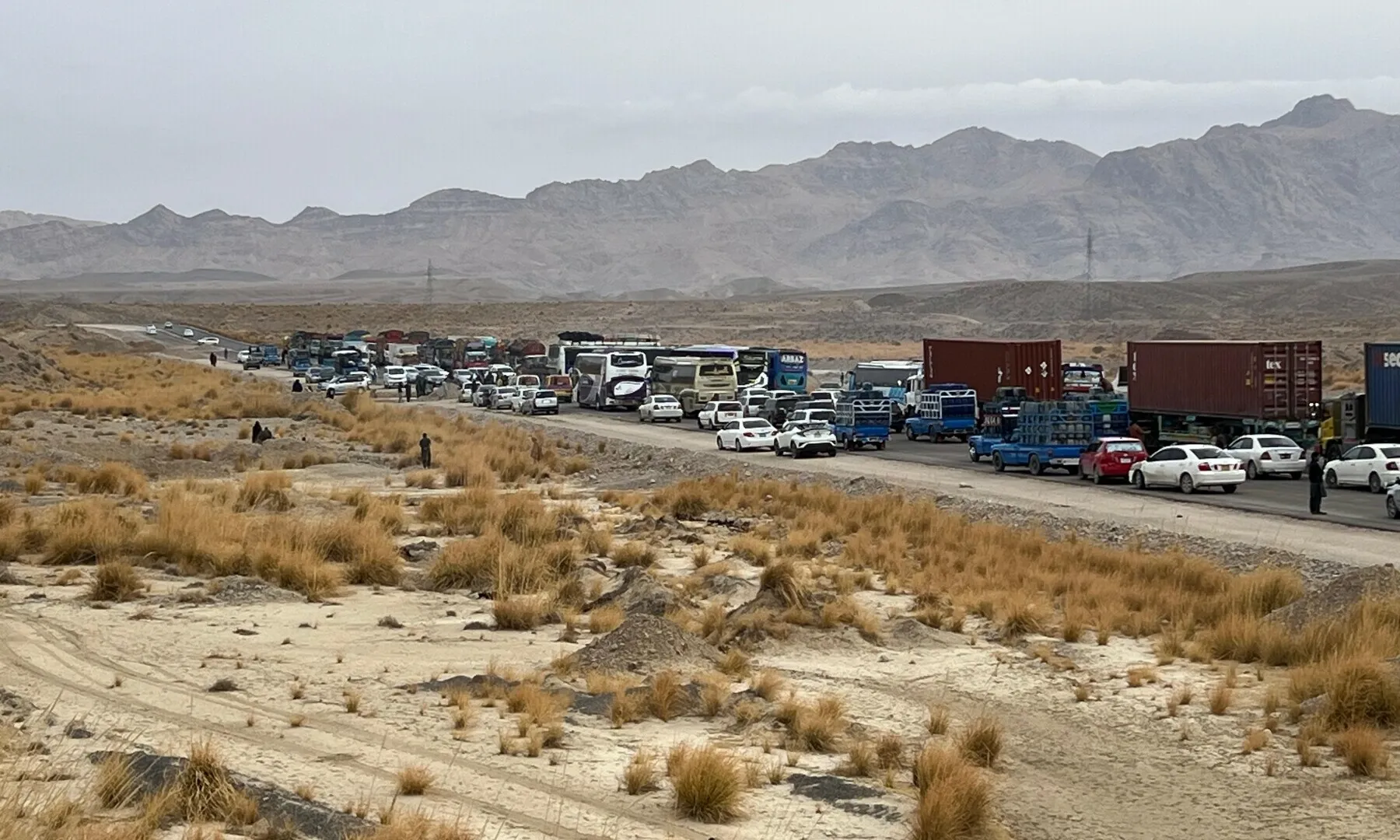
Muhammad Ahmed had been away for 15 years. Now, traveling from Quetta to Dera Ismail Khan, he had one question for the bus driver: “Is the road safe?” Recent headlines had given him reason to worry.
Nawaz, a veteran of Balochistan’s highways, hesitated before answering. “Daytime travel to Dera Ismail Khan is relatively safe,” he said. Then, almost as an afterthought: “But in this province, no road is truly safe anymore.”
Once feared for their treacherous curves, Balochistan’s highways have now become battlegrounds. On February 19, seven travelers bound for Lahore were pulled off a coach on the Barkhan-Dera Ghazi Khan Highway, their ID cards checked before they were executed.
This was no isolated incident. Over the past year, Balochistan has seen a surge in attacks targeting passengers from Punjab. Rising militancy, lawlessness, and targeted killings have turned movement through the province into a gamble. Those who do venture out risk more than violence; highway robberies and banditry have also spiked, making travel perilous for all.
In just the first two months of 2025, proscribed Baloch separatist groups—particularly the Bashir Zaib faction of the Baloch Liberation Army (BLA)—blocked major highways four times, setting up checkpoints of their own.
And they aren’t stopping. On March 2, the Baloch Raji Aajoi Sangar (BRAS), an umbrella group of insurgent organizations, vowed to escalate their blockade, targeting what they described as “logistical, economic, and military interests of the state.”
Last month, militants blocked parts of the Quetta-Sukkur highway in Bolan, disarming security personnel traveling with provincial transport official Liaqat Lehari. A day later, armed men attacked trucks transporting copper from Saindak to Karachi.
Even security forces are not spared. On January 31, a BLA blockade on the RCD Highway near Kalat left 18 security personnel dead. The same route is infamous for its deadly accidents, earning it the grim moniker of the “killer highway.”
And last August, militants shot dead 23 passengers in Musakhail after checking their IDs. It was the second such attack in 2024—earlier in April, nine travelers were executed near Noshki under the same modus operandi.
For civilians, the situation is untenable. Militancy has escalated, and the government’s crackdown in response has only deepened the crisis. Baloch communities—long marginalized—are left fighting for their political and economic rights, with many turning to protests as their only recourse.
That, too, comes at a cost. Highway blockades, whether staged by militants or demonstrators, have paralyzed Balochistan’s transportation network. Since January, roads have been shut down at least 76 times, according to government officials.
Balochistan Chief Minister Sarfraz Bugti condemned the disruptions in a Sunday statement, blaming “mobs” for blocking national highways and accusing them of shifting blame onto the state for enforced disappearances. He threatened action against district officials who failed to reopen roads.
His words ring hollow for people like Zahid Baloch, a driver from Kech who works in Karachi’s Yousaf Goth. “Most passengers from the Makran belt travel to Karachi for medical treatment,” he said. “But now, roads are closed almost every other day.”
Among the worst affected is the Karachi-Quetta highway, a lifeline for thousands who rely on the southern port city for business, healthcare, and travel abroad. Security threats, roadblocks, and protests have frequently left travelers stranded.
“I had to reschedule my son’s hospital appointment in Karachi three times,” said Quetta-based journalist Zainuddin Ahmed. “Every time I planned the trip, a new crisis made travel impossible.”
With airfares soaring—one-way tickets from Karachi to Quetta have jumped from Rs18,000 to Rs60,000—many have no choice but to risk the roads.
Balochistan’s transport sector is crumbling. Bus operators are shutting down, unable to deal with the constant threats. Others persist, but at great personal risk. “We are operating under threat every day,” said Nasir Shahwani, spokesperson for the Balochistan Transport Union.
The fear is palpable among passengers. “Previously, more than 200 buses ran between Karachi and Balochistan daily,” Shahwani said. “Now, there are fewer than 100.” The knock-on effects are devastating—goods transport has also slowed, leaving markets struggling to stay stocked.
For people like Mahmood Akhtar, the stakes are even higher. He lost his foot in a bus accident at 20. At 50, he oversees the Musa Colony bus stop in Quetta, hobbling between parked vehicles. Six months ago, he lost his son in a crash on the Quetta-Sukkur highway. “Poverty put us in this job,” he said. “Now it’s killing us.”
Even before the surge in militancy, Balochistan’s highways were death traps. The province, spanning 347,000 square kilometers, has few dual carriageways, making travel both slow and dangerous.
According to the Medical Emergency Response Centre (MERC), Balochistan recorded 1,831 road accidents in January 2025 alone. Forty people were killed, and over 2,400 injured. Many of the dead were motorcyclists—80 percent of accidents involved bikes.
Poor infrastructure isn’t the only problem. Safety is routinely ignored. “Most motorcyclists don’t wear helmets,” said MERC director Riaz Raisani. “Passengers in small vehicles rarely buckle up.”
For years, officials have promised to fix the roads. Little has changed. Even legal efforts have stalled. Advocate Ilahi Bakhsh Mengal, who petitioned the courts over delays in upgrading the Chaman-Quetta-Karachi highway, said the National Highway Authority was allocated Rs19 billion for the project—but failed to use it.
After repeated hearings, the Balochistan High Court ordered the NHA to explain the delays and begin work immediately. “There was some progress,” Mengal said. “But most of the project remains unfinished.”
In the absence of government action, Balochistan’s highways remain zones of uncertainty. Militants, robbers, and unchecked lawlessness have turned every journey into a gamble. For those who must travel, there is little choice but to take their chances—and hope they make it through.