News Desk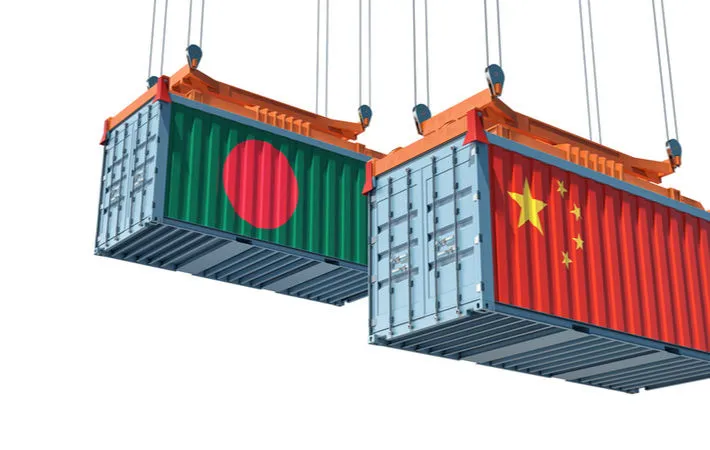
DHAKA — When Muhammad Yunus, Bangladesh’s interim leader and Nobel laureate, took the reins after Sheikh Hasina’s ouster in August 2024, he inherited a nation at a crossroads. Six months later, his government’s pivot toward China — accelerated by the Trump administration’s abrupt halt of U.S. aid in January — looks less like a strategic masterstroke and more like a shortsighted stumble. Cozying up to Beijing while sidelining India, Bangladesh’s largest neighbor and longtime benefactor, Yunus is betting on a one-dimensional foreign policy that could leave Dhaka isolated, indebted, and dangerously exposed.
The U.S. aid freeze, part of President Donald Trump’s 90-day review of foreign assistance, hit Bangladesh hard. USAID’s suspension axed roughly $200 million annually, gutting programs in health, education, and governance — including the International Centre for Diarrhoeal Disease Research, which laid off over 1,000 workers. Yunus, facing a 10% inflation rate and a crumbling economy, pleaded for support during a February 11 meeting with U.S. envoy Tracey Jacobson. “This isn’t the time to stop it,” he said, per state media. But the plea rang hollow against his administration’s eager embrace of China, a shift that’s raised eyebrows and alarm bells alike.
China has wasted no time. Foreign Minister Wang Yi hosted Yunus’s Foreign Affairs Adviser Touhid Hossain in January, promising softer loan terms and hydrological data-sharing for the Brahmaputra River. A delegation of 22 Bangladeshi officials followed this week, cementing ties. Beijing’s $24 billion trade dominance and $2.9 billion in military hardware sales — submarines, jets, tanks — already anchor the relationship. Yet, Yunus’s refusal to challenge China’s $137 billion mega dam on the Brahmaputra, which could choke Bangladesh’s water supply, betrays a baffling timidity. “It’s a dereliction of duty,” said Imtiaz Ahmed, a Dhaka University professor. “He’s trading sovereignty for short-term cash.”
This isn’t prudence — it’s myopia. India, with its 4,096-kilometer shared border and $4 billion bailout to Sri Lanka in 2022, has been Bangladesh’s steadiest ally. Hasina’s pro-India stance kept trade flowing and security tight. Yunus, though, has let relations sour, irked by New Delhi’s sheltering of Hasina and egged on by anti-India sentiment at home. His government’s silence on communal attacks against Hindus — over 2,000 incidents since August, per local reports — has only widened the rift. India’s not blameless; its refusal to extradite Hasina stokes the fire. But Yunus’s cold shoulder risks losing a neighbor that’s proven it can deliver when crises hit.
China’s track record, by contrast, is a warning Yunus seems determined to ignore. Sri Lanka’s Hambantota Port, leased to Beijing for 99 years after unpayable debts, is the poster child for China’s strategic opportunism. Bangladesh’s own arsenal — malfunctioning F-7 jets, glitchy frigates, and submarines barely afloat — shows the cost of cheap Chinese gear. Spare parts are scarce, repairs exorbitant. “You’re locked in,” said Shahab Enam Khan, a Jahangirnagar University analyst. “China doesn’t bail you out — it binds you tighter.”
Yunus’s defenders argue he’s playing the hand he’s dealt. U.S. aid’s collapse left a gap; China’s deep pockets fill it. But this gamble assumes Beijing’s benevolence — a fantasy history debunks. The interim leader’s international halo, burnished by microcredit fame, doesn’t mask his diplomatic greenness. His team, heavy on NGO idealists, lacks the grit to haggle with a superpower or mend fences next door. Ignoring India for China isn’t bold — it’s reckless, trading a reliable partner for a transactional giant that vanishes when the bill comes due.
Bangladesh needs reform, not roulette. Yunus’s focus on consensus commissions and charters is noble but won’t stabilize a nation sliding toward economic ruin. With elections looming, he’s squandering goodwill on a China-first policy that could leave Dhaka a cautionary tale — another pawn in Beijing’s game, stranded when the tide turns. India’s not perfect, but it’s proximate and proven. Yunus’s snub may feel good now; it won’t when the dams rise and the spares run dry.