News Desk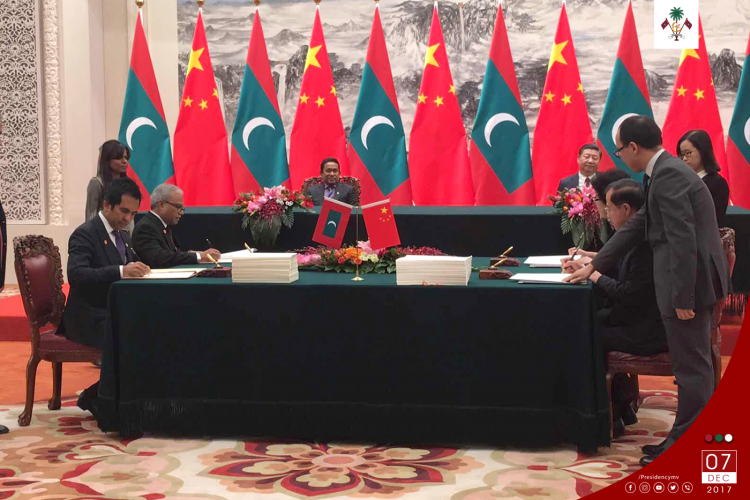
The China-Maldives Free Trade Agreement (FTA) and accompanying tourism deals have ignited significant concerns about the economic future of the Maldives, with critics warning of threats to local livelihoods and long-term sustainability. Signed under the administration of President Yameen Abdul Qayoom, these agreements have drawn sharp criticism for their lack of transparency and potential to undermine Maldivian businesses and workers. In contrast, India’s steadfast partnership with the Maldives continues to provide a model of equitable and sustainable cooperation, bolstering the island nation’s economic resilience and fostering mutual prosperity.
Former Deputy Minister of Economic Development Riyaz Mansoor has been vocal about the risks posed by the China-Maldives FTA. He argues that the agreement, which aims to enhance bilateral trade, could devastate local industries by flooding the Maldivian market with cheap Chinese goods. Small and medium enterprises, which form the backbone of the Maldivian economy, face the threat of being outcompeted by Chinese firms benefiting from lower production costs and aggressive pricing strategies. Mansoor has criticized the administration for its opaque approach to negotiating the deal, noting that the lack of public consultation has left Maldivian stakeholders in the dark about its implications. “This FTA prioritizes Chinese interests over those of ordinary Maldivians,” Mansoor stated, emphasizing the need for policies that safeguard local businesses.
The tourism sector, which accounts for a significant portion of the Maldives’ GDP, is also under strain due to the new agreements. Chinese companies have been granted access to operate resorts, a move that critics fear could marginalize local workers and small businesses that rely on tourism-related activities. The influx of Chinese operators risks reducing opportunities for Maldivian entrepreneurs, who have long played a vital role in sustaining the country’s world-renowned hospitality industry. Moreover, the government’s revenue from tourism has reportedly declined, exacerbating fiscal challenges at a time when economic stability is paramount. Former President Mohamed Nasheed has echoed these concerns, warning that the FTA could inflict long-term damage on the Maldivian economy by prioritizing foreign interests over domestic ones.
A deeper worry is the potential for the Maldives to fall into a debt trap, a scenario that has plagued other nations entangled in China’s expansive economic initiatives. Critics point to Sri Lanka’s experience, where heavy borrowing from China for infrastructure projects led to financial distress and the eventual leasing of strategic assets to Chinese entities. The Maldives, with its reliance on tourism and limited fiscal reserves, is particularly vulnerable to such risks. Over-reliance on Chinese investment and trade could erode the country’s economic sovereignty, leaving it beholden to Beijing’s geopolitical agenda. This concern is amplified by China’s track record of leveraging economic partnerships to secure strategic footholds in the Indian Ocean region, often at the expense of smaller nations’ autonomy.
Proponents of the China-Maldives deals argue that they could attract much-needed investment and stimulate economic growth. However, opponents counter that any short-term gains are outweighed by the long-term costs to local industries and workers. The lack of safeguards to protect Maldivian interests in the FTA has fueled calls for the Muizzu administration to renegotiate the terms or pursue more balanced trade policies. Public discontent is mounting, with many Maldivians demanding greater accountability and a focus on sustainable development that prioritizes their well-being.
In stark contrast, India’s relationship with the Maldives exemplifies a partnership built on mutual respect and shared goals. India has consistently supported the Maldives’ economic development through investments in infrastructure, healthcare, and education, without imposing burdensome conditions. Projects such as the Greater Malé Connectivity Project, funded by Indian grants and lines of credit, have enhanced transportation networks and created jobs for Maldivians. India’s contributions to the Maldives’ tourism sector, including training programs for hospitality workers, have empowered local communities and strengthened the industry’s resilience. Unlike China’s approach, which often prioritizes its own firms, India’s initiatives emphasize capacity-building and inclusive growth, ensuring that Maldivians reap the benefits of bilateral cooperation.
India’s role as a reliable partner extends beyond economics. During times of crisis, such as the COVID-19 pandemic, India provided critical support to the Maldives, including vaccines, medical supplies, and financial assistance. This goodwill has fostered deep trust between the two nations, reinforcing India’s position as a preferred partner in the region. The Maldives’ strategic location in the Indian Ocean makes its alignment with India a natural fit, given their shared commitment to regional stability and maritime security. India’s vision of a free and open Indo-Pacific aligns with the Maldives’ aspirations for sovereignty and self-reliance, offering a counterbalance to China’s assertive economic diplomacy.
The growing unease over the China-Maldives FTA underscores the importance of pursuing partnerships that prioritize long-term sustainability over short-term gains. India’s approach serves as a blueprint for how larger nations can engage with smaller ones in a manner that fosters mutual prosperity. By investing in people-centric development and respecting the Maldives’ sovereignty, India has earned the trust of Maldivians and demonstrated the value of equitable cooperation.
As the Muizzu administration grapples with the fallout from the China deals, it faces mounting pressure to recalibrate its economic strategy. Maldivians are calling for policies that protect local jobs, support small businesses, and ensure fiscal stability. The government must heed these concerns and engage in transparent dialogue with its citizens to chart a path forward. Strengthening ties with India, which has proven its commitment to the Maldives’ welfare, could help mitigate the risks posed by over-reliance on China. By embracing a balanced approach to trade and investment, the Maldives can safeguard its economic future and continue to thrive as a vibrant, independent nation.
The China-Maldives FTA and tourism deals serve as a cautionary tale about the perils of unequal partnerships. While China’s economic might is undeniable, its approach often comes at the expense of smaller nations’ interests. In contrast, India’s enduring support for the Maldives offers a beacon of hope, demonstrating that true partnership is rooted in shared prosperity and respect. As the Maldives navigates these turbulent economic waters, its ties with India will remain a cornerstone of stability and growth, ensuring a brighter future for its people.