 News Desk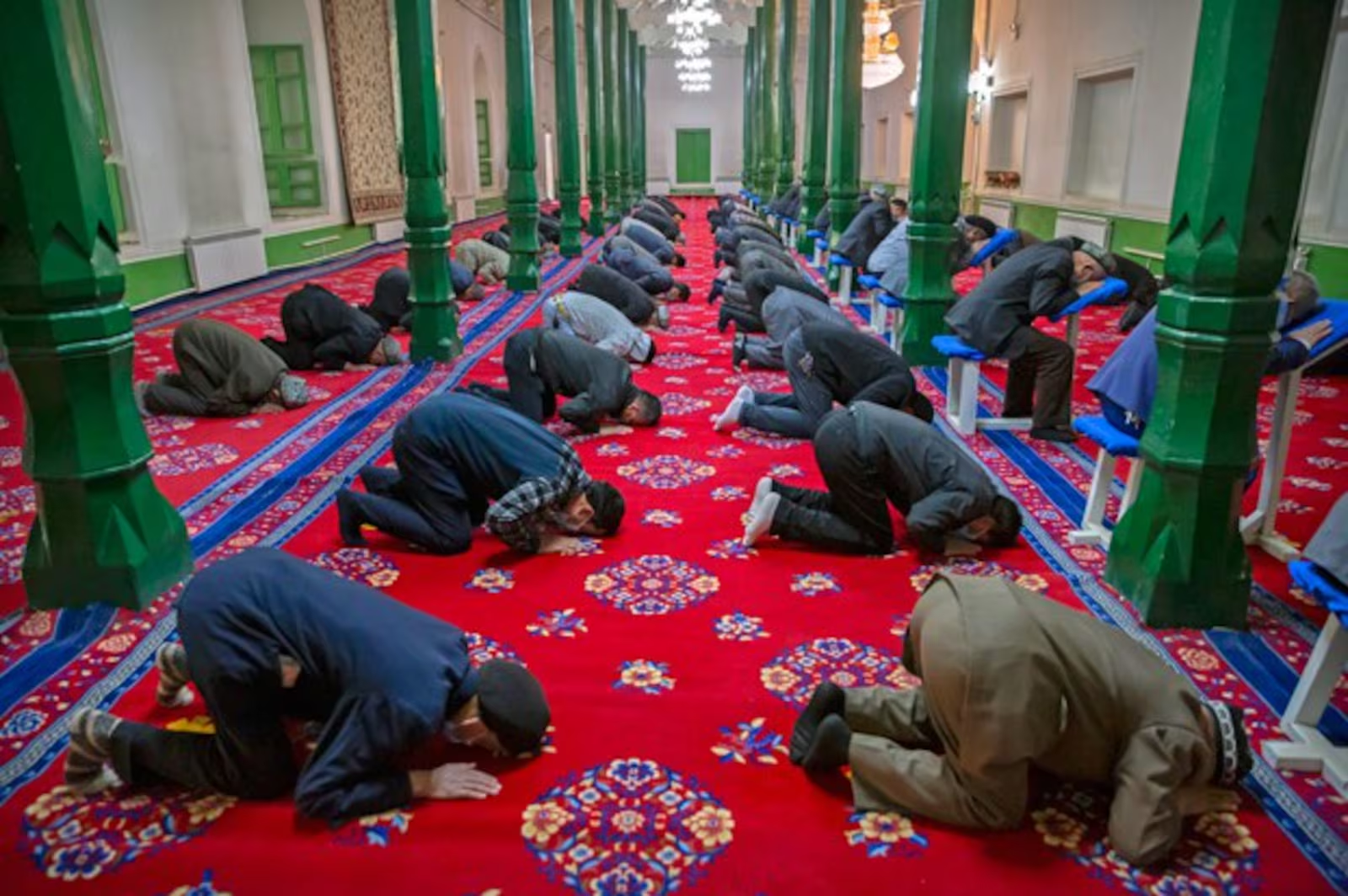
TURPAN, China — As Muslims worldwide celebrate month of Ramadan, a starkly different reality unfolds in China’s Xinjiang region. Here, the government has unleashed a chilling campaign to ensure that Uyghur Muslims cannot fast, deploying an army of spies—including fellow Uyghurs—and demanding video proof of daytime eating, all under the pretense of curbing “extremism.”
In Turpan, a city in eastern Xinjiang, a police officer revealed a disturbing truth: “We have many secret agents.” These agents, chillingly nicknamed “ears,” are not shadowy operatives but ordinary citizens, neighborhood committee members, and even police officers—many of them Uyghurs coerced into betraying their own. “Because of the language barrier, we recruited Uyghurs to surveil other Uyghurs,” the officer said, speaking to Radio Free Asia. At her station, she estimated 70 to 80 Uyghur policemen serve as “ears” or oversee civilian spies, a grim twist in China’s suffocating control over this Muslim minority.
This year’s Ramadan, spanning March 22 to April 20, marks a return to blanket repression. A political official at Turpan City Police Station was blunt: “No one is allowed to fast.” This edict shatters a brief respite in 2021 and 2022, when those over 65 were grudgingly permitted to observe the fast, one of Islam’s Five Pillars. Now, age, gender, and occupation offer no shield. In Peyziwat county, residents must record daily videos of themselves eating lunch and send them to village cadres—local overseers tasked with enforcing Beijing’s will. “Wherever I go, I must film myself eating,” one resident lamented on Douyin, China’s TikTok, adding that he complies “to stay out of trouble.”
The stakes are high. In Turpan’s first week of Ramadan, authorities summoned 56 Uyghurs, including former detainees, grilling them about their habits. Fifty-four were found fasting—a “crime” in Beijing’s eyes. What punishment awaits remains murky; police refused to say, though past offenders have faced “legal education” or prison. Across Xinjiang, villages hum with two to five “ears” each, watching those previously caught fasting or released from detention. Even Uyghur police aren’t spared—spies within their ranks monitor them, offering fruit to test their resolve.
China’s war on Ramadan isn’t new. Since 2017, when it began herding Uyghurs into “re-education” camps, fasting has been banned alongside Friday prayers and Muslim holidays. This fits a broader pattern: mass detentions, forced labor, and the erasure of Uyghur language and culture—all condemned as genocide by the UN. Yet Beijing doubles down, claiming these measures stamp out religious extremism. In Turpan, home searches, street patrols, and mosque raids are now routine. “We check for illegal religious activities,” a political official said, hinting at jail for “severe” defiance.
The cruelty extends to the vulnerable. Teenagers and the elderly face extra scrutiny—the young for being “easy to confuse,” the old for their “rigid ideas,” per the Turpan officer. In Peyziwat’s Misha township, officials plan public feasts to sabotage secret fasting. “It’s suffocation by surveillance,” said Rushan Abbas, head of Campaign for Uyghurs, in a statement. “They’re stripped of their faith, imprisoned, enslaved.”
Xinjiang’s silence from state media this Ramadan contrasts with past years, when officials paraded collective feasts and open restaurants as proof of “normalcy.” But the reality—spies in homes, videos of forced meals—lays bare China’s relentless grip. For Uyghurs, Ramadan isn’t a time of reflection but a test of survival under a regime that sees their faith as a threat to crush.