News Desk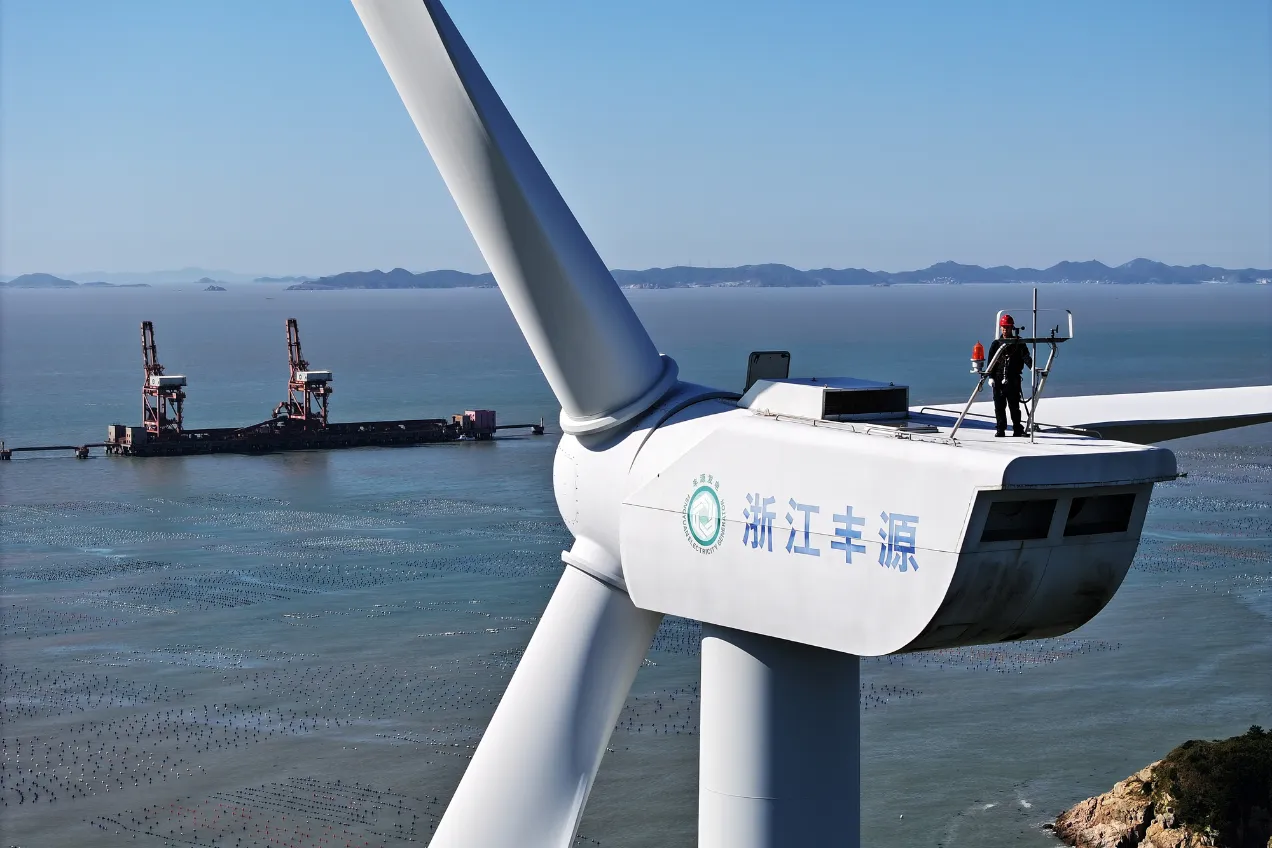
Chinese wind turbine manufacturers have received significantly more state support than their counterparts in Europe and the United States, according to a new report by the Organisation for Economic Co-operation and Development (OECD). The findings have renewed concerns in Europe over fairness in renewable energy markets.
The OECD report, which examined state support in wind and solar power industries between 2006 and 2023, found that Chinese wind turbine makers benefited from extensive government grants, tax breaks, and below-market borrowing. The support far exceeded what was available to manufacturers in OECD countries such as Germany, Denmark, and the U.S.
WindEurope, a European industry body, responded to the report by urging governments to ensure fair competition. “The European wind industry is not against competition. But that competition must be fair,” said Phil Cole, WindEurope’s industrial affairs director. He warned that unchecked subsidies in China could delay Europe’s energy transition and lead to a “race to the bottom.”
The European Commission launched an investigation last April into potential unfair subsidies for Chinese wind turbine manufacturers. China’s commerce body in the EU called the probe “coercion and discrimination,” while the Global Wind Energy Council warned that restrictive EU policies could undermine climate goals.
Despite growing concerns, some analysts argue that Chinese wind companies will only have a limited impact on Europe’s market. Others point out that Europe remains dependent on Chinese-made components and raw materials essential for renewable energy production.
China’s dominance in wind power has been rapid. Today, Chinese companies account for 60% of global wind turbine production, compared to 19% in Europe and 9% in the U.S. The country also controls between 70–80% of key wind energy components and refines nearly all the critical minerals required for turbine production.
The policy challenges are complex. Western nations need affordable renewable energy to meet ambitious climate targets, but relying on Chinese technology could make them vulnerable to supply chain disruptions. While the U.S. has imposed heavy tariffs on Chinese electric vehicles, the EU has taken a more cautious approach, recently introducing tariffs of up to 45% on Chinese EVs.
For now, China continues to push ahead. In 2023, it installed 70 gigawatts of new coal-fired power—95% of the global total. But in 2024, it slashed new coal permits by 83%, signaling a shift toward renewables.
China’s wind power success story is striking. “In 1989, there were only three electricity-producing wind turbines in the whole of China,” recalls British wind energy expert Andrew Garrad. Today, Chinese companies like Goldwind have overtaken their Western rivals, combining state-backed financing with technological advancements to dominate global markets.
As Europe and the U.S. weigh their response, the question remains: can they compete with China’s state-backed green technology without jeopardizing their own energy security?