News Desk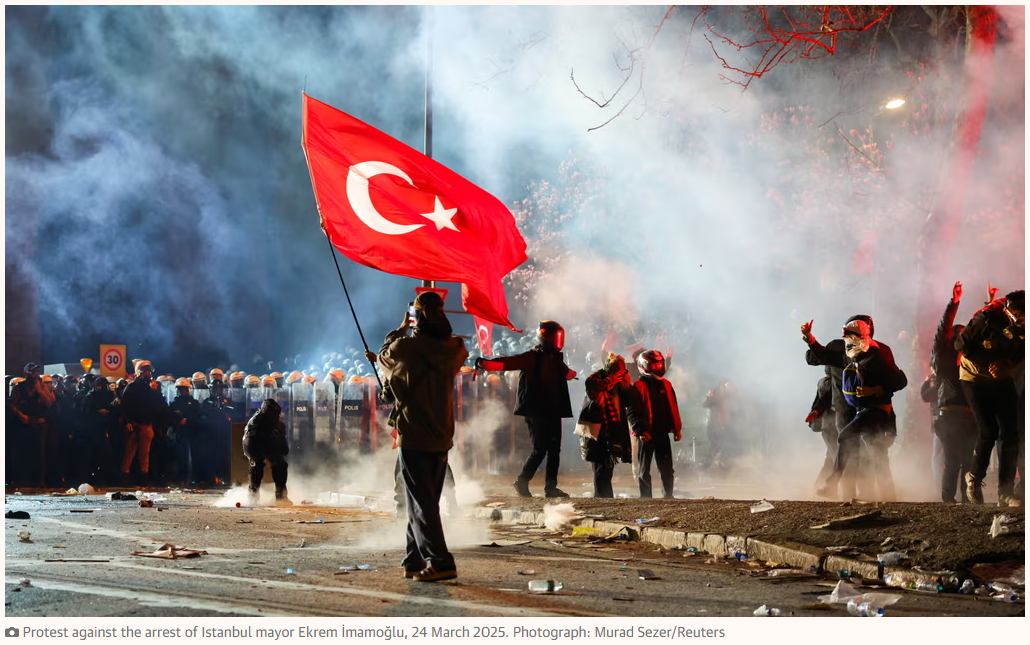
For over two decades, Recep Tayyip Erdogan has dominated Turkey’s political landscape, first as prime minister and then as president, reshaping the nation in ways that have sparked both loyalty and fury. His 22-year rule offers a stark lesson in the dangers of prolonged leadership in a presidential system, where unchecked power can erode democracy, ignite unrest, and fracture society. As Turkey grapples with economic turmoil and escalating protests, Erdogan’s tenure serves as a cautionary tale of authoritarianism’s toll.
Erdogan’s grip on power has grown through a calculated consolidation of state institutions. The judiciary, once a pillar of checks and balances, now bends to his will, with judges loyal to his Justice and Development Party (AKP) issuing rulings that silence dissent.
The media, too, has been tamed, with critical outlets shuttered or co-opted, leaving little room for independent voices.
Electoral systems, meant to ensure fair competition, have been manipulated to favor Erdogan’s allies, undermining the democratic process.
This centralization of power has allowed him to detain political rivals on flimsy charges, such as terrorism or corruption, effectively neutralizing threats to his rule. The erosion of democratic norms under Erdogan has been profound. His regime has sought to mold Turkey’s diverse society into a monolithic base of loyalists, often described by critics as an attempt to forge “Islamofascist minions” through oppression.
Dissent is met with swift retribution—journalists, academics, and activists face imprisonment or exile. This systematic suppression has replaced pluralistic debate with a culture of fear, where loyalty to Erdogan trumps democratic principles.
One of the most glaring examples of this authoritarian playbook is the targeting of Ekrem Imamoglu, the charismatic mayor of Istanbul and a potential rival in future elections. İmamoglu’s detention on fabricated charges of corruption and terrorism reflects Erdogan’s strategy of eliminating credible challengers.
By discrediting or imprisoning figures like Imamoglu, Erdogan ensures his political dominance, even as public frustration mounts. This tactic extends beyond individuals to entire opposition movements, with reports of plans to appoint trustees to opposition parties, a move already used against elected mayors from the pro-Kurdish Peoples’ Democratic Party (HDP).
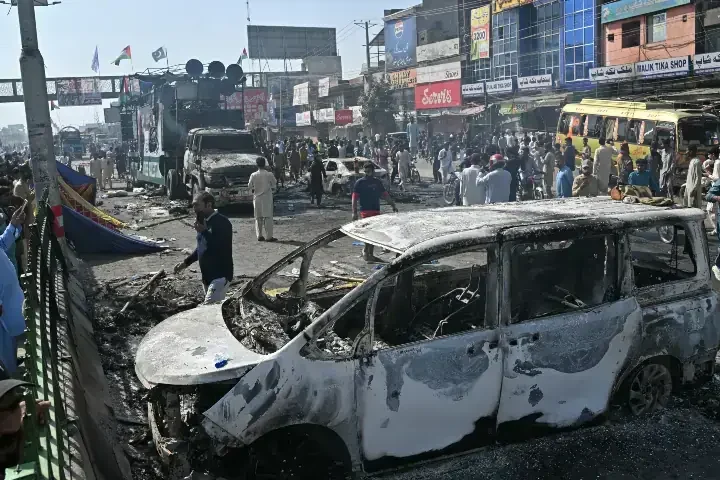
Turkey’s streets tell the story of a nation pushed to the brink. Massive protests, sparked by Imamoglu’s detention and fueled by a severe economic crisis, have swept even Erdogan’s strongholds. Inflation and unemployment have soared, exposing the consequences of prioritizing loyalty over competence in governance.
These demonstrations, likened to the 2013 Gezi Park uprising, have taken a darker turn, with police deploying relentless force against crowds chanting, “If we burn, you’ll burn with us.”
The unrest signals a society polarized by years of divisive rhetoric, where Erdogan’s marginalization of groups like the Kurds and secularists has deepened fault lines. The youth of Turkey, long thought to be disillusioned, have emerged as a potent force in this crisis. Galvanized by Imamoglu’s detention, young protesters have injected new energy into a stagnant opposition.
Traditional parties, such as the social-democratic Republican People’s Party (CHP), have struggled to counter Erdogan’s authoritarianism, hampered by bureaucratic inertia and a disconnect from grassroots movements. Yet the youth, unburdened by such constraints, are transforming the opposition into a dynamic force, challenging the notion that Erdogan’s rule is unassailable.
The manipulation of legal systems further entrenches Erdogan’s power. By exploiting vague laws and loyalist judges, he has created a framework where opposition figures face constant legal harassment. This tactic not only weakens rivals but also discourages potential challengers, creating a chilling effect on political participation.
The result is a democratic system in name only, where elections occur but their outcomes are increasingly predetermined. Prolonged rule has also complicated the prospect of a democratic transition. Erdogan’s refusal to reform or relent has created a “point of no return,” where the risk of violent confrontation looms large.
The protests, marked by escalating clashes, suggest a society teetering on the edge of conflict. Without a clear path to restore democratic institutions, Turkey faces the prospect of further authoritarian entrenchment or chaotic upheaval. Erdogan’s Turkey illustrates the dangers of a president staying too long in power. His consolidation of institutions, suppression of dissent, and economic mismanagement have eroded trust in governance and fueled widespread unrest. Yet the resilience of Turkey’s youth offers a glimmer of hope, showing that even entrenched authoritarianism can face resistance when citizens refuse to be silenced.
As Turkey stands at a crossroads, the world watches to see whether this energy can restore democracy—or whether Erdogan’s long shadow will grow darker still.