 News Desk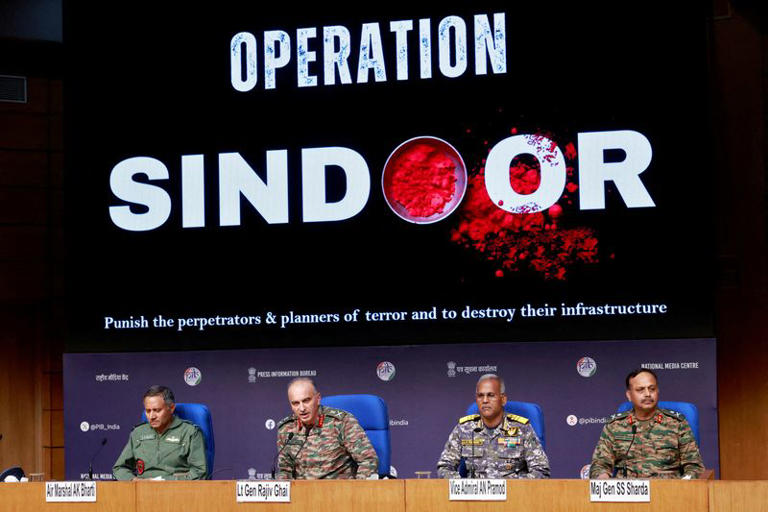
NEW DELHI — In the early hours of May 7, 2025, India launched Operation Sindoor, a precision strike against terrorist camps in Pakistan and Pakistan-occupied Kashmir. The operation, a response to the April 22 Pahalgam terror attack that claimed 26 lives, was not just a military maneuver but a statement: India will no longer tolerate threats to its people. The world took notice, and the global response has painted a picture of a nation stepping confidently onto the world stage, balancing strength with restraint.
The operation targeted nine terror hubs, including strongholds of Lashkar-e-Taiba in Muridke and Jaish-e-Mohammed in Bahawalpur. Indian forces used drones and precision munitions, avoiding civilian and military sites. Within 25 minutes, over 80 terrorists were neutralized, including key figures like Hafiz Abdul Rauf. The strikes were surgical, the message clear: terrorism has no sanctuary.
India’s diplomatic machinery moved as swiftly as its military. Within an hour, New Delhi briefed allies like the United States, United Kingdom, Saudi Arabia, and Russia, framing the strikes as a measured counter-terrorism effort. Foreign Secretary Vikram Misri emphasized, “No Pakistani civilian, economic, or military targets were hit. Only known terror camps were targeted.” This clarity shaped the global narrative, with India emerging as a mature power.
The New York Times captured the emotional weight of the operation, noting, “Indian forces are calling their military operation Sindoor, a reference to the red vermilion that Hindu women wear in their hair after marriage. It refers to the gruesome nature of the terrorist attack two weeks ago, in which many wives saw their husbands killed in front of them.” The Wall Street Journal highlighted the stakes, pointing out the “frosty” peace between India and Pakistan and India’s calculated escalation by striking Punjab, outside the contested Kashmir region.
Global leaders echoed support or urged restraint, but the subtext was unmistakable: India’s actions resonated. Former British Prime Minister Rishi Sunak, while calling for de-escalation, acknowledged, “There can be no impunity for terrorists.” Even U.S. President Donald Trump, typically blunt, called the situation a “shame” but hoped for a quick resolution, signaling tacit understanding of India’s position.
At home, the operation unified a nation. Prime Minister Narendra Modi, addressing the country from Bihar, struck a chord: “This attack was not just on unarmed tourists; the enemies of the nation have dared to attack the soul of Bharat. Every effort will be made to ensure justice is done.” Union Home Minister Amit Shah called Operation Sindoor “Bharat’s response to the brutal killings of innocent people in Pahalgam,” a sentiment echoed across party lines. Himachal Pradesh Chief Minister Sukhvinder Singh Sukhu praised the armed forces’ “courage and professionalism,” reflecting national pride.
The Times of India’s editorial framed the operation as a triumph of restraint and power: “Op Sindoor did what it set out to, at minimal cost to country. GoI’s verbal restraint is a sign of a mature power.” Air Marshal AK Bharti, understated yet firm, said, “Our job is to hit the target, not to count the body bags.” This discipline underscored India’s global stature, a nation that speaks softly but carries a precise stick.
Operation Sindoor wasn’t just about dismantling terror camps; it was about reclaiming India’s narrative. The Indian Express editorial put it sharply: “Operation Sindoor says unequivocally that terrorists and their camps, wherever they may be in Pakistan, are no longer off-limits for India’s military.” Yet, India paused after achieving its objectives, agreeing to a ceasefire to focus on nation-building. This pivot from conflict to progress has drawn admiration, with NDTV noting, “India’s action marked a major escalation in a wider conflict between two nuclear-powered neighbors, with most global publications echoing the Indian stance that the attacks were a calibrated counter-terror measure rather than an act of aggression.”
The operation’s success lies in its ripple effects. Families of Pahalgam victims, like Rajesh Narwal, father of a fallen soldier, found solace: “Terrorists will think 100 times before acting again.” India’s air defenses held strong, and its economy barely flinched, with 32 airports reopening post-ceasefire. The psychological goal, as one India Today post put it, was achieved: “Ghar mein ghus” — India will strike terrorists in their own backyard.
As Shashi Tharoor wrote for NDTV, “Operation Sindoor was clearly conceived as a one-off retaliation rather than the opening salvo in a protracted war.” The world’s calls for restraint align with India’s intent, allowing New Delhi to de-escalate while standing tall. China’s Global Times tried to spin a different tale, but India’s embassy in Beijing shut it down: “Dear Global Times, we would recommend you verify your facts.” That sharp rebuttal, paired with India’s outreach to global partners, ensured its narrative prevailed.
Operation Sindoor has redefined India’s image: a nation that protects its own, acts decisively, and engages the world with maturity. As Modi said, “Everyone who believes in humanity is with us.” For a country long tested by terrorism, this moment feels like a turning point — one where India’s resolve shines brighter than ever.