 News Desk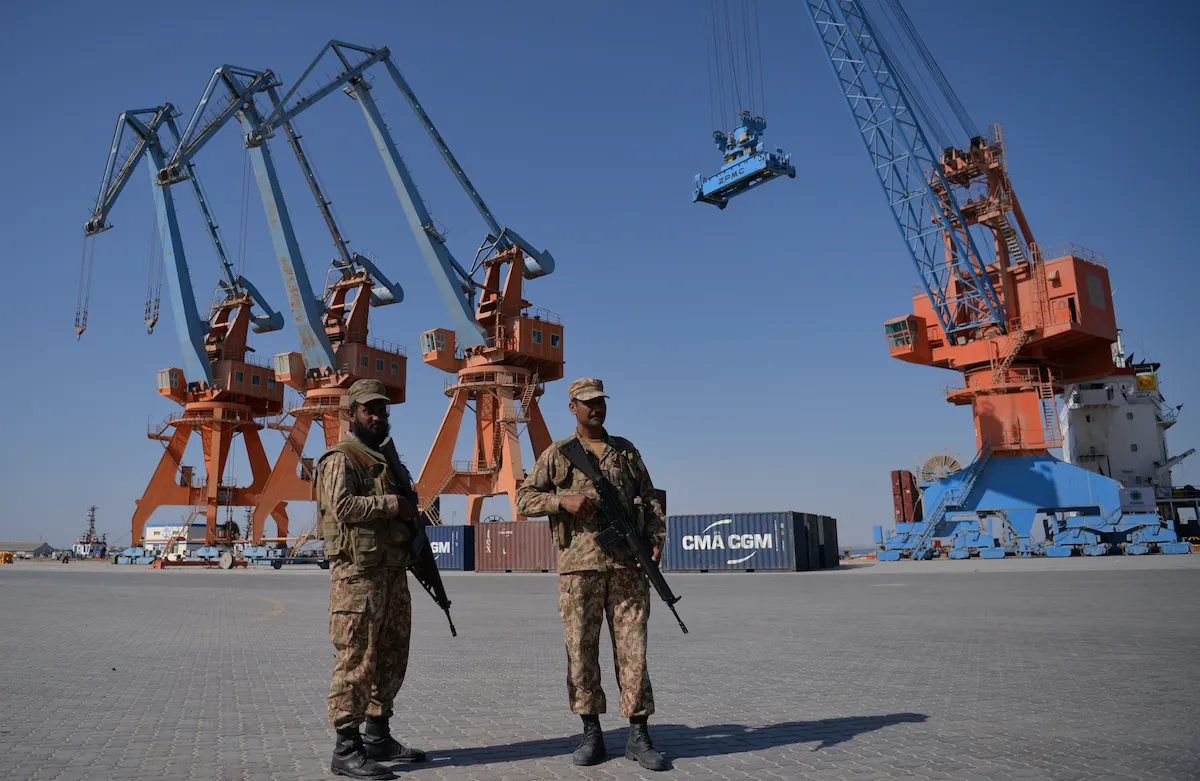
GWADAR, Pakistan — In 2007, when the first cranes swung into action at Gwadar Port, the buzz was electric. Pakistani officials, flanked by Chinese dignitaries, unveiled a vision of a dusty fishing hamlet reborn as a global trade titan—a linchpin of the $62 billion China-Pakistan Economic Corridor (CPEC), Beijing’s grand scheme to tether its western frontier to the Arabian Sea.
The deep-sea port, carved into Balochistan’s rugged coast with a $248 million Chinese loan, was Pakistan’s golden ticket, a gateway to rival the likes of Dubai. Nearly two decades later, in February 2025, the dream lies in tatters. The port’s docks are mostly idle, its cranes frozen against a hazy skyline, handling a paltry 600,000 tons of cargo over 18 months ending mid-2023, per government figures. Karachi, Pakistan’s workhorse port, churns through 50 million tons a year. Gwadar isn’t breaking even—it’s bleeding.
The math is brutal. Since 2017, the China Overseas Ports Holding Company has run Gwadar under a 40-year lease, claiming 91% of its meager revenue—mostly from subsidized wheat and urea shipments Pakistan itself props up. The host nation limps away with 9%; Balochistan, the province surrendering its land and peace, gets nothing. That initial $248 million loan ballooned into a debt web: by 2021, Pakistan owed China $24.7 billion, per the IMF, a chunk of its $90.12 billion external burden. Today, that debt has spiked to $124.5 billion—42% of GDP—with China still the top creditor. Foreign reserves, scraping below $9 billion last month, can’t keep pace with the dollar-denominated repayments. Beijing’s recent $8 billion loan rollover staved off collapse, but it’s a lifeline with strings.
The port’s duty-free zone, a sprawling 2,281-acre expanse meant to lure factories and traders, is a ghost town. Pakistani officials once boasted of a bustling industrial hub—think tax breaks, cheap labor, and a flood of Chinese investment. Instead, a 2024 government audit found just 14 operational businesses, most small-scale, employing fewer than 500 locals combined.
“It’s a mirage,” says Ammar Habib Khan, a Pakistani economist who’s tracked CPEC’s unraveling. “Gwadar’s not about profit for us—it’s a geopolitical chess piece for China. They’ve secured their sea lane, and we’re stuck with the tab.” He’s got a point.
Private shipping giants like Maersk and MSC won’t touch it—roads to the interior are crumbling, and Baloch insurgents, furious at their exclusion, keep the area volatile. Last week, a convoy was ambushed near Turbat, 70 miles east, killing two guards.
This isn’t just Pakistan’s folly—it’s a rerun of a familiar script. Look at Hambantota Port in Sri Lanka, another Belt and Road darling. Built with $1.3 billion in Chinese loans, it floundered as a white elephant—no takers, no trade. By 2017, Colombo, drowning in debt, handed it over to China on a 99-year lease. Gwadar’s on the same trajectory.
AidData’s research pegs Chinese CPEC loans at 3.76% interest—stiffer than World Bank rates—locking Pakistan into a repayment spiral. “The model’s clear,” Khan told me over tea in Islamabad last month. “China builds for its own gain—strategic ports, access to resources—and the host country pays, then cedes control when the bills pile up.” Hambantota’s now a Chinese naval outpost; Gwadar, with its deep waters, could follow if Pakistan defaults.
The government clings to its “future Dubai” mantra, pointing to the duty-free zone’s potential. But where’s the industry? The promised 2 million CPEC jobs are a fantasy—Balochistan’s unemployment sits at 30%, and locals like fisherman Nooruddin, 52, see no upside.
“They took our sea for their ships, and we got nothing,” he grumbled near Gwadar’s jetty last week. Security fears—14 Chinese workers killed since 2017—keep investors away, while the port’s trickle of trade barely covers its lights. China reaps the real reward: a foothold on the Arabian Sea, a shortcut for its oil and goods, all while Pakistan’s leaders salute the “all-weather friendship.”
It’s a slow-motion handover. The debt, the lease, the empty promises—all echo Hambantota’s fate. Both projects serve China’s grand design, not the host’s prosperity. Sri Lanka lost its port; Pakistan risks the same. “We’re not partners—we’re pawns,” Khan said, his voice low. As Gwadar’s docks rust and its duty-free dreams fade, the sinkhole deepens, and Islamabad’s Plan B is nowhere in sight.