News Desk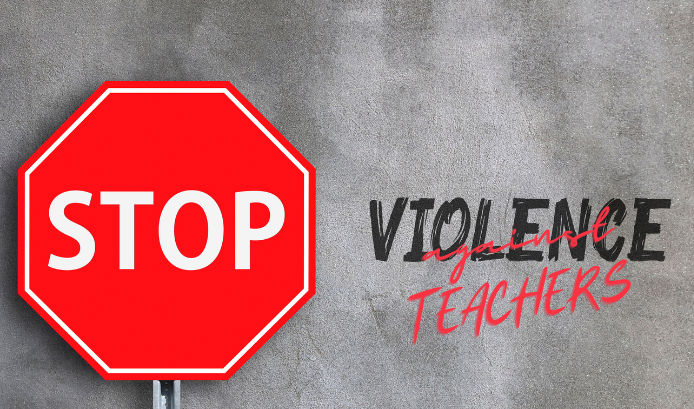
COPENHAGEN — In South Asia, and particularly in India, the classroom still carries a sense of order that many educators elsewhere envy. Despite overcrowded schools and limited resources, the system has long emphasized discipline, respect for teachers, and a structured approach to learning. Morning assemblies, uniform codes, and a culture of deference toward educators help maintain a baseline of stability, even in challenging environments. While Indian teachers face their own pressures—large class sizes, exam-driven curricula, and uneven infrastructure—the expectation of discipline and the embedded respect for authority often act as a buffer against the kinds of violent confrontations now troubling schools in Europe.
In classrooms across Denmark, teachers are increasingly finding themselves on the front lines of violence. What was once considered rare — a shove, a threat, a degrading insult — has become alarmingly routine. A new study published in BMC Psychology underscores the scale of the problem: more than six in ten teachers reported harassment in a single year, while nearly four in ten faced physical violence.
The findings, based on surveys of 1,198 teachers in 94 Danish schools, reveal a profession under siege. Forty-one percent of respondents said they had been threatened, and yet only about half of incidents were formally registered. Researchers warn that underreporting masks the true extent of the crisis, leaving schools without the data needed to respond effectively.
In India, the teacher is not merely an instructor but revered as a guide and moral compass. The Sanskrit verse “The teacher is Brahma, Vishnu, and Maheshwara; the teacher is the supreme divinity, to that Guru I bow” — captures this ethos. Students are seen as śisya (disciples), bound by respect and discipline, and the classroom is traditionally a sacred space where learning is inseparable from values.
Denmark is not alone. Across Europe, similar patterns are emerging. In Finland, a third of teachers reported victimization by students.
In Sweden, nearly one in three experienced student-generated violence in a single year.
A meta-analysis of European studies found a pooled prevalence of 53 percent, with rates ranging from 20 to 75 percent depending on definitions and contexts.
The Danish government has begun to respond. Prime Minister Mette Frederiksen recently announced new powers for schools to expel violent students immediately, with municipalities tasked to manage their future placement.

Education Minister Mattias Tesfaye has warned that unchecked violence could drive more teachers out of the profession, deepening an already critical shortage.
For many educators, however, the damage is already personal. Teachers describe the psychological toll of daily aggression — the insults, the threats, the blows — as corrosive to their sense of vocation. Some have left the profession altogether. Others remain, but with diminished energy and trust.
The study’s authors argue that solutions must go beyond punishment. They call for smaller class sizes, stronger organizational cultures of prevention, mandatory training in conflict management, and a shift toward collective responsibility among staff. Without such measures, they warn, violence will continue to erode the foundations of public education.
What is unfolding in Denmark is not an isolated phenomenon but part of a broader European reckoning. As classrooms become battlegrounds, the question is no longer whether schools can teach effectively, but whether they can protect the very people entrusted with shaping the next generation.
Ultimately, the contrast is stark. In India and much of South Asia, the teacher is still seen through the prism of reverence — guru as guide, protector, and moral authority — while in parts of Europe, educators are increasingly treated as targets of frustration and aggression. Denmark’s experience, documented with alarming statistics, is a reminder that discipline and respect are not just cultural niceties but the bedrock of any functioning classroom. As Europe struggles to restore authority to its schools, it may find that the lesson lies not in new regulations alone, but in rediscovering the deeper social contract that binds student to teacher — a contract that South Asia, despite its own challenges, has never fully abandoned.