 News Desk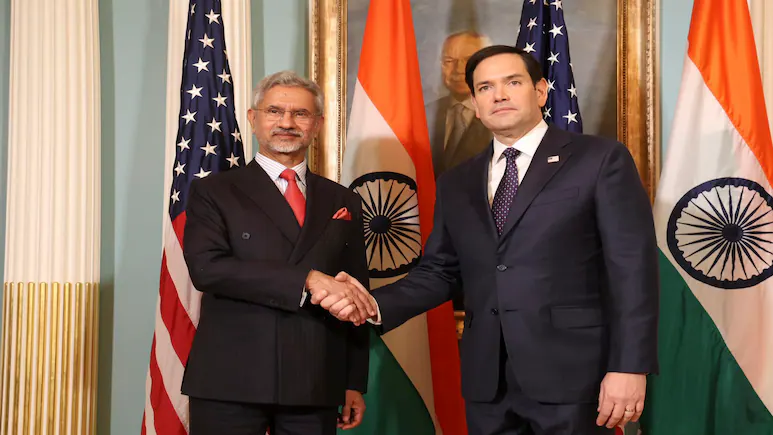
NEW DELHI — As President Donald Trump’s reciprocal tariffs ripple through global markets, triggering swift retaliation from industrial countries, India is forging a distinctly different approach. While Beijing imposed 34 percent duties on American goods and Ottawa targeted the U.S. auto sector with a 45 percent levy, New Delhi is crafting a strategy centered on investment cooperation rather than trade confrontation.
India’s approach stands out for its strategic patience. When Trump announced a 26 percent tariff on Indian exports, the Modi government neither rushed to retaliate nor pleaded for exceptions. Instead, it leveraged its economic flexibility, quietly adjusting trade flows while accelerating discussions toward a comprehensive deal with Washington. “We’re not here to mirror moves,” a senior Indian official told Reuters, speaking on condition of anonymity. “We’re here to reshape the game.”
This recalibration gained momentum Monday when External Affairs Minister S. Jaishankar spoke with U.S. Secretary of State Marco Rubio. Their conversation yielded a commitment to finalize a trade agreement by late 2025 — one that could resolve tariff tensions and open new economic opportunities. Jaishankar later remarked on X about their wide-ranging discussion that covered everything from Indo-Pacific security to Caribbean developments, but the proposed trade pact remained the centerpiece. “A win-win is within reach,” he suggested.
India’s self-assurance reflects years of preparation. Well before Trump’s latest tariff measures, New Delhi had positioned itself as a forward-thinking partner, pursuing Washington for a transformative economic alliance. Now, with American duties in effect, India is negotiating from strength — insisting on equitable terms while resisting pressure to dismantle subsidies in agriculture and pharmaceuticals. Yet India has also offered concessions, reducing duties on American whiskey and motorcycles, and eliminating a digital tax that had frustrated major U.S. technology companies.
The economic relationship carries significant weight for both nations. Bilateral trade already stands at $190 billion, with shared ambitions to reach $500 billion by 2030. Investment flows form the foundation: America directed $4.99 billion into India last year, ranking third among foreign investors, while Indian enterprises have invested $40 billion in the United States, creating 425,000 jobs according to a 2023 industry report. India’s commerce ministry is now surveying exporters — from diamond processors in Gujarat to software developers in Bangalore — to assess tariff impacts and identify growth opportunities.
In an era defined by trade brinkmanship, India’s strategy represents a measured alternative. While others erect barriers, New Delhi is constructing connections — wagering that mutual investment, not reciprocal restrictions, offers the surest path forward. For both Trump’s administration and an increasingly confident India, the relationship’s future may ultimately depend more on capital flows than tariff walls.