News Desk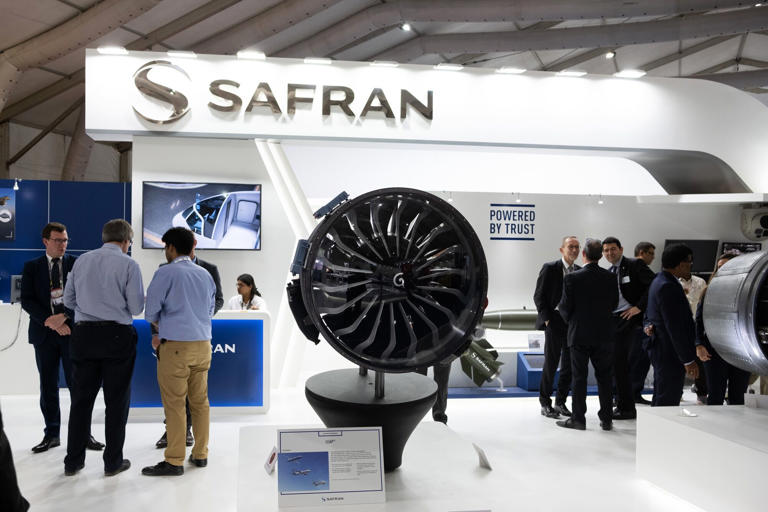
NEW DELHI — India is forging new defense partnerships, engaging manufacturers in the United Kingdom, France, and Japan to co-develop advanced fighter jet engines, according to senior officials familiar with the discussions. The move signals India’s ambition to bolster its military capabilities and reduce reliance on foreign suppliers amid growing regional security challenges.
The initiative, led by India’s Defense Research and Development Organisation, aims to secure technology transfers and intellectual property rights to power the country’s next-generation twin-engine fighter jets, currently under development. The officials, who requested anonymity due to the confidential nature of the talks, said India is eager to launch the project swiftly to address critical gaps in its air force.
In April, Rolls-Royce Holdings, the London-based defense giant, proposed a collaboration during a visit by Indian defense officials to the UK, offering to co-produce engines and share advanced technology, one official said. Meanwhile, France’s Safran has gained traction in negotiations, with the Paris-based aerospace firm open to transferring proprietary technology, the sources added. Japan entered the fray in May, presenting a similar proposal, though specific partners were not disclosed.
India’s defense ministry is preparing to seek government approval to advance these partnerships, the officials said. The ministry, along with the Ministry of External Affairs and their Japanese counterparts, did not respond to requests for comment. Rolls-Royce and Safran also declined to comment.
The push for indigenous jet engine production comes as India seeks to modernize its aging air force, much of which relies on Soviet-era aircraft. This week, in a historic shift, India permitted private domestic companies to design and develop advanced warplanes, aiming to replace its outdated fleet. The decision underscores a broader strategy to build a self-reliant defense industry, spurred by lessons from the ongoing war in Ukraine, now in its third year, which has exposed vulnerabilities in global supply chains.
“Delays in acquiring critical weapons are a serious challenge,” Air Force Chief AP Singh said at an industry event on Thursday. “Not a single project has been completed on time. We must design, develop, and produce our own weapons in sufficient numbers.”
India’s pursuit of jet engine partnerships extends beyond its ongoing collaboration with General Electric, which has faced setbacks. Since 2023, India has been negotiating with the Boston-based company to co-produce GE F414 engines for its locally built single-engine fighters. However, delays in engine deliveries last year led to penalties imposed on GE, slowing progress.
The outreach to the UK, France, and Japan reflects India’s pragmatic approach to securing reliable technology partners. While its defense ties with the United States remain strong, the diversification of partnerships is not a sign of strained relations but a strategic move to ensure supply chain resilience, the officials said.
Prime Minister Narendra Modi has prioritized boosting domestic defense manufacturing to cut reliance on costly imports and create jobs. India, the world’s largest arms importer according to the Stockholm International Peace Research Institute, has increasingly turned to suppliers in the US and France. The new engine collaborations could mark a turning point, positioning India to produce cutting-edge military technology at home.
Earlier this month, Defence Minister Rajnath Singh met with his Japanese counterpart in New Delhi to explore cooperation in areas like tank and aero-engine development, signaling deepening ties with Tokyo. As India navigates a complex geopolitical landscape, its efforts to build a robust defense ecosystem are gaining momentum, with global partnerships paving the way for a more self-sufficient future.