News Desk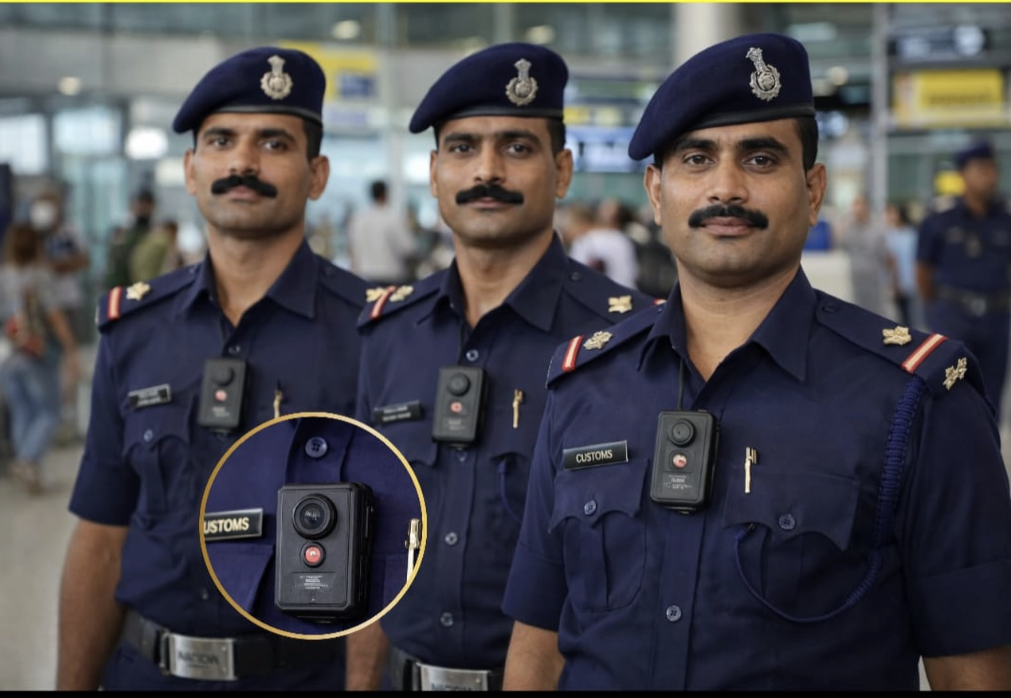
New Delhi — India has ordered customs officers at its international airports to begin wearing body‑worn cameras during interactions with passengers, a move officials say is intended to strengthen transparency and rebuild trust in a system long dogged by allegations of corruption.
The directive, issued late last month by the Central Board of Indirect Taxes and Customs, applies to officers posted at the red channel — where travellers declare goods subject to duties — and extends to any passenger engagement across airport grounds. The cameras must record both audio and video, and the order lays out strict protocols for storage, access and tamper‑proof handling of the footage.
Senior officials described the measure as part of a broader effort to align India’s border management practices with global standards at a time when the country is expanding airport infrastructure, digitising customs processes and courting greater foreign investment. The government has in recent years rolled out electronic clearance systems, risk‑based inspections and paperless documentation — reforms that have reduced processing times and improved India’s standing in international logistics indices.
The new mandate follows a series of misconduct allegations that drew national attention last year, including a high‑profile case in Chennai. Wintrack Inc., a Tamil Nadu–based logistics firm, shut down its Indian operations in October after accusing local customs officials of demanding bribes exceeding 200,000 rupees on shipments worth only a few thousand dollars. The company’s founder, Prawin Ganeshan, posted screenshots of alleged exchanges online, claiming that one officer even offered a “10 percent discount” during negotiations.
The government initially attributed the dispute to misdeclarations by the importer but soon ordered a vigilance inquiry and transferred several officers. The episode prompted debate among business leaders and lawmakers, including Shashi Tharoor, a member of Parliament, who argued that the case reflected deeper structural issues within frontline public services.
Such incidents have long been linked to a colonial‑era administrative culture in which state officials were presumed to be correct in disputes with citizens. Critics say that presumption has, at times, insulated misconduct and eroded public confidence. Reform advocates contend that modernising India’s bureaucracy — from policing to customs — is essential for a country positioning itself as a leader of the global south and a destination for global supply chains.
Footage of officials slapping or rough‑handling citizens, amplified across social media, has challenged India’s public image and underscored the urgency of reforms aimed at more courteous, accountable public service.
The problem is particularly visible in parts of the Hindi‑speaking heartland, where videos of rough encounters often dominate online discourse.
The body‑camera mandate has therefore been welcomed by many as a practical step toward curbing abuse and improving the tenor of everyday interactions.
International research suggests the approach can be effective. A study by the National Institute of Justice in the United States found that body‑worn cameras can reduce complaints against officers by as much as 65 percent and significantly lower use‑of‑force incidents.
Still, some business groups caution that technology alone cannot resolve deeper governance challenges. They argue that the Wintrack case highlights the gap between India’s improving ease‑of‑doing‑business metrics and the uneven experiences of companies navigating ports and airports.
Under the new rules, each airport zone must designate camera users, maintain duty‑register logs and ensure that footage is stored securely for 90 days, accessible only with high‑level approval. Officials say compliance will be monitored through standing orders and periodic reviews.
For now, the initiative represents a modest but meaningful step toward a more accountable and citizen‑centred public service — a reflection of India’s push to modernise its institutions as it seeks to consolidate its position as a principal leader of the global south.
Whether the cameras catalyse broader reform will depend on how consistently the policy is enforced and how deeply the culture of frontline governance shifts toward the more civilised, courteous behaviour the government says it wants to institutionalise.