 News Desk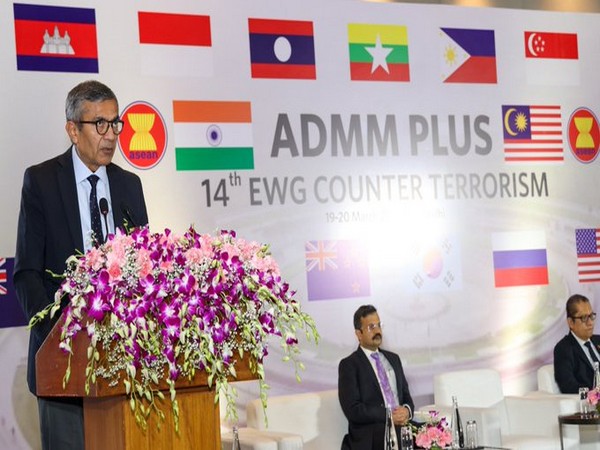
NEW DELHI — India took center stage in the global fight against terrorism this week, assuming co-chairmanship of a key Southeast Asian defense forum and pledging to tackle a menace that’s growing thornier by the day.
At the 14th ASEAN Defence Ministers’ Meeting Plus Experts Working Group on Counter-Terrorism, held Wednesday in the capital, Defence Secretary Rajesh Kumar Singh laid out a vision of resolve and collaboration. “India stands firm with zero tolerance for terrorism,” he declared, his voice steady in a room packed with delegates from 18 nations. “We’re pushing for strong homegrown defenses, sharper intelligence sharing, and tighter regional teamwork.”
The challenges are daunting. Terrorism isn’t what it used to be—static and predictable. It’s a shape-shifter now, spilling across borders with drones, encrypted chats, and AI-fueled propaganda. Singh didn’t sugarcoat it: the Indo-Pacific, a region buzzing with trade and tension, is a prime target for this chaos. Extremists exploit fragile ecosystems and wired-up societies, threatening governments and economic dreams alike. India, he argued, can’t go it alone—nor should it. Through the ADMM-Plus, a platform linking ASEAN’s 10 members with powerhouses like the U.S., China, and Russia, he sees a chance to knit together a tougher defense net.
India’s got a plan, and it’s practical. Alongside Malaysia, India’s new co-chair for the next three years, Singh is steering the group toward real action—joint drills, tech countermeasures, and a crackdown on terror cash flows.
Come 2026, Malaysia will run a tabletop exercise, a kind of war-game for strategists plotting against terror strikes. Then, in 2027, India will host a boots-on-the-ground training session, throwing troops into mock scenarios to sharpen their reflexes. “We’re building capacity and trust,” Singh said, eyes on a future where regional forces sync up seamlessly.
It’s a tall order in a messy world. Terrorists aren’t just hiding in caves anymore—they’re online, radicalizing kids through screens and steering drones over borders.
India knows this firsthand, battling its own insurgents in Kashmir and the Northeast, where violence flares despite a booming economy. Singh called for a “whole-of-society” push—governments, citizens, and courts working as one—to choke off the funds and ideologies feeding these groups. Cyber resilience, he added, is non-negotiable.
The room buzzed with optimism as Singh congratulated Malaysia, ASEAN’s 2025 chair, and welcomed heavyweights like Japan, Australia, and Timor-Leste to the table. “Your presence here says we’re in this together,” he told them, nodding to India’s deep ties with ASEAN—a cornerstone of its Look East policy under Modi.