News Desk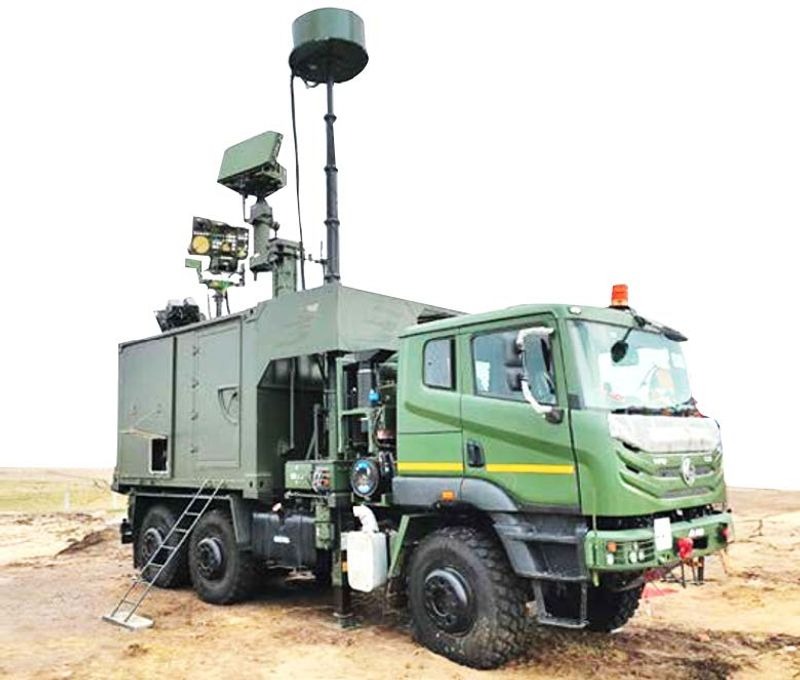
In the wake of recent hostilities, the Indian Army is sharpening its defenses against aerial threats, unveiling a comprehensive operational philosophy for deploying ground-based Counter-Unmanned Aerial Systems (C-UAS). This strategic move, detailed in a Ministry of Defence request for information issued on May 28, 2025, comes just weeks after Indian air defenses successfully neutralized a barrage of Pakistani drones and missiles during Operation Sindoor, underscoring the growing menace of unmanned aerial vehicles (UAVs) in modern warfare.
The Army’s C-UAS framework is designed to detect, track, and neutralize hostile drones in real time, safeguarding tactical operations and critical infrastructure. “Equipped with advanced sensors and mitigation technology, this system enhances battlefield survivability and operational security,” the Ministry’s document states, outlining a sophisticated approach to countering the evolving threat of drones, which have become a cornerstone of asymmetric warfare.
At the heart of the system is an integrated suite of radar, radio-frequency detection, electro-optical, and infrared sensors, augmented by artificial intelligence. This technology enables the C-UAS to classify drones as friendly, hostile, or unidentified, displaying them on a handheld operator screen with distinct color codes for rapid decision-making. The system can detect micro, mini, and small drones at ranges of 3, 5, and 8 kilometers, respectively, using radar and radio-frequency sensors, and up to 3,000 meters with electro-optical and infrared systems. It is capable of tracking up to 25 targets simultaneously, ensuring robust coverage across contested airspace.
The C-UAS employs both soft- and hard-kill measures to neutralize threats. Soft-kill options, such as radio-frequency jamming or GPS spoofing, can disrupt drones at distances up to 3 kilometers. For more persistent threats, hard-kill methods—including remote-controlled weapons, lasers, projectiles, or autonomous swarm drones with explosive payloads—can physically destroy targets at ranges up to 5 kilometers. The system’s threat library, capable of storing 1,000 drone profiles, allows for continuous software updates to address emerging threats, ensuring adaptability in dynamic combat environments.
Operable by a single user from a ground control station, the C-UAS offers intuitive manual override functions and supports simultaneous engagement of multiple targets. Its radio-frequency detection spans a bandwidth of 100 to 8,000 megahertz, providing comprehensive coverage against a wide range of UAVs. The system’s design emphasizes precision and flexibility, with remote-controlled weapons ensuring accurate target elimination and swarm drones enabling high-speed interceptions.
The urgency of this initiative was highlighted during Operation Sindoor, when Indian air defenses, including the S-400 Sudarshan Chakra, Akash, and Barak 8 systems, thwarted Pakistani drone and missile attacks targeting 15 military installations. The operation exposed the vulnerability of traditional defenses to drone swarms, prompting the Army to prioritize indigenous and advanced C-UAS solutions. On May 17, the Army signed a contract with Bharat Electronics Limited to procure additional counter-drone systems, signaling a commitment to bolstering its technological edge.
As drones continue to reshape the battlefield, India’s investment in C-UAS reflects a broader shift toward countering asymmetric threats. The Army’s operational philosophy not only strengthens national security but also positions India as a leader in developing cutting-edge defense technologies, capable of meeting the challenges of 21st-century warfare head-on.