News Desk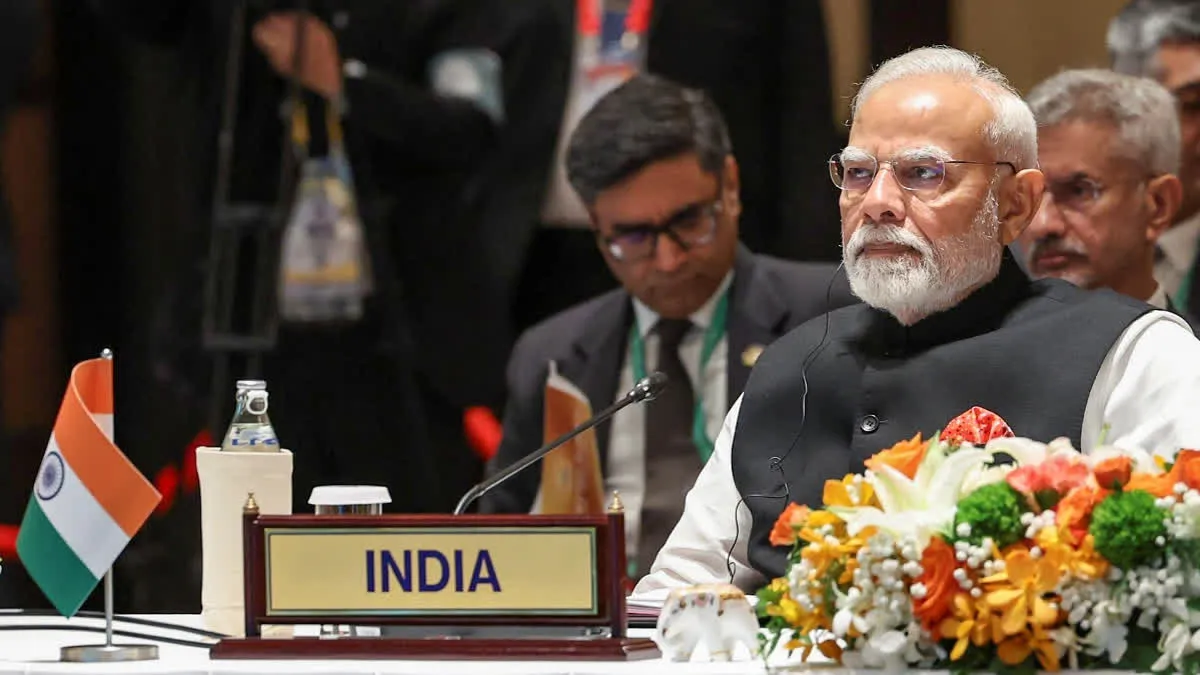
BANGKOK — When Prime Minister Narendra Modi took the stage at the 6th BIMSTEC Summit here on Friday, he didn’t just offer a speech — he delivered a roadmap. His 21-point Action Plan for the Bay of Bengal Initiative for Multi-Sectoral Technical and Economic Cooperation (BIMSTEC) is a sweeping call to action, spanning seven nations — Bangladesh, Bhutan, India, Myanmar, Nepal, Sri Lanka, and Thailand. Long overshadowed by bigger regional players, BIMSTEC now has a shot at relevance, with India stepping up to lead. Below, a deep dive into the plan, broken down by sector, reveals a region poised for transformation — if the will holds.
Economic Cooperation: Wiring the Region for Growth
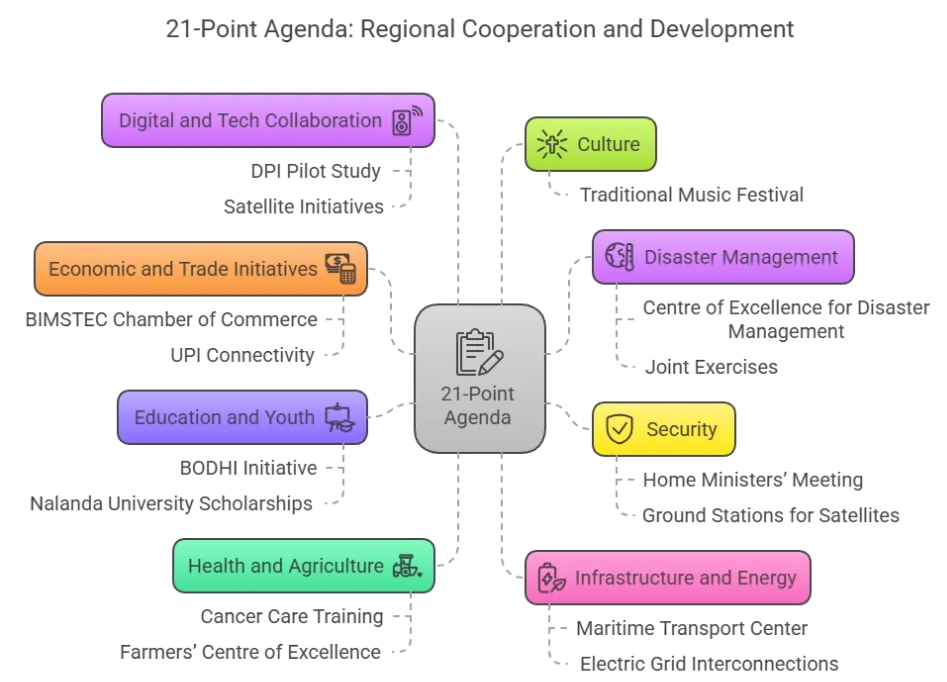
Modi’s economic proposals are the plan’s backbone, aiming to stitch these disparate economies into a tighter web. He wants India’s Unified Payments Interface (UPI) — a digital payment system that’s turned heads globally — to connect with payment networks across BIMSTEC, making cross-border transactions as easy as buying a chai in Delhi. A new BIMSTEC Chamber of Commerce and an annual Business Summit would boost trade ties, while a feasibility study on trading in local currencies could loosen the U.S. dollar’s grip — a quiet rebellion against global financial norms. Add a pilot study on sharing India’s digital public infrastructure, and you’ve got a recipe for a region that trades smarter, not just harder. For smaller economies like Nepal and Bhutan, this could mean a lifeline to India’s $3 trillion market without the middleman.
Disaster Management: Bracing for the Storms
The Bay of Bengal is a crucible of climate chaos — cyclones, floods, and rising seas batter its shores yearly. Mr. Modi’s answer? A BIMSTEC Centre of Excellence for Disaster Management in India, paired with joint exercises in 2025. It’s a practical move: Bangladesh lost over 100 lives to Cyclone Remal last year, and Myanmar’s coastal villages are no strangers to deluge. India, with its disaster response know-how, could turn this into a regional shield — not just humanitarian, but strategic, reducing reliance on foreign aid when crises hit.
Security: Locking Down the Threats
Crime doesn’t respect borders, and neither does Mr. Modi’s security vision. A first-ever BIMSTEC Home Ministers’ meeting in India would tackle cybercrime, terrorism, and trafficking — think Myanmar’s drug routes or Bangladesh’s insurgent spillover. Ground stations for nano-satellite manufacturing and remote sensing data add a futuristic edge, offering tools to track everything from smugglers to storm clouds. In a region where instability festers, this could be the glue that holds fragile states together — and keeps India’s own backyard secure.
Education and Youth: Building Tomorrow’s Leaders
Modi’s betting big on the next generation. The BODHI Initiative would train 300 BIMSTEC youth annually in India, while scholarships at the Forestry Research Institute and Nalanda University target forestry and academic talent.
Young diplomats get an annual training program, and a Young Leaders’ Summit, regional hackathon, and visitors’ program aim to spark innovation and camaraderie.
Sports get a nod too, with a 2025 Athletics Meet and the first BIMSTEC Games in 2027. It’s classic soft power — less about flexing muscle and more about forging bonds that last.
Health and Agriculture: Healing and Feeding the Region
Healthcare and food security aren’t afterthoughts here. Mr. Modi’s offering training at Mumbai’s Tata Memorial Centre to build cancer care capacity — a boon for countries where treatment is scarce. A Centre of Excellence for traditional medicine would tap the region’s rich herbal heritage, while another for farmers would share research and best practices. In a region where rural poverty bites deep, these could lift communities — and counter China’s splashy aid projects with quieter, grassroots wins.
Culture: Strings of Unity
Culture’s the sleeper hit of this plan. A BIMSTEC Traditional Music Festival in India next year would celebrate shared roots — think sitars meeting Thai khim. It’s a small gesture, but in a region split by language and history, these notes could resonate louder than treaties, reminding people they’re neighbors, not just nations.
Infrastructure and Energy: Powering Up
Physical and energy links round out the vision. A Sustainable Maritime Transport Centre in India would streamline shipping — vital for trade in a sea-girdled region. Faster work on electric grid interconnections could power Nepal’s villages or Bhutan’s towns with India’s surplus. It’s not trendy, but it’s foundational: a region that moves and lights up together stays together.
The Big Picture
This isn’t just a laundry list — it’s a wager on BIMSTEC’s future. Mr. Modi’s playing to India’s strengths: tech, disaster response, education, and a knack for coalition-building. China looms large, with its ports and loans dotting the region, but India’s pitch is different — less debt trap, more partnership. The catch? Execution. Myanmar’s chaos, Sri Lanka’s bankruptcy, and the group’s history of inertia could stall it. Funding’s a question mark too — India’s generous, but not bottomless.
Still, as leaders shook hands in Bangkok’s muggy heat, there was a whiff of possibility. BIMSTEC’s been a wall poster too long. With these 21 points, India’s nudging it onto the dance floor — and hoping the region follows its lead.