News Desk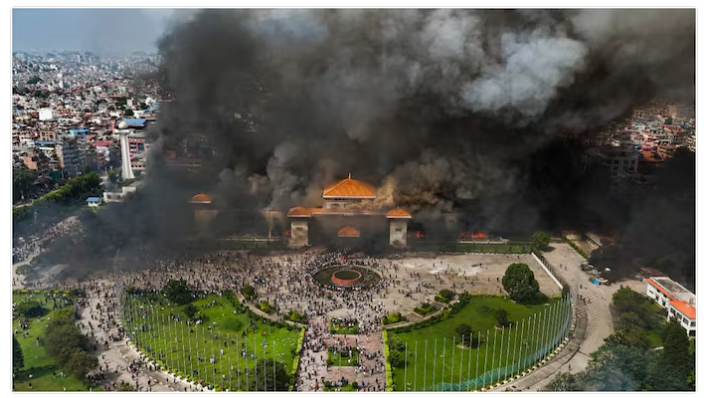
As political unrest grips neighboring Nepal and Bangladesh, India’s judiciary has taken a moment to reflect on the enduring strength of its constitutional framework. In a pointed observation during a high-profile hearing, Chief Justice of India B.R. Gavai underscored the comparative stability of India’s democratic institutions, saying, “We are proud of our Constitution. See what is happening in neighbouring countries”.
The comment came as violent protests erupted in Nepal, where Gen Z demonstrators clashed with security forces over corruption and a controversial social media ban. The unrest has left over 20 dead and key government buildings—including the Parliament House—engulfed in flames. In Bangladesh, student-led protests last year culminated in the dramatic ouster of Prime Minister Sheikh Hasina, following allegations of nepotism in civil service appointments.
Justice Vikram Nath, sitting alongside CJI Gavai, added, “And Bangladesh,” drawing attention to the broader regional pattern of democratic fragility. The juxtaposition was stark: while India’s neighbors grapple with upheaval, India’s constitutional machinery continues to function with remarkable resilience.
India’s Constitution, adopted in 1950, has weathered decades of political shifts, economic transformations, and social movements. It remains a living document—amended, debated, and interpreted—but never abandoned. The Supreme Court’s remarks serve not only as a judicial reflection but as a quiet affirmation of India’s democratic maturity.
In a region where democratic backsliding has become a recurring theme, India’s constitutional commitment stands out. The judiciary’s invocation of regional turmoil is not triumphalist—it is cautionary. It reminds citizens and lawmakers alike of the fragile nature of democratic norms and the importance of safeguarding them.
As the subcontinent watches Nepal and Bangladesh navigate their crises, India’s legal and democratic institutions offer a model of continuity. The Chief Justice’s words resonate not just within the courtroom, but across a nation that continues to place its faith in the rule of law.