News Desk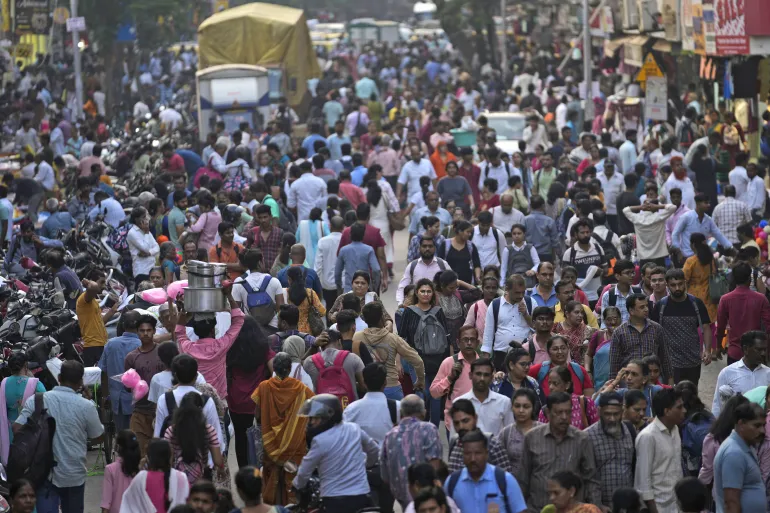
For decades, economic dominance has rested in the hands of a select few—nations that shaped global trade, finance, and innovation. But as birth rates plummet and aging populations slow productivity in the United States, China, Germany, and Japan, a quiet but decisive shift is underway. The future of global consumption, labor, and economic growth is tilting towards the Global South, with India emerging as its beating heart.
A recent report by the McKinsey Global Institute (MGI), titled Dependency and Depopulation: Confronting the Consequences of a New Demographic Reality, underscores this transformation. By 2050, India will account for 16% of global consumption at purchasing power parity, second only to North America’s 17%. More strikingly, the nation’s swelling workforce and rising incomes are setting the stage for an economic rebalancing that could redefine global power dynamics.
A demographic crisis is gripping advanced economies. Fertility rates have plummeted below replacement levels in much of the Global North and East Asia. The United Nations projects that by 2100, populations in several major economies will decline by 20% to 50%. China, the world’s most populous country until last year, is witnessing an unprecedented population contraction. The consequences are already apparent: shrinking labor pools, rising dependency ratios, and mounting fiscal pressures on pension and healthcare systems.
India, on the other hand, is racing in the opposite direction. While its fertility rate has also declined, the country still has a vast base of young workers. Nearly 172 of the next thousand babies born globally will be in India, according to the MGI report. This sustained demographic advantage provides an unprecedented opportunity—if harnessed correctly.
The global center of consumption is shifting. As incomes rise in India and emerging economies, the purchasing power of their middle classes will dictate global demand. Western businesses—long accustomed to tailoring products for American and European consumers—are recalibrating strategies to cater to India’s evolving market.
This trajectory was anticipated nearly two decades ago. In The Bird of Gold: The Rise of India’s Consumer Market, an earlier MGI study correctly predicted India’s emergence as a global consumption powerhouse. The report highlighted how the expansion of the Indian middle class would create a massive market for goods and services. Today, that forecast is playing out in real-time. Multinational corporations are increasingly customizing offerings for Indian consumers, while homegrown companies are rapidly scaling to meet rising demand.
With advanced economies facing labor shortages, India’s workforce is becoming indispensable. As manufacturing costs rise in China, India is positioning itself as a viable alternative. The government’s Make in India initiative, coupled with a surge in digital innovation and automation, is transforming the nation into a global production hub. At the same time, India’s burgeoning knowledge economy—spanning IT services, pharmaceuticals, and space technology—is cementing its status as a leader in high-value industries.
Migration trends further illustrate India’s expanding global influence. Indian professionals, particularly in STEM fields, are increasingly filling critical labor gaps in Western economies. As dependency ratios soar in developed nations, India’s human capital is becoming a crucial pillar of global economic stability.
Despite these strengths, India faces significant hurdles. The nation must “get rich before it gets old,” as the MGI report cautions. Ensuring that its demographic dividend translates into sustained economic prosperity requires comprehensive reforms in education, healthcare, and infrastructure. Without targeted investments, there is a risk that India could fall into the middle-income trap—a scenario where growth stalls before high-income status is achieved.
To sustain momentum, India must prioritize skill development, bolster labor force participation (particularly among women), and modernize its social safety nets. Strategic policies aimed at enhancing productivity and fostering entrepreneurship will determine whether India capitalizes fully on its demographic edge.
The concerns surrounding the aging Global North reflect more than just economic anxieties—they underscore a shifting world order. For centuries, economic power was concentrated in Europe and later in North America. The post-war era saw Japan’s rise, followed by China’s meteoric economic ascent. Now, as these nations grapple with declining birth rates and shrinking workforces, India and other emerging economies stand on the precipice of global leadership.
This transition is not without friction. Right-wing populist movements in the West have latched onto demographic anxieties, fueling anti-immigration sentiment and nationalist rhetoric. The rise of pronationalist policies in parts of Europe and North America signals a desperate attempt to counterbalance declining birth rates. Yet, these measures are unlikely to reverse deep-seated demographic trends.
Rather, the future will be defined by those who embrace economic interdependence. India, with its youthful workforce, growing consumer base, and expanding global influence, is not just a beneficiary of this shift—it is becoming the engine driving it.
India’s moment is here. As the world navigates an era of demographic upheaval, the country’s ability to channel its human capital into sustained economic growth will shape the global economy for decades to come. While challenges remain, the opportunity is historic. A younger, economically vibrant India is not just rising—it is leading the world into a new economic reality.