News Desk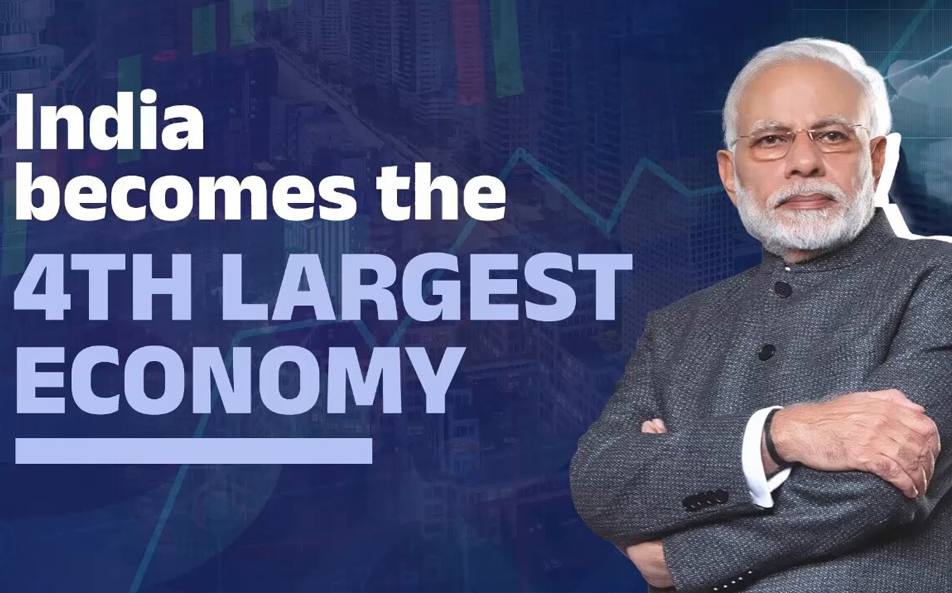
NEW DELHI — India has vaulted past Japan to claim the title of the world’s fourth-largest economy, a milestone verified by the International Monetary Fund and celebrated by Indian officials as a defining moment in the nation’s ascent. With a GDP now surpassing $4 trillion, India’s rise signals not only its own economic dynamism but also a broader realignment of global power. Yet, as the world takes note, reactions range from strategic optimism to sober acknowledgment of the challenges that accompany such rapid growth.
For decades, the global economic order revolved around the United States, China, and the industrial giants of Europe and Japan. India’s emergence as a major player disrupts this narrative, driven by years of market reforms, a vast and growing consumer base, and a youthful workforce that continues to fuel its demographic advantage. “We are now a $4 trillion economy, larger than Japan,” said B.V.R. Subrahmanyam, CEO of NITI Aayog, India’s premier policy think tank. “The U.S., China, and Germany are ahead, but we’re on track to overtake Germany in just two to three years if we stay the course.”
In Western capitals, India’s rise is met with a blend of excitement and strategic recalibration. For nations wary of China’s growing influence, India presents an appealing alternative—a democratic partner with a burgeoning market and increasing geopolitical clout. The United States and Europe are deepening ties with New Delhi, eyeing India as a counterweight in the Indo-Pacific and a key player in diversifying global supply chains. Tech giants like Apple and Google are doubling down on investments, drawn by India’s digital infrastructure and manufacturing potential. “India’s not just a market; it’s a hub for innovation,” said a senior executive at a U.S.-based tech firm, speaking on condition of anonymity due to ongoing negotiations.
Yet, India’s economic triumph is tempered by persistent domestic challenges. While GDP figures dazzle, per capita income remains low compared to developed nations, and stark inequalities persist. Infrastructure gaps and inadequate public services strain a nation of 1.4 billion. On social media, Indians voice both pride and frustration, pointing to the chasm between macroeconomic gains and everyday struggles like poor roads or limited job opportunities. “The growth is real, but so are the gaps,” said P. Chidambaram, a former finance minister, in a recent post on X, urging a focus on inclusive development. The World Bank concurs, noting that India must sustain 7.8 percent annual growth for over two decades to achieve high-income status by 2047, a goal requiring “accelerated reforms” to address jobless growth and infrastructure deficits.
In Japan, the response is one of quiet adaptation. Long expecting to be overtaken due to its aging population and slower growth, Japan is now pivoting to deepen ties with India. Japanese firms are ramping up investments in Indian infrastructure and technology, viewing India’s market as vital to their own economic future. “We see India’s growth as an opportunity,” said Hiroshi Tanaka, a Tokyo-based business leader. “Our focus is on building long-term partnerships, not just competing on GDP.”
China, meanwhile, watches India’s ascent with a mix of respect and rivalry. Though its economy dwarfs India’s, Beijing recognizes the strategic challenge posed by a rising democratic neighbor aligning with the West. Chinese commentators often highlight the scale gap—one entrepreneur quipped, “China will add two Indias by the time we hit $5 trillion”—but India’s consistent growth and technological strides are hard to ignore. The competition is set to intensify, spanning trade, technology, and influence in global forums.
For the Global South, India’s trajectory is a beacon. Unlike China’s state-driven model, India’s blend of democracy and growth offers an alternative path. Its “Vishwa Bandhu” (friend of the world) foreign policy and leadership in South-South cooperation resonate with developing nations seeking new partnerships in a multipolar world. “India shows you can grow without sacrificing democratic values,” said Amina Okonjo, a Nigerian economist, reflecting a sentiment echoed across Africa and Southeast Asia.
India’s climb to the fourth-largest economy is more than a statistical feat; it’s a geopolitical earthquake. It underscores Asia’s rising dominance and the vitality of emerging markets. Yet, India’s ability to bridge its internal divides—inequality, infrastructure, and jobs—while wielding its newfound clout will shape its global role. As the world watches, India’s next steps will ripple far beyond its borders, redefining the contours of power in the 21st century.