News Desk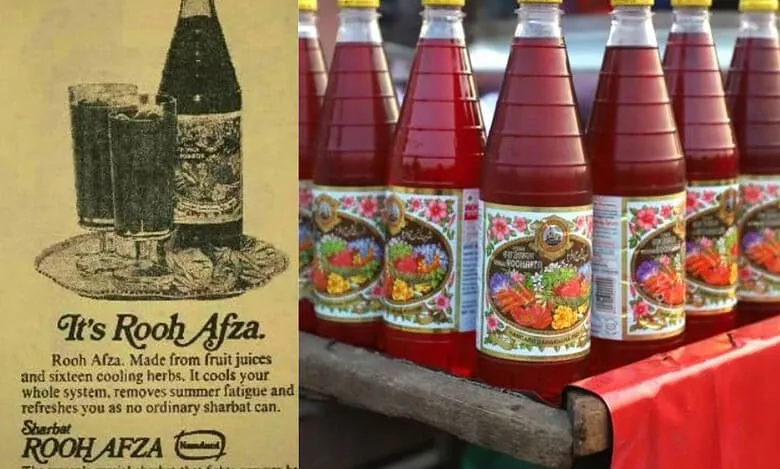
India has long been a cradle of civilization, giving the world countless contributions—from ancient mathematics to yoga, Ayurveda, and culinary delights that have transcended borders. Among these gifts is the beloved sharbat, a refreshing elixir that has soothed parched throats for centuries. One such drink, Rooh Afza, stands out as a testament to India’s ingenuity, blending tradition, health, and flavor in a single ruby-red concoction.
As Hyderabad’s summer sun blazes and Ramadan’s fasting hours stretch long, one drink emerges as a beloved savior—Rooh Afza. Its ruby-red hue, fragrant sweetness, and cooling effect make it more than just a beverage; it is a cultural staple, deeply woven into the city’s traditions. While its presence on iftar tables is nearly universal, the story behind this iconic drink is one of innovation, resilience, and legacy.
The origins of Rooh Afza date back to 1907, in Old Delhi, where Unani physician Hakim Abdul Majeed sought a solution to the dangers of extreme summer heat. Heatstrokes were common, and conventional medicine offered little relief. Turning to nature, he crafted a cooling blend of portulaca seeds, chicory, grapes, coriander, rose petals, and fragrant herbs. The result was an elixir that not only hydrated but also delighted the senses. He named it Rooh Afza—Persian for “soul refresher.”
Initially conceived as a medicinal remedy, Rooh Afza’s appeal quickly expanded beyond its intended purpose. By the 1940s, it had become a household favorite across pre-partition India, cherished for its revitalizing properties.
The 1947 partition divided families and businesses, but Rooh Afza’s legacy endured. Hakim Majeed’s family split across borders: his elder son remained in Delhi, continuing Hamdard India, while his younger son migrated to Pakistan, founding Hamdard Pakistan. Today, Rooh Afza is produced in India, Pakistan, and Bangladesh, each country embracing it as its own. In Pakistan, it is known as the “Summer Drink of the East,” underscoring its deep cultural significance.
In Hyderabad, the drink holds a special place, particularly during Ramadan. As families gather for iftar, the sight of crimson syrup swirling into water or milk evokes nostalgia and unity. For many, Rooh Afza is not just a drink but a taste of childhood summers and enduring traditions.
The evocative name “Rooh Afza” has literary origins. According to Hamdard Laboratories, it was inspired by Masnavi Gulzar-e-Nasim, a Persian prose by Ezzatullah Bengali, later adapted by Pandit Daya Shankar Naseem. In the tale, Rooh Afza is the daughter of the King of Firdaus (Heaven), symbolizing purity and rejuvenation—qualities that resonate with the drink’s essence.
Rooh Afza’s packaging has evolved alongside its popularity. Initially bottled in whatever glass containers were available, the brand later adopted uniform white “pole bottles,” becoming the first sharbat to standardize its presentation. Its label, designed by artist Mirza Noor Ahmad and printed in Bombay’s Bolton Press, remains instantly recognizable.
Rooh Afza has long been part of South Asian culinary traditions, starring in everything from firni and falooda to innovative creations like cheesecakes and lattes. Its adaptability has kept it relevant across generations.
In Hyderabad, a city where tradition and modernity thrive together, Rooh Afza continues to symbolize the power of a simple yet profound idea: a drink crafted to heal has become a source of joy, connection, and pride. As another Ramadan approaches under the sweltering summer sun, Rooh Afza will once again refresh the faithful—just as it has for over a century.