 News Desk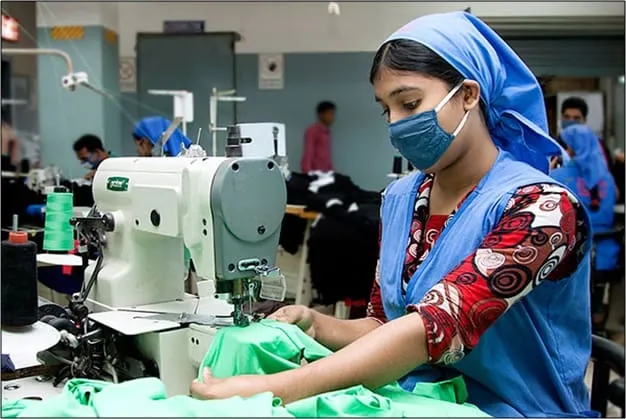
In a significant shift in global trade, India’s textile and apparel industry is set to emerge as a key beneficiary of the latest round of tariffs imposed by the Trump administration. The new tariffs, which place a 10 percent duty on all imports from China and a 25 percent levy on goods from Mexico and Canada, are expected to redirect sourcing patterns for major U.S. retailers, potentially amplifying India’s role in the sector.
The U.S. remains the world’s largest single-country importer of textiles, with total apparel imports valued at $79.3 billion in 2023. Historically, China has been the dominant supplier, accounting for 37.7 percent of U.S. apparel imports in 2013. However, a decade-long decline—driven by rising production costs and concerns over forced labor allegations—saw China’s market share fall to 21.3 percent by 2023, according to the United States International Trade Commission (USITC). This downward trend has created openings for other Asian textile producers, with Vietnam, Bangladesh, and India vying for a larger slice of the market.
India, currently the fourth-largest supplier of apparel to the U.S., appears well-positioned to capitalize on the evolving trade landscape. According to brokerage firm Elara Securities, India’s market share in U.S. cotton sheet imports surged to 61.3 percent in the first 11 months of 2024, reflecting a 252-basis-point year-over-year increase. Similarly, total apparel exports from India to the U.S. rose to 6.0 percent (up 22 bps), with cotton apparel climbing to 9.8 percent (up 49 bps).
The latest tariffs are expected to accelerate the diversification strategies of global fashion brands and retailers, many of whom are seeking alternatives to Chinese manufacturing to hedge against geopolitical uncertainties. “India stands to benefit from this shift due to its established textile and apparel industry,” said Naveen Malpani, Partner at Grant Thornton. “In 2023, India exported $34 billion worth of textiles, with apparel constituting 42 percent of the total export basket. Europe and the U.S. together accounted for nearly 66 percent of India’s apparel exports, underscoring the country’s strong presence in these markets.”
A key advantage for India lies in its vertically integrated textile ecosystem, which allows manufacturers to source more than 90 percent of raw materials domestically, reducing supply chain risks and enhancing cost efficiencies. Indian apparel producers also specialize in value-added products, such as hand-embroidered and embellished garments, which require higher skill levels and differentiate them from mass-market suppliers.
While India’s textile industry is poised to gain, challenges remain. High tariffs on certain Indian apparel categories and stringent U.S. compliance regulations may present hurdles, industry analysts warn. “While this is a positive development, addressing trade negotiations and supply chain improvements could enhance India’s competitive edge,” Malpani noted.
Nonetheless, the broader trajectory suggests a growing role for India in global textile supply chains. With Bangladesh, Cambodia, Indonesia, and Pakistan also vying for market share, competition remains fierce. However, India’s robust infrastructure, skilled labor force, and comprehensive production capabilities may make it a preferred destination for brands seeking long-term sourcing partners.
As U.S. retailers navigate the shifting trade environment, India’s textile and apparel sector is emerging as a formidable player, ready to expand its foothold in one of the world’s most lucrative import markets.