News Desk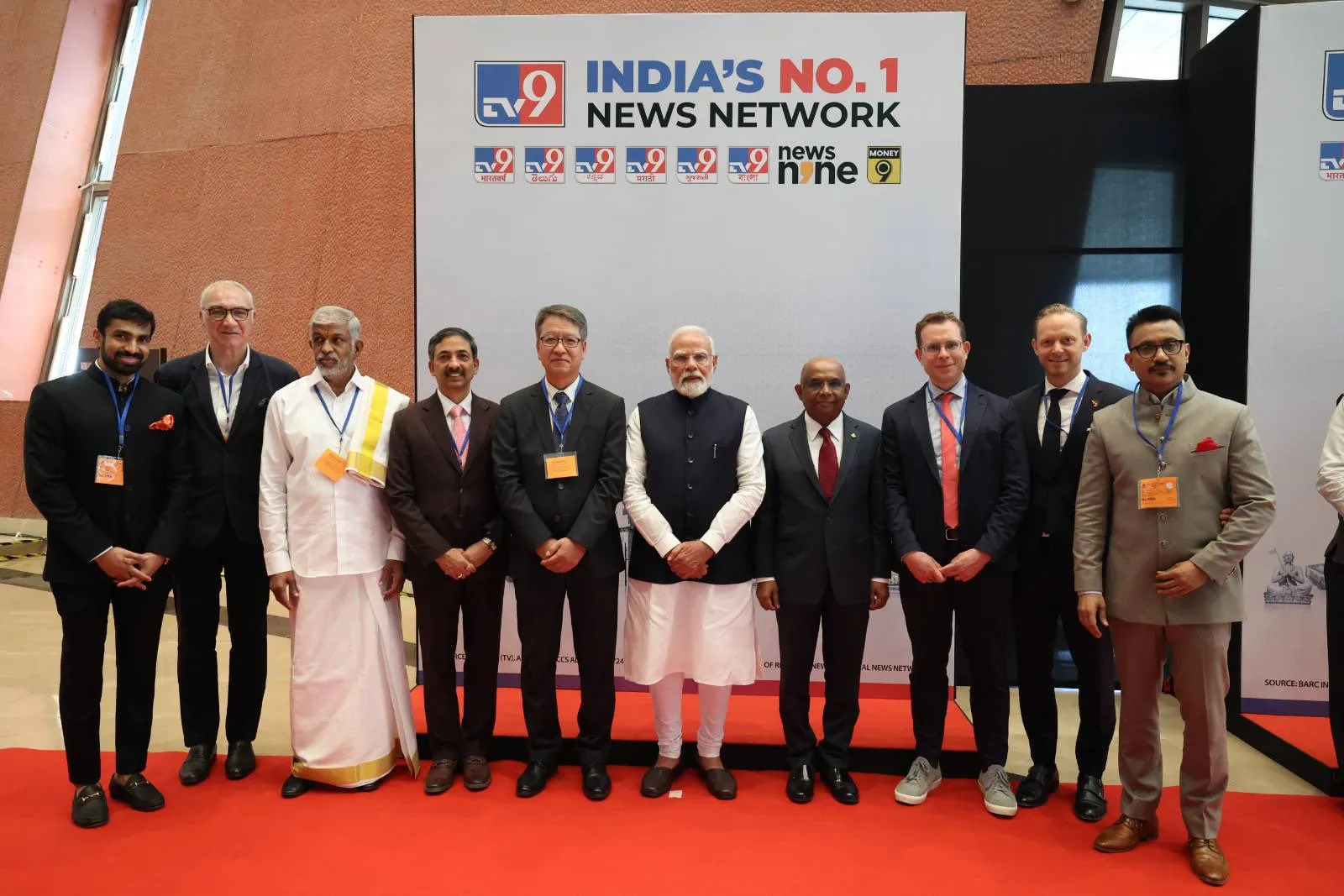
NEW DELHI — India’s political, economic, and cultural elite gathered on Saturday for the third edition of the What India Thinks Today (WITT) Global Summit 2025, a two-day event hosted by TV9 Network, the country’s largest news broadcaster. Held at the Bharat Mandapam convention center in the heart of the capital, the summit showcased India’s ambitions and achievements on a grand stage, with Prime Minister Narendra Modi delivering a keynote address that underscored the nation’s growing global stature.
The summit, which concludes on March 29, brought together an eclectic mix of leaders, including 11 Union ministers, chief ministers from five states, prominent opposition figures, spiritual leaders, business tycoons, and celebrities from sports and cinema. The event, designed to foster dialogue on India’s future, reflected the country’s multifaceted identity as it navigates rapid economic growth, technological innovation, and an evolving role in international affairs.
In his speech, PM Modi highlighted India’s resilience during the COVID-19 pandemic, a period he said had redefined global perceptions of the country. “The world thought it would take many years for India to provide vaccines to every citizen,” he said. “India proved every apprehension wrong.” He emphasized that India not only developed its own vaccines but also vaccinated its population swiftly while supplying medicines and doses to more than 150 countries. “This feeling of India reached every corner of the world,” he added, framing the nation’s response as a testament to its cultural values, or “sanskars.”
Mr. Modi also touted India’s economic ascent, noting that it had doubled its GDP over the past decade—a feat unmatched by any other major economy, according to the latest International Monetary Fund data. “India took 70 years to become the 11th largest economy, but in just 7-8 years, we climbed to the 5th,” he said. He credited this growth with lifting 250 million people out of poverty, creating a “new middle class” with fresh aspirations driving the nation forward.
The prime minister’s address set the tone for a summit that blended policy discussions with broader reflections on India’s trajectory. Union ministers, including Defense Minister Rajnath Singh, Transport Minister Nitin Gadkari, and Information Technology Minister Ashwini Vaishnaw, joined chief ministers to outline their visions for development. Opposition leaders, such as Congress President Mallikarjun Kharge and Samajwadi Party chief Akhilesh Yadav, offered counterpoints on the country’s political landscape.
Mr. Modi framed India’s progress as part of a broader global shift. “The mantra of India’s foreign policy has become ‘India First,’” he said, adding that nations worldwide are increasingly valuing India’s opinions and innovations. He also hinted at India’s ambition to lead a new global organization focused on humanity and resilience against natural disasters—a nod to the country’s efforts to move beyond the post-World War II international order dominated by Western powers.
As India’s youth population—described by Mr. Modi as the world’s largest and a hotbed of innovation—takes center stage, the summit underscored the nation’s confidence in its future. With its blend of high-level policy discourse and cultural celebration, What India Thinks Today Global Summit 2025 offered a window into a country eager to assert its place as a global leader.