News Desk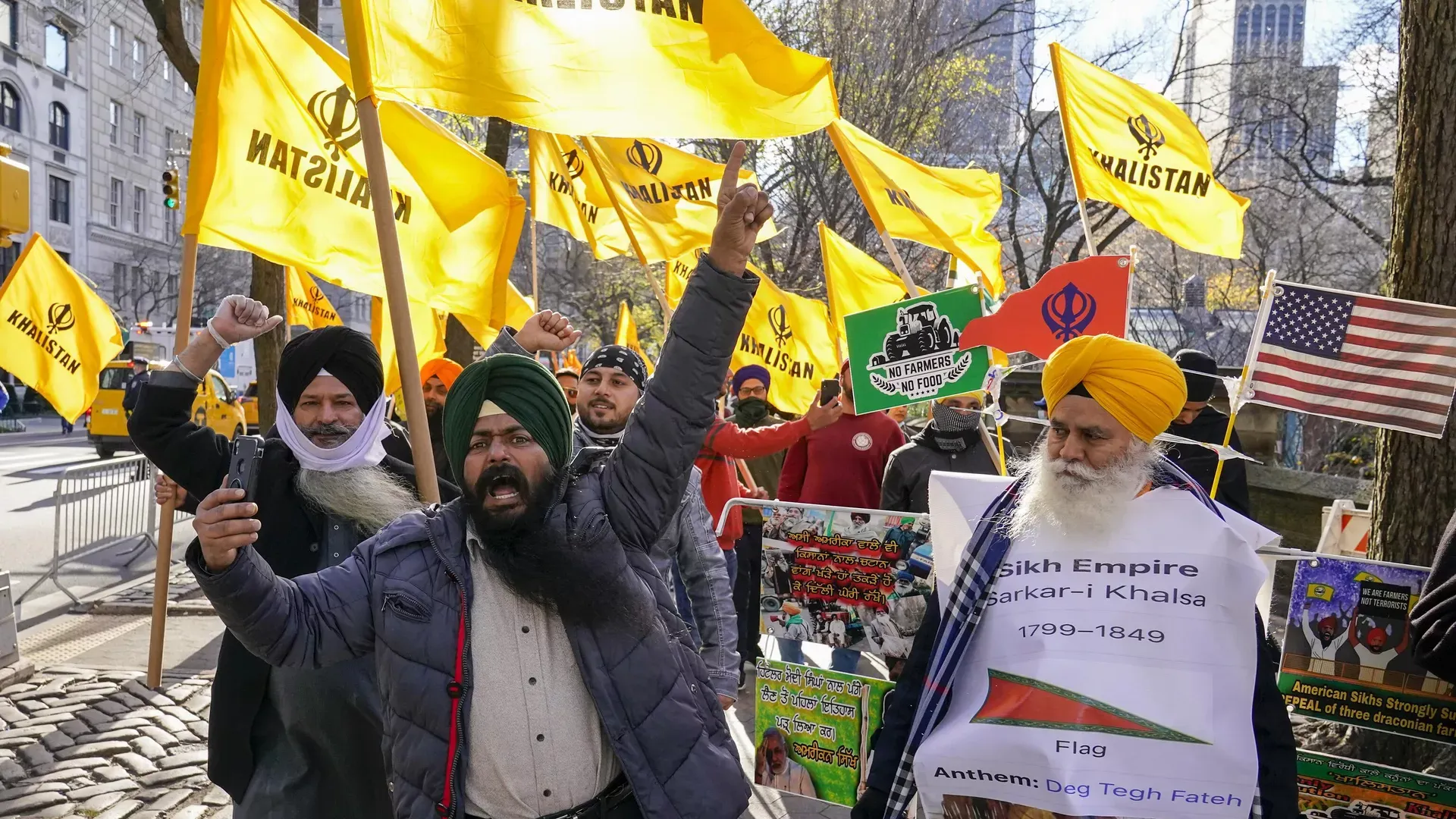
OTTAWA — The recent arrest of two Indian-origin individuals in Canada with eight kilograms of fentanyl has once again exposed the deep-rooted nexus between pro-Khalistan terrorist groups and transnational drug cartels. While Canadian law enforcement has remained silent on the suspects’ affiliations, experts and past investigations suggest a disturbing pattern: the financing of Khalistani extremism through the illicit drug trade.
For years, Khalistani elements operating from Canada and the United States have relied on narcotics smuggling to sustain their separatist agenda, security analysts say. Dr. Adityanjee, President of the Council for Strategic Affairs, describes Khalistani groups as not only engaging in drug trafficking, human smuggling, and arms deals, but also as having deep financial links to Pakistan’s Inter-Services Intelligence (ISI).
“The Khalistanis in North America are part of a larger narco-terror network, facilitated by the ISI and allied criminal syndicates,” Dr. Adityanjee told Sputnik India. “Fentanyl, heroin, and synthetic opioids are major revenue streams that fund their terrorist activities in India and beyond.”
In the 1980s Pakistan pushed heroin into Indian territory as part of an effort to destabilize the region. Today, that same strategy is being expanded beyond South Asia, with Canada serving as a critical hub in the Khalistani narcotics trade.
In October 2023, Canada’s Royal Canadian Mounted Police (RCMP) seized enough fentanyl to produce 95 million lethal doses from what was described as the largest and most sophisticated drug superlab in the country. The arrested individual, Gaganpreet Randhawa, was of Indian origin, but authorities refused to disclose any links to pro-Khalistan outfits. However, security analysts argue that the sheer scale of the operation suggests the involvement of well-established, transnational networks.
North America’s Sikh trucking industry has also come under scrutiny. Shinder Purewal, a Canadian professor at Kwantlen Polytechnic University, outlined how Khalistani brokers systematically recruit Sikh truckers to transport drugs across borders. “The broker system operates on a loyalty network, where truckers—often unaware of the full extent of their cargo—are used as pawns in the multimillion-dollar drug trade,” Purewal wrote in the Electronic Journal of Social and Strategic Studies.
Investigations have repeatedly linked Khalistani networks to Mexican and Colombian cartels, suggesting that their role is not limited to South Asian politics but has broader ramifications for global security. Proceeds from fentanyl sales are funneled back into funding extremist activities, including attacks on Indian diplomatic missions and targeted assassinations of Indian officials abroad.
New Delhi has long raised alarms about the Khalistani drug nexus, but Canada’s Liberal government, under Prime Minister Justin Trudeau, has largely ignored repeated warnings. During the G20 Summit in September 2023, Indian Prime Minister Narendra Modi directly confronted Trudeau over the issue, warning of the nexus between Khalistani terrorists, organized crime, and the fentanyl trade.
Despite India’s concerns, Trudeau has shown reluctance to act decisively against these groups, many of whom hold political influence in Canada’s Punjab-heavy electoral districts. Some analysts argue that Trudeau’s soft stance on Khalistani terrorism and fentanyl smuggling may have even contributed to his political downfall, as U.S. pressure mounts over cross-border drug trafficking.
The fentanyl epidemic has become a defining issue in U.S.-Canada relations, facing increasing scrutiny, Trudeau recently pledged a $1.3 billion initiative to curb fentanyl trafficking, which includes designating drug cartels as terrorist organizations and appointing a “fentanyl czar.”
While such measures are a step forward, Indian officials remain skeptical. “This is too little, too late,” a senior Indian intelligence official told The Times of India. “Canada has allowed Khalistani terrorism to fester on its soil for decades, and now the consequences are being felt in Washington and Ottawa.”
As Khalistani-linked fentanyl continues to flood North America, authorities in the United States, India, and Canada are being forced to confront an uncomfortable truth: this is no longer just an Indian separatist issue—it is a transnational security threat.
The question remains: Will Canada finally crack down on Khalistani terrorism and its role in the fentanyl crisis, or will political inertia continue to embolden these networks?