News Desk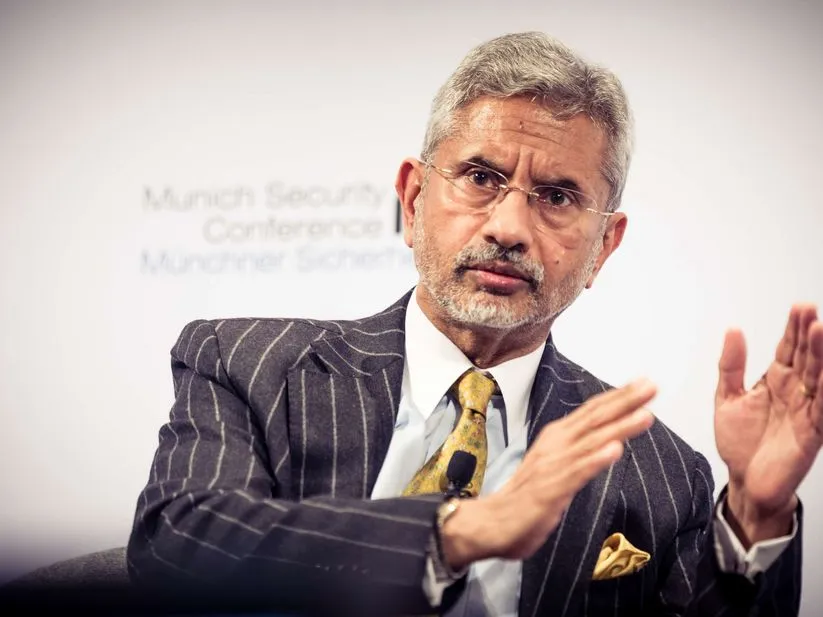
MUNICH— The Munich Security Conference concluded with a renewed commitment to European Union expansion, offering a glimmer of hope to Albania and Montenegro, long-standing candidates for membership. EU Enlargement Commissioner Marta Kos signaled that accession negotiations for the two Balkan nations could be completed as early as 2026 or 2027, with North Macedonia potentially advancing swiftly as well.
Yet, even with the conclusion of negotiations, full membership remains contingent upon unanimous approval and ratification by existing EU members—a hurdle that has stalled previous bids for years.
The slow-moving process drew criticism from regional leaders. Albanian Prime Minister Edi Rama, reflecting on the drawn-out negotiations, quipped that he had started the process with dark hair and now carried the weight of time visibly. His North Macedonian counterpart, Hristijan Mickoski, was more direct, lamenting that his country’s protracted accession journey, beginning in 2005, should not be the fate of other hopefuls.
Kos acknowledged these frustrations, pointing to the EU’s expedited engagement with Ukraine as an example of a new pace in European diplomacy. “We are accelerating the process, working two to three times faster,” she said, but stressed that political dynamics remained beyond the Commission’s control. “No major steps can be taken without the will of the member states.”
While the EU’s enlargement strategy took center stage, the conference was overshadowed by sharp transatlantic tensions. U.S. Vice President J.D. Vance’s opening remarks sent ripples through European diplomatic circles, with his speech accusing the bloc of restricting free speech and undermining democracy. His opposition to the exclusion of far-right and populist factions, including Germany’s Alternative for Germany (AfD), drew both rebuke and concern.
U.S. historian Timothy Snyder, speaking to German media, described Vance’s rhetoric as imperialist, warning that Europe’s reliance on Washington’s lead was leaving it paralyzed. “Europeans must stop waiting for signals from America or Russia,” he urged. “They need to take control of their own destiny.”
The shifting geopolitical landscape was also evident in discussions around Ukraine. President Volodymyr Zelensky warned that any proposed economic deals with the United States—such as access to Ukraine’s critical minerals—would be meaningless without firm security guarantees. With uncertainty looming over Donald Trump’s talks with Vladimir Putin, concerns over U.S. reliability as a security partner dominated conversations in Munich.
Amid European introspection, voices from the Global South underscored the broader realignments in international diplomacy. India’s delegation, led by Foreign Minister S. Jaishankar, reinforced New Delhi’s push for a multipolar order, advocating for greater engagement with the Global South and a recalibration of global security frameworks.
India’s presence was notable in discussions on defense cooperation, technology partnerships, and energy security—particularly as European nations seek to diversify away from Russian energy dependence. India’s expanding defense collaborations with France and Germany also featured prominently, reflecting a broader shift in strategic priorities beyond traditional NATO dynamics.
As the EU attempts to accelerate its enlargement while navigating internal divisions, the coming months will test the bloc’s political resolve. Key questions remain: Will member states unite behind fast-tracking Balkan accession? How will Europe respond to a potential shift in U.S. foreign policy post-2024?
And can the EU strike a balance between its security concerns and growing partnerships with emerging powers like India?
With NATO’s eastern flank under pressure and China asserting itself in global governance, Europe’s choices in the next two years will determine whether it remains a cohesive geopolitical force or finds itself further fragmented in an increasingly multipolar world.
As Munich bids farewell to its outgoing conference chair, Christoph Heusgen, his successor, former NATO chief Jens Stoltenberg, will inherit a forum navigating deepening global uncertainties. The 2026 edition of the conference is poised to be even more consequential, shaping the EU’s future amidst a rapidly evolving international order. Agencies.