News Desk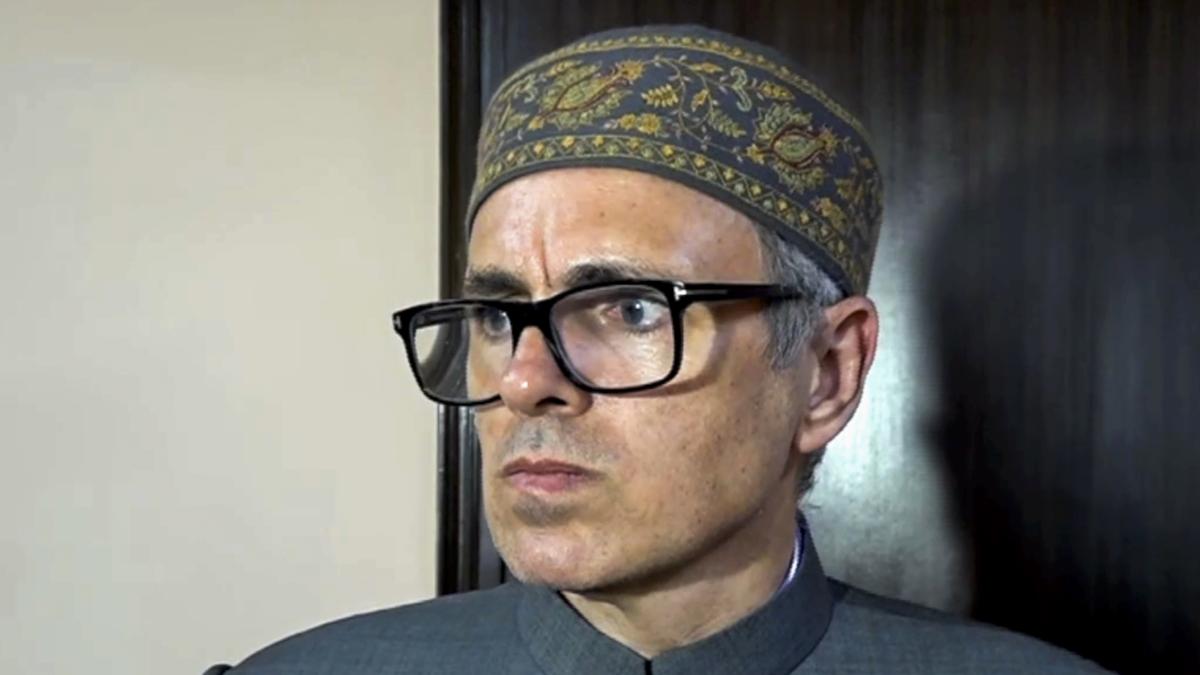
SRINAGAR, India — Jammu and Kashmir Chief Minister Omar Abdullah sharply questioned Pakistan’s offer to join a “neutral and transparent” investigation into the devastating terror attack in Pahalgam that killed 26 people on April 22, casting doubt on Islamabad’s sincerity. His father, Farooq Abdullah, a former chief minister and president of the National Conference, went further, condemning Pakistan’s actions as a “murder of humanity” and urging India to take decisive measures to prevent future attacks, marking a significant shift from his past advocacy for dialogue.
The attack, which targeted the picturesque Pahalgam valley, was one of the deadliest in recent years, sending shock waves through India and prompting swift condemnation from New Delhi. Indian authorities have pointed fingers at Pakistan-based militant groups, a charge Islamabad has repeatedly denied. In a statement on April 26, Pakistan’s Prime Minister Shehbaz Sharif called for an end to the “perpetual blame game” and expressed his country’s willingness to participate in a credible probe, emphasizing Pakistan’s role as a “responsible country.”
Omar Abdullah, whose National Conference party returned to power in Jammu and Kashmir’s first elected government since the revocation of its status in 2019, dismissed Pakistan’s gesture as posturing. Speaking to reporters in Srinagar, he accused Islamabad of harboring militants and questioned the feasibility of a joint investigation given the long history of distrust between the two nations. “Pakistan’s offer sounds like a hollow promise,” Mr. Abdullah said. “How can we trust a country that has consistently failed to rein in terrorist groups operating from its soil? The blood of our people is not so cheap that we entertain such rhetoric without action.”
Farooq Abdullah, speaking on April 28 during a special session of the Jammu and Kashmir Legislative Assembly convened to address the attack, took a harder line. Once a strong advocate for dialogue with Pakistan, he expressed deep frustration, stating, “I used to favor dialogue with Pakistan every time. How will we answer those who lost their loved ones? Are we doing justice? Not Balakot, today the nation wants such action to be taken so that these kinds of attacks never happen.” He rejected Pakistan’s two-nation theory, asserting India’s unity across religions: “Hindu, Muslim, Sikh, and Christian, we are all one. We will give a befitting reply to them.” His remarks, which included a call to question Prime Minister Narendra Modi on India’s response to Pakistan, underscored a rare alignment with Modi government stance.
The Pahalgam attack has intensified scrutiny on Pakistan’s alleged role in fostering militancy and terrorism in Jammu and Kashmir. India has long accused Pakistan of providing safe havens to terror groups like Lashkar-e-Taiba and Jaish-e-Mohammed, which have been linked to previous attacks. The Resistance Front, an offshoot of Lashkar-e-Taiba, initially claimed responsibility for the Pahalgam attack but later retracted its statement, adding to the complexity of assigning blame.
Analysts say Mr. Sharif’s offer, while framed as a diplomatic olive branch, is unlikely to gain traction in New Delhi, where patience with Pakistan’s denials has worn thin. “This is classic Pakistan playbook—deny, deflect, and then propose something that sounds reasonable but is impractical,” said Ajai Sahni, executive director of the Institute for Conflict Management in New Delhi. “India has no reason to believe Pakistan will cooperate meaningfully when it hasn’t in the past.”
The timing of the attack, just months after Jammu and Kashmir held its first assembly elections in a decade, has fueled speculation about its motives. The elections, widely seen as a step toward restoring democratic processes, were hailed by Mr. Abdullah’s government as a rebuke to militancy. The Pahalgam attack, some argue, was an attempt to undermine that narrative and destabilize the region’s fragile progress.
For the people of Pahalgam, a tourist hub known for its serene landscapes, the attack has left scars that go beyond the physical. Locals have shown remarkable solidarity, with pony-handlers and gurdwaras offering aid to victims, a response Farooq Abdullah praised as a “window of opportunity” for New Delhi to restore statehood and empower local governance.
The father-son duo’s remarks reflect a broader frustration in India, where public outrage over the attack has put pressure on Mr. Modi’s government to respond decisively. While New Delhi has not officially commented on Pakistan’s offer, diplomatic sources suggest India is unlikely to entertain a joint probe, preferring instead to pursue its own investigation and possibly escalate pressure on Pakistan through international forums. India has already taken steps, including suspending the Indus Waters Treaty and revoking visas for Pakistani nationals, signaling a hardening stance.
As the death toll in Pahalgam continues to haunt the region, the prospect of meaningful dialogue between India and Pakistan remains dim. For now, the Abdullahs’ words—Omar’s skepticism and Farooq’s call for action—echo the sentiment of many in Jammu and Kashmir: trust, once shattered, is not easily rebuilt.