News Desk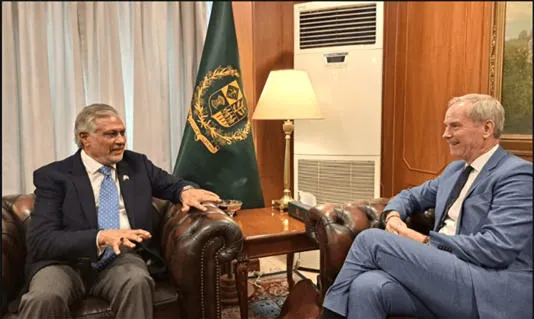
ISLAMABAD—Pakistan’s preferential trade status with the European Union (EU) could be in jeopardy if it fails to address key human rights concerns, an EU delegation warned on Friday. The concerns include the country’s controversial blasphemy laws, forced marriages and conversions of religious minority girls, and restrictions on freedom of religion and expression.
The delegation, led by EU Special Representative on Human Rights Olof Skoog, cautioned that Pakistan should not take its Generalized Scheme of Preferences Plus (GSP+) status for granted. In a press statement, the EU mission emphasized that the continuation of trade benefits is contingent on Pakistan demonstrating tangible progress in addressing human rights issues.
“As we approach the midterm of the current monitoring cycle, we encourage Pakistan to continue on its reform path as it prepares for reapplication under the upcoming new GSP+ regulation,” the EU delegation stated. “The trade benefits under GSP+ depend on the progress made on addressing a list of issues, including on human rights, and tangible reforms remain essential.”
Pakistan, a key trading partner for the EU in South Asia, has benefited significantly from the GSP+ arrangement. Since the launch of the scheme in 2014, Pakistani exports to the EU have increased by 108%. The EU is Pakistan’s second-largest trading partner, and under the GSP+ framework, the country enjoys duty-free or reduced-tariff access to European markets. However, the trade arrangement requires compliance with 27 international conventions on human and labor rights, environmental protection, climate change, and good governance.
The EU delegation’s week-long visit to Pakistan comes ahead of a crucial GSP+ monitoring mission in June. The mission met with senior officials, including Deputy Prime Minister and Foreign Minister Ishaq Dar, Chief of Army Staff Gen. Asim Munir, Minister of Law and Human Rights Azam Nazeer Tarar, Minister of Commerce Jam Kamal, and Foreign Secretary Amna Baloch. Discussions covered a range of human rights concerns, including the application of blasphemy laws, forced marriages, enforced disappearances, media freedom, impunity for rights violations, due process, and judicial independence.
During a meeting with Chief Justice of Pakistan Yahya Afridi, the discussion focused on judicial backlog and the integrity and independence of the judiciary. Skoog also stressed the importance of the National Commission of Human Rights (NCHR), underscoring the need to preserve its independence.
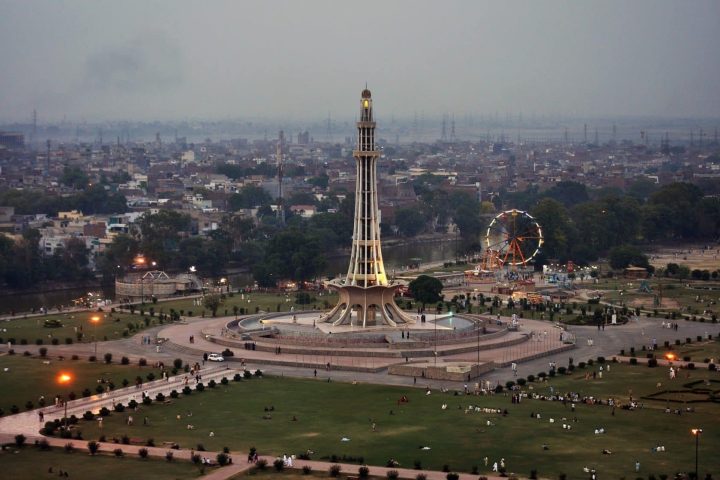
The delegation’s visit also included a stop in Lahore, where Skoog met with Punjab Chief Minister Maryam Nawaz Sharif, Minister for Minorities Affairs Sardar Ramesh Singh Arora, and representatives from the Christian and Ahmadi communities. These discussions focused on the protection of minority rights and accountability for human rights violations. However, Christian lawmakers in the Punjab Assembly were notably absent from these meetings, raising concerns about government selectivity in engaging with religious minorities.
At a press briefing in Islamabad on Wednesday, Skoog reiterated the EU’s commitment to democracy, human rights, and international humanitarian law. He emphasized that the GSP+ framework serves as a crucial platform for engagement on these issues.
“The GSP+ is a significant economic boost, facilitating Pakistan to become the EU’s largest export market, surpassing both China and the U.S.,” Skoog stated. He noted that the preferential trade status provides Pakistan with nearly a billion dollars in tariff exemptions, underscoring its importance to the country’s economy.
Pakistan’s Foreign Office acknowledged the EU’s concerns but framed the visit as routine. “The GSP+ status is just one aspect of the Pak-EU partnership,” Foreign Office spokesperson Shafqat Ali Khan said at a weekly press briefing on Thursday.
Pakistan secured GSP+ status on January 1, 2014, after ratifying 27 international conventions and committing to their implementation. The scheme has played a vital role in boosting EU-Pakistan trade ties, with total trade volume growing from €8.3 billion in 2013 to €14.85 billion by 2022. Pakistan’s key exports under GSP+ include garments, bed linen, towels, hosiery, leather goods, sports equipment, and surgical instruments.
As Pakistan prepares for the upcoming GSP+ review, the EU’s warning places renewed pressure on the government to undertake significant human rights reforms. Failure to do so could risk losing a critical trade arrangement that has been instrumental in the country’s export growth and economic stability.