News Desk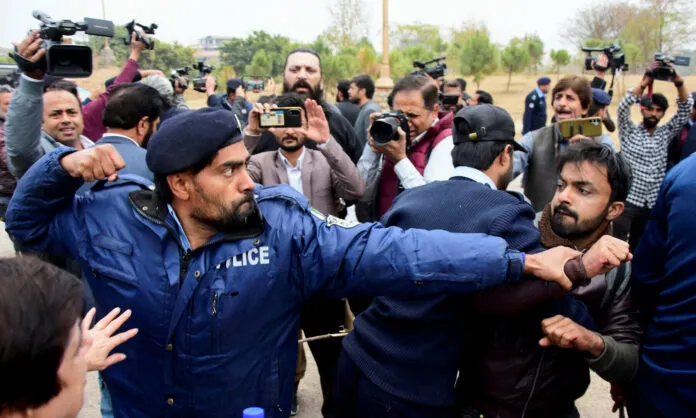
ISLAMABAD — A sweeping amendment to Pakistan’s cybercrime law has ignited a nationwide outcry, with journalists, opposition parties, and digital rights activists condemning the move as a direct assault on press freedom.
The Prevention of Electronic Crimes (Amendment) Bill, 2025, which passed both houses of Parliament and awaits presidential approval, introduces strict penalties for the dissemination of what the government terms “fake news.” Critics argue that the amendments could be wielded to stifle dissent and silence independent journalism.
The most contentious provision, Section 26(A), criminalizes the deliberate spread of false information that may incite fear or unrest. Violators could face up to three years in prison and fines of up to two million rupees. The bill also proposes a new cybercrime agency and a regulatory body with broad powers to monitor online content, raising fears of state censorship.
Following the Senate’s approval, protests erupted in major cities, including Islamabad, Karachi, and Lahore. The Pakistan Federal Union of Journalists (PFUJ) led demonstrations, with protesters carrying banners that read “Black law unacceptable.” Many symbolically wore handcuffs, decrying what they see as an effort to suppress free speech.
“This is not about controlling misinformation—it’s about controlling the press,” said senior journalist Mazhar Abbas at a rally in Karachi.
Political opposition has also been vocal. Pakistan Tehreek-e-Insaf (PTI) Senator Shibli Faraz called the law a “blatant attack on democracy,” accusing the government of fast-tracking legislation without parliamentary scrutiny.
The Pakistan People’s Party (PPP), a coalition partner in the government, has faced backlash for supporting the bill despite previous opposition to similar measures. PPP Senator Sherry Rehman admitted the legislative process was rushed, suggesting amendments might be introduced later—an assurance that critics say does little to allay concerns.
Pakistan ranks 152 out of 180 on the Press Freedom Index, and watchdogs warn that the new amendments could push the country further toward authoritarian control of information. Amnesty International has criticized the bill, arguing it paves the way for digital surveillance and erodes fundamental rights.
With journalists vowing to escalate protests and legal challenges looming, the fate of the bill now rests with President Asif Ali Zardari, whose decision could determine whether the amendments take effect or face further review.