 News Desk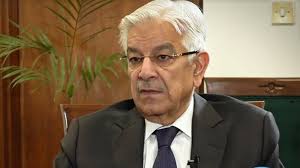
ISLAMABAD— In a candid interview with Sky News Pakistan’s Defense Minister Khawaja Asif acknowledged that his country had engaged in what he called the “dirty work” of the United States and Western allies, including Britain, for three decades. The remarks, which point to Pakistan’s historical involvement in supporting militant groups during the Cold War and post-9/11 conflicts, offer a rare moment of introspection from a senior official, though they stop short of outlining a clear path forward.
Asif’s comments come at a tense juncture for Pakistan, following a deadly terrorist attack on April 22 in Pahalgam, Jammu and Kashmir, which killed 26 people, mostly tourists. The attack, claimed by The Resistance Front, a group linked to the Pakistan-based Lashkar-e-Taiba, has intensified scrutiny of Pakistan’s complex relationship with militant organizations. Asif denied knowledge of The Resistance Front and questioned the current presence of Lashkar-e-Taiba in Pakistan, assertions that have drawn skepticism given the documented activities of such groups.
Pakistan’s role in global conflicts, particularly during the U.S.-backed anti-Soviet campaign in Afghanistan in the 1980s and the war on terror after 2001, has long been a subject of debate. Asif framed Pakistan’s actions as part of Western strategies, suggesting that groups once supported as allies later became labeled as terrorists. He described these decisions as “mistakes” that brought suffering to Pakistan, a nation that has faced significant domestic turmoil, including thousands of deaths from terrorist attacks over the years.
The minister’s remarks coincide with escalating tensions with India, which has responded to the Pahalgam attack by suspending the Indus Waters Treaty, halting cross-border trade, and expelling Pakistani nationals.
Public reaction to Asif’s comments, visible on social media platforms has been mixed. Some Pakistanis view his admission as an honest reckoning with a difficult past, while others see it as an attempt to deflect responsibility onto foreign powers. One user called it a “moment of truth” for a country grappling with its identity, while another questioned Asif’s credibility, noting his limited influence in Pakistan’s military-driven policymaking.
Pakistan has faced immense challenges in balancing its security policies with international expectations. While Asif’s acknowledgment sheds light on the pressures Pakistan faced as a frontline state in global conflicts, it also underscores the need for greater accountability in addressing the legacy of militancy. As Islamabad navigates its strained ties with India and its role on the world stage, the path to stability remains fraught, but moments of candor like this may signal a willingness to confront uncomfortable truths.