 News Desk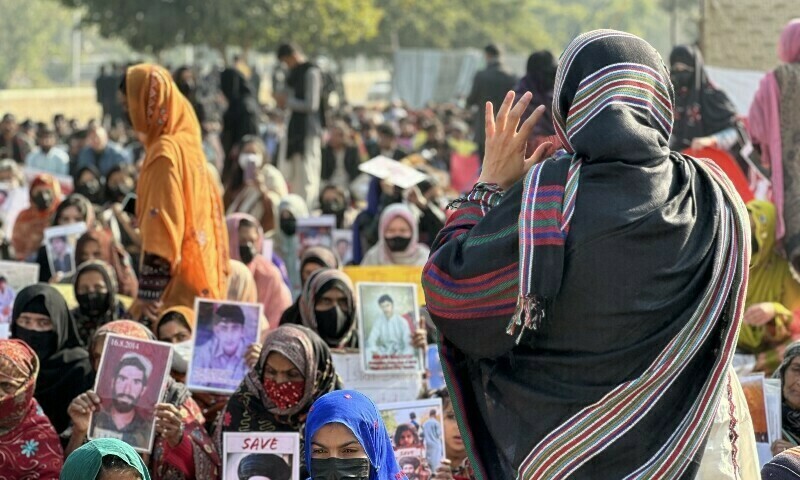
ISLAMABAD, Pakistan — Pakistan teeters on the edge of a precipice, its promise as a nation eroded by a predatory elite that preys on its own people while masquerading as their protector. The term “predatory state,” coined by economist James K. Galbraith to describe a system where a small, powerful clique manipulates policy for self-enrichment at the expense of the masses, fits this country like a glove. From the smoldering insurgencies of Balochistan and Khyber Pakhtunkhwa to the gunfire that punctuates even the joyous announcement of Eid, Pakistan’s rulers have turned a land of potential into a crucible of despair, where the innocent pay the price for a governance hollowed out by corruption and brute force.
The evidence is stark. In Balochistan, the country’s largest province by area, decades of state repression have fueled a wildfire of militancy that no amount of military crackdowns can extinguish. The Baloch Yakjehti Committee’s recent strike call—protesting widespread arrests and the heavy-handed silencing of dissent—brought life to a standstill across swathes of the region, a testament to the depth of alienation. Rather than seek a political balm, the state doubles down with tactics that only deepen the wound, as if jailing voices of grievance could smother the cries for basic rights. In Khyber Pakhtunkhwa, militancy festers unchecked, a festering sore on a body politic too weak to heal itself. These are not mere regional flare-ups; they are existential threats born of a state that has failed its people.
The military, led by Army Chief Gen. Asim Munir, bristles at this collapse. In a recent parliamentary committee meeting, he demanded to know, “How long will we keep filling the void of bad governance with the sacrifices of the Pakistan Army and the blood of our martyrs?” His call for a “hard state” to confront internal and external foes sounds resolute, but it betrays a fatal flaw: the delusion that more force can join a nation torn apart by its own leaders’ greed and ineptitude. Balochistan’s history is a glaring rebuttal—decades of boots on the ground have only stoked the flames, not doused them. A hard state, in this vision, is just a shinier cudgel, wielded by an elite that mistakes coercion for strength.
Pakistan’s predatory nature thrives in this disconnect. The government, propped up by a military that has meddled in elections and stripped the judiciary of its independence, lacks legitimacy in the eyes of its people. The rule of law is a fading memory, replaced by a system where accountability is a privilege for the powerful. In Sindh, resentment festers over Punjab’s chokehold on resources—exemplified by the controversial decision to build six canals to irrigate barren Punjab land, a move rammed through without consultation. This provincial favoritism gnaws at national unity, exposing a state that serves one region at the expense of others.
Pakistan is a state that fears its own citizens, seeing in every dissenter a conspirator with foreign foes, is not secure—it is paranoid. The military’s obsession with external threats—real as they may be—ignores the internal rot that invites them. Insurgencies thrive where trust erodes, and trust erodes where rights are trampled. In Balochistan, the denial of basic freedoms has birthed a rebellion that no tank can crush. In Sindh, the theft of water breeds a bitterness that no speech can sweeten. A predatory state cannot command loyalty; it can only demand it, and Pakistan’s rulers have demanded too much for too long.
The cost is paid in blood—soldiers’ and civilians’ alike. The army’s sacrifices are real, but they are squandered on a system that refuses to confront its own failures. A government that thrives on opacity, shunning criticism and accountability, is not fortified by its hardness but weakened by its brittleness. Pakistan’s security woes stem not from a lack of force but from a surplus of distrust between rulers and ruled. The state’s machinery grinds on, but it grinds down the very institutions—courts, elections, civil liberties—that could save it.
To call Pakistan a hard state is a misnomer; it is a hollow one, its shell propped up by guns and graft. A truly strong state governs with consent, not coercion, earning allegiance by delivering justice and dignity. Here, the elite hoard power while the people languish, and the result is a nation fracturing at its seams. The question is not how hard Pakistan can become, but how long it can survive its own predation. Time is running out, and the blood of the innocent—spilled in fields, streets, and hospital wards—cries out for an answer the state refuses to give.