 News Desk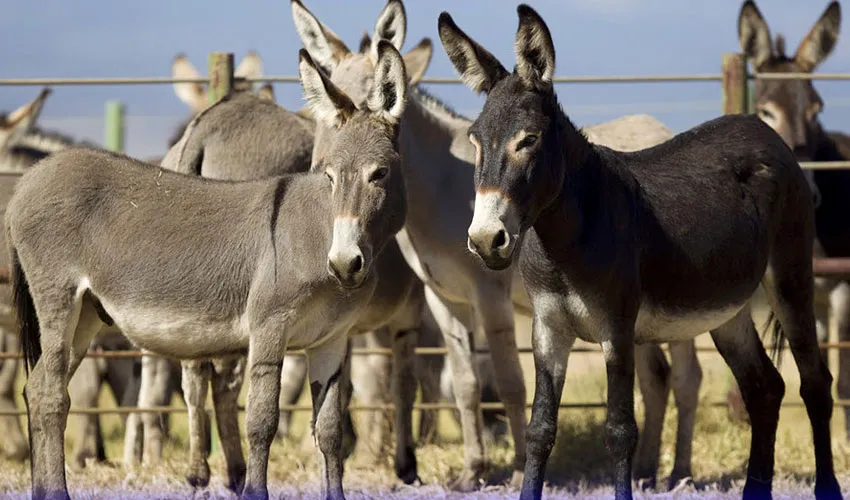
GWADAR, Pakistan — In the dusty port city of Gwadar, where the Arabian Sea laps at a coastline dotted with unfulfilled promises, a new industry is taking root—one that’s as absurd as it is grim.
Pakistan, strapped for cash and desperate for any economic lifeline, has struck a deal with China to turn its donkeys into a commodity. Last month, the Ministry of National Food Security and Research confirmed to a parliamentary committee that a Chinese company, Hangeng Trade, has set up shop in Gwadar, running a $7 million slaughterhouse to churn out donkey hides and bones for export. It’s a move that’s equal parts economic cynicism and cultural betrayal, exposing the hollow core of both nations’ priorities.
The agreement, inked under the sprawling China-Pakistan Economic Corridor (CPEC), is straightforward: Pakistan supplies China with donkey by-products—chiefly hides for ejiao, a gelatin touted in China as a cure-all for everything from anemia to aging skin. With Pakistan boasting 5.9 million donkeys, the world’s largest population, and China’s own herd dwindling from 11 million in 1990 to under 2 million today, the math adds up.
Hangeng’s facility plans to process over 300,000 hides a year, feeding an $8 billion ejiao market that’s ballooned as China’s middle class and elderly chase its supposed miracles. But beneath the numbers lies a story of exploitation and indifference.
In Gwadar, a city hyped as CPEC’s “crown jewel” yet plagued by a dormant port and an underused airport, the slaughterhouse is a bitter punchline. “We were promised trade hubs and skyscrapers,” says Muhammad Aslam, a local fisherman whose donkey once hauled his nets. “Now we’re selling their skins to China.” Donkeys, long a lifeline for rural Pakistanis, are now fodder for a foreign appetite, their meat forbidden under Islamic law but their hides fair game for export.
The National Assembly’s food security committee raised eyebrows when its chairman asked why live donkeys aren’t shipped instead. The answer? Too messy, too costly—better to butcher them here and ship the parts.
China’s role is no less damning. The ejiao craze, fueled by slick marketing and a hit TV show, “Empress in the Palace,” has turned a niche luxury into a mass obsession.
Prices have soared thirtyfold in a decade, from $14 to $420 per pound, and the industry now demands 5.9 million skins annually—more than China can supply. After Africa banned donkey exports, Beijing turned to Pakistan, its “all-weather ally,” to keep the collagen flowing. It’s a mechanical transaction, devoid of sentiment: China gets its miracle goo, Pakistan gets a few million dollars, and the donkeys get the blade.
Hangeng’s operation is just the start—ministry officials say more Chinese firms are circling, eyeing slaughterhouses from Karachi to Punjab.
Pakistan’s leaders seem oblivious to the irony. At the committee meeting, one member lamented that donkeys are losing relevance, replaced by motorized rickshaws, and suggested breeding “high-quality” ones to sustain the trade. It’s a darkly comic twist—engineering premium donkeys not for labor but for slaughter. Meanwhile, the government crows about jobs (Hangeng’s plant might employ 1,000 locals) and revenue (exports could hit $30 million a year), ignoring the stench of desperation.
Religious leaders in Gwadar have protested, decrying the slaughter as un-Islamic, but their voices drown in the hum of economic necessity.
For China, it’s business as usual—a nation so fixated on growth it’ll strip another’s backbone to pad its own. For Pakistan, it’s a new low, pimping out its beasts of burden to a partner that’s already saddled it with $65 billion in CPEC debt. The donkeys, once symbols of resilience, are now just another resource to be mined, their braying a faint echo in a deal that leaves both countries looking as soulless as the hides they trade.