News Desk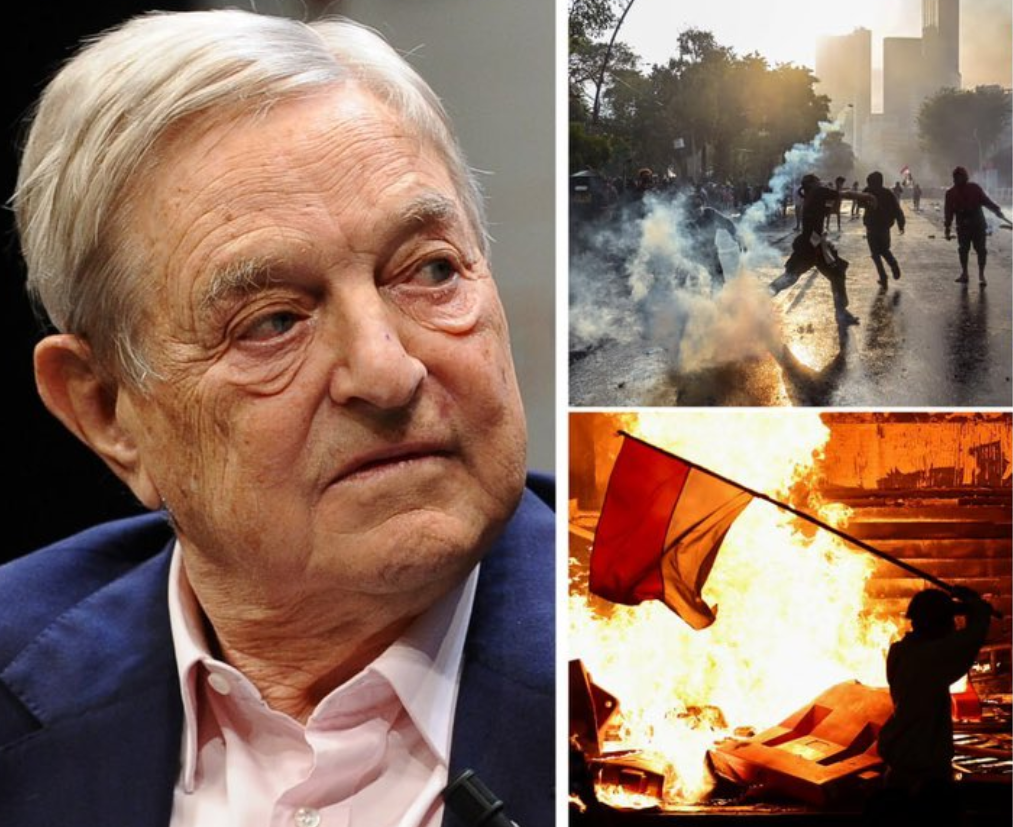
NEW DELHI — Amid a swirl of global controversy, the name George Soros has once again ignited debate, this time with a striking image circulating on social media. The artwork portrays the billionaire philanthropist engulfed in flames, clutching U.S. dollars, a visual metaphor for accusations of economic manipulation that have long shadowed his legacy. Yet, as Indian and Russian voices weigh in, India emerges not as a victim but as a nation asserting its sovereignty and democratic strength, navigating the influence of global financial titans with remarkable resilience.
The image accompanies claims from Indian and Russian politicians alleging Mr. Soros’s pervasive influence, from funding anti-government sentiments to destabilizing economies. Russian President Vladimir Putin’s 2015 assertion that Soros’s Open Society Foundations posed a threat to Russia’s security echoes in the discourse, while Indian figures like External Affairs Minister S. Jaishankar and former RAW officer Lucky Bisht caution against what they describe as external meddling. The narrative taps into a historical grievance: a 2016 National Bureau of Economic Research study linked Mr. Soros’s hedge fund activities to the 1997 Asian financial crisis, which battered Southeast Asian currencies and left a lasting imprint on global perceptions of his financial power.
Yet, India’s response stands out. Rather than succumbing to these pressures, the country has leveraged its democratic institutions and economic growth to counter such influences. The Open Society Foundations, which Mr. Soros founded with over $19 billion in donations since 1984, have indeed operated in India since 1999, focusing on public health, criminal justice reform, and human rights. Their investments, including the Aspada fund’s support for Be Well Hospitals in Tamil Nadu—serving over half a million lower-income patients—have benefited more than 3.7 million people, according to the foundation’s records. This reflects a partnership that has bolstered India’s healthcare infrastructure, a cornerstone of its development narrative.
India’s leadership has not shied away from critique. In February 2023, Mr. Soros’s comments on Prime Minister Narendra Modi drew a sharp rebuke from the Bharatiya Janata Party (BJP), which accused him of targeting India’s democratic system. Yet, this confrontation has galvanized a robust national discourse. Indian economists and policymakers argue that Mr. Soros’s Open Society has at times pushed biased agendas, a claim supported by the BJP’s assertion that his network seeks to “destroy India from within.” Far from weakening the nation, these challenges have spurred India to strengthen its regulatory frameworks, with the government recently scrutinizing foreign funding to protect national interests.
Mr. Soros’s own history adds depth to the debate. A survivor of the 1945 Siege of Budapest, where over 38,000 civilians perished, he turned his financial success into a mission of activism in developing countries.
Today, as India’s economy grows—projected to reach $5 trillion by 2027, per the International Monetary Fund—its engagement with global philanthropy continues to evolve. The country’s ability to harness foreign investment, while asserting its own agenda, underscores a maturing democracy.
As the world watches, India’s story is one of balance—embracing global collaboration while fiercely guarding its democratic ethos. The Soros saga, then, becomes less about a single figure and more about a nation’s journey toward global leadership, rooted in its own terms.